Engaging Activities for 4-Year-Olds: Growth Through Play
Discover purposeful activities that strengthen motor skills, cognitive abilities, and social development in preschoolers.
Physical Development Through Movement and Play
Physical activity forms a cornerstone of healthy child development during the preschool years. At four years old, children are naturally drawn to movement and increasingly capable of coordinating their bodies in complex ways. Structured movement activities provide opportunities for children to build strength, balance, and confidence while enjoying the process of play.
Organized activities that focus on gross motor development help children gain control over their larger muscle groups and improve their overall body awareness. These experiences build self-esteem as children achieve new physical milestones and develop a positive relationship with movement and exercise.
Balance and Coordination Challenges
Creating environments where children can practice balance develops their proprioceptive awareness and strengthens stabilizing muscles. Walking along lines, curbs, or balance beams with adult support introduces the concept of weight distribution and body control. As children gain confidence, they can progress to attempting these activities independently, which reinforces their sense of accomplishment.
Obstacle courses provide versatile opportunities for practicing multiple physical skills simultaneously. Children can crawl under furniture, climb over low structures, hop on stepping stones, and navigate through various challenges. These varied experiences help children understand their body’s capabilities and build the motor planning skills necessary for coordinated movement.
Jumping, Running, and Directional Movement
Dynamic activities that involve jumping and running allow children to practice explosive movements and develop lower body strength. Setting targets on the ground and encouraging children to jump from one shape to another makes this practice engaging and goal-oriented. Similarly, running around obstacles or following directional instructions combines physical exertion with cognitive processing.
Introducing variations in movement patterns—such as walking backwards, moving sideways, or running in place while changing directions—enhances children’s spatial awareness and adaptability. These creative variations prevent activities from becoming monotonous while continuously challenging developing motor systems.
Fine Motor Skill Development and Hand Strength
Fine motor skills, which involve the small muscles of the hands and fingers, become increasingly important as children prepare for school. Activities that require precise hand movements and finger control lay the groundwork for writing, drawing, and self-care skills. Providing diverse opportunities to manipulate objects, handle different textures, and practice gripping strengthens these crucial abilities.
Sensory Exploration and Tactile Learning
Children learn through their senses, and tactile experiences provide rich opportunities for cognitive and motor development simultaneously. Creating sensory bins filled with various materials—such as rice, beans, or water beads—invites children to explore with their hands and simple tools like spoons and cups. This type of free exploration develops fine motor control through natural manipulation while encouraging children to notice cause-and-effect relationships.
Different textures engage children’s sensory systems in unique ways. Smooth pebbles, textured fabrics, crinkly paper, and moldable substances each provide distinct sensory feedback. When adults participate in sensory play alongside children and describe what they observe, this further enriches the cognitive benefits by introducing vocabulary and encouraging observation skills.
Construction and Building Activities
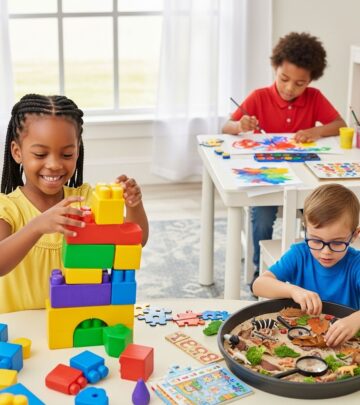
Building with blocks and similar materials strengthens hand-eye coordination and fine motor precision. Starting with larger, softer blocks allows younger or less experienced builders to experience success, while gradually progressing to wooden blocks, magnetic tiles, and interlocking brick systems provides appropriate challenges. The act of stacking, placing, and connecting pieces requires sustained focus and hand strength.
Advanced building materials like LEGO bricks demand even greater fine motor precision, as snapping bricks together requires significant finger strength and dexterity. The satisfaction of completing a structure motivates continued practice and skill refinement. Building activities also naturally incorporate spatial reasoning as children learn to visualize three-dimensional relationships.
Creative Expression Through Art
Artistic activities progressively develop hand strength and control as children move from finger painting with whole-hand engagement to more precise drawing with crayons and eventually to scissors and glue stick manipulation. Starting with large crayons and expansive paper allows young four-year-olds to focus on the joy of creating without frustration over precision.
Collage making with various materials encourages sensory exploration while requiring fine motor decisions about placement and composition. Working with clay, playdough, or modeling compounds builds hand strength through squeezing, rolling, and shaping activities. These hands-on experiences develop problem-solving abilities as children learn how different techniques produce different results.
Cognitive Growth Through Puzzle Solving and Games
Mental development during the preschool years involves building foundations for academic learning, including attention span, memory, reasoning, and problem-solving abilities. Strategic activities that challenge children’s thinking in enjoyable contexts support this crucial cognitive expansion.
Puzzle and Problem-Solving Activities
Puzzle completion develops multiple cognitive domains simultaneously. Large-piece puzzles and basic shape sorters appropriate for younger four-year-olds build spatial awareness and fine motor skills while requiring logical thinking. As children gain proficiency, gradually increasing puzzle complexity maintains appropriate challenge levels without causing frustration.
Solving puzzles teaches persistence and patience, particularly when adults work through challenges alongside children rather than immediately providing solutions. This collaborative approach models problem-solving strategies while fostering resilience.
Memory and Matching Games
Memory matching games boost focus and retention through enjoyable competition and discovery. These games require children to identify items, remember their locations, search for matches, and recognize when pairs align correctly. Regular practice with memory games strengthens working memory capacity, an executive function skill essential for academic success.
Themed matching games—such as those featuring trains or other objects aligned with children’s interests—increase engagement and motivation. The combination of genuine interest with cognitive challenge creates optimal learning conditions. Simple card games like Go Fish provide similar cognitive benefits while introducing basic game rules and turn-taking concepts.
Strategy and Reasoning Games
Games like Connect Four and Tic-Tac-Toe introduce strategic thinking as children learn to plan moves and anticipate consequences. Initially, adults guide children to think through cause-and-effect relationships between their decisions and outcomes. After gameplay, discussing which strategies succeeded and what alternatives might work differently builds metacognitive awareness—the ability to think about one’s own thinking.
Guessing games using cut-out pictures or 20-questions formats boost reasoning and categorization skills while promoting social interaction. These games teach children to ask strategic questions and narrow possibilities through logical deduction.
Social and Emotional Development Through Cooperative Play
Preschool years mark increasing capacity for social interaction and cooperation. Activities designed to involve multiple participants or encourage shared accomplishment support the development of social skills and emotional competence.
Dance, Music, and Rhythmic Movement
Musical and movement activities improve memory, rhythm, and coordination while reinforcing cognitive skills. Dancing together strengthens the connection between adult and child while building interpersonal synchrony—the ability to attune to another person’s tempo and energy. Action songs like “Wheels on the Bus” or “Head, Shoulders, Knees and Toes” combine cognitive learning with joyful movement.
Simple rhythm games with clapping or instruments develop auditory discrimination and motor timing. Singing songs with actions supports memory and sequencing abilities while providing multi-sensory engagement that enhances learning retention.
Collaborative Building and Creative Projects
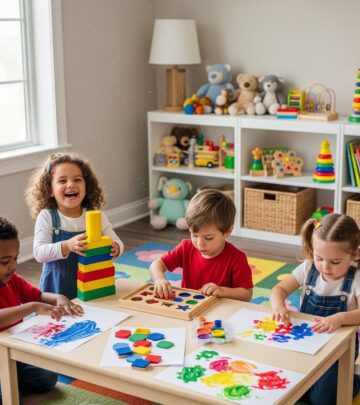
Group building projects encourage cooperation and communication. When multiple children work together on a structure, they must negotiate, share materials, and coordinate efforts. These experiences develop negotiation skills and the ability to contribute to something larger than individual efforts.
Art projects provide opportunities to share ideas and praise each other’s work, building positive peer relationships and creative confidence. Working side-by-side on a mural or collaborative collage naturally fosters conversation and mutual encouragement.
Pretend Play and Role-Playing Scenarios
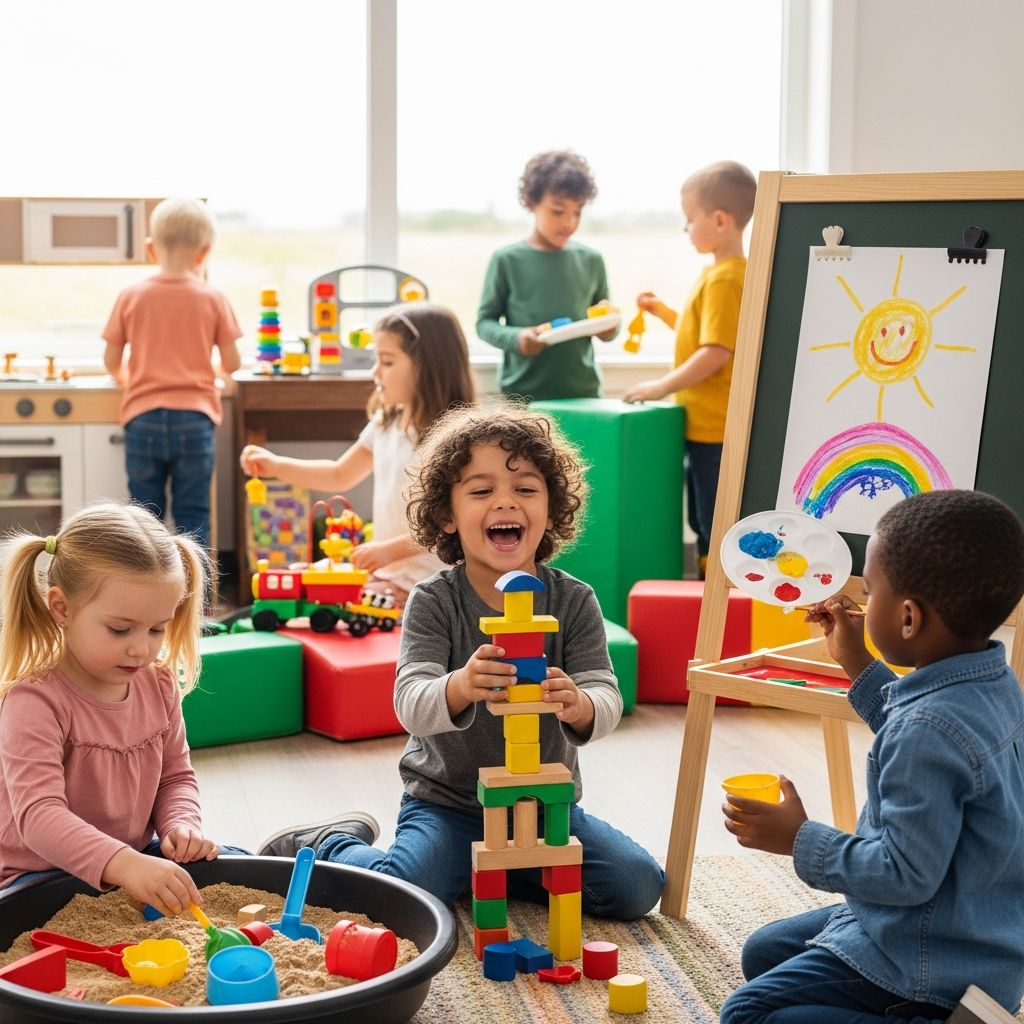
Imaginative play reaches sophisticated levels at four years old, with children developing complex scenarios and role assignments. Setting up pretend situations—such as playing house, restaurant, or doctor—with supporting props like dress-up clothes and toy equipment encourages imaginative thinking. Through role-playing, children practice social interactions, explore different perspectives, and work through real-life situations in safe contexts.
Pretend play develops imagination and abstract thinking as children create narratives and problem-solve within imaginary constraints. The social skills practiced through role-playing—taking turns, communicating role expectations, responding to others’ ideas—transfer to real-world peer interactions.
Kitchen and Nature-Based Learning Experiences
Real-world activities that connect to daily life make learning meaningful and memorable for young children. Involving children in cooking, baking, and nature exploration creates multi-sensory experiences rich with learning opportunities.
Cooking and Baking Activities
Kitchen participation teaches following directions and sequencing—critical cognitive skills. Measuring ingredients introduces basic mathematics concepts, while stirring mixtures and decorating cookies develops hand strength and fine motor coordination. These activities create natural opportunities for conversation about processes, ingredients, and taste experiences, supporting language development.
The immediate reward of eating something children helped create provides powerful motivation and celebrates their contribution to the family or group experience.
Nature Exploration and Outdoor Scavenger Hunts
Nature walks expose children to seasonal changes, plant and animal life, and the sensory richness of outdoor environments. Scavenger hunts transform walks into focused exploration, where children search for specific items like different leaf shapes, interesting rocks, or particular insects. This activity combines physical movement with observation skills and introduces basic scientific concepts.
Outdoor play in varied environments supports physical fitness while providing sensory stimulation that develops neural pathways linked to attention and emotional regulation.
Foundational Principles for Activity Selection
The most effective activities honor how young children learn best. Following children’s emerging interests and energy levels ensures engagement and motivation. Some days children arrive ready for vigorous movement, while other times they prefer quieter, more focused activities. Flexibility in activity selection acknowledges these natural variations.
Emphasizing process over product—celebrating the experience of creating rather than judging the final result—builds intrinsic motivation and positive self-concept. Four-year-olds who feel their efforts are valued develop greater confidence to attempt new challenges.
For optimal engagement, keeping activities appropriately brief prevents frustration and maintains attention. Most four-year-olds sustain focused attention for 10-20 minutes before requiring a transition to new activities.
Providing frequent, specific praise for effort and engagement rather than only acknowledging perfect outcomes builds growth mindset and encourages persistence through challenges. Celebrating what children accomplished—”You kept trying different ways until you found one that worked”—reinforces productive approaches to problem-solving.
Adapting and Progressing Activities
Individual development varies significantly among four-year-olds. Some children demonstrate advanced skills in particular areas while still developing abilities in others. Thoughtfully adapting activities to match each child’s current abilities while gently introducing appropriate challenges maintains optimal engagement.
As children master activities, gradually increasing complexity maintains challenge levels and prevents boredom. A child skilled at simple puzzles progresses to more pieces; a confident builder advances from large blocks to more intricate systems. This intentional progression supports continued growth across developmental domains.
Frequently Asked Questions
Q: How much physical activity should a 4-year-old get daily?
A: Four-year-olds benefit from at least 60 minutes of moderate physical activity daily, including both structured play and unstructured free movement. This can be broken into multiple shorter periods throughout the day rather than one continuous block.
Q: What should I do if my child isn’t interested in an activity I’ve planned?
A: Children’s interests naturally vary and change frequently. Rather than forcing participation, try introducing the activity again later or modifying it based on your child’s current interests. Following their lead builds motivation and prevents power struggles around play.
Q: How can I encourage my child to persist when activities become challenging?
A: Model perseverance yourself, ask guiding questions rather than immediately providing solutions, and celebrate effort regardless of outcomes. Comments like “That didn’t work—what could you try next?” teach problem-solving approaches.
Q: Are screen-based activities appropriate for 4-year-olds?
A: While some high-quality educational programming may have value, hands-on activities provide superior developmental benefits through direct sensory engagement and physical movement. Screen time should be limited and never replace physical play.
Q: How do I know if my child’s development is on track?
A: Most four-year-olds demonstrate a wide range of typical skills across motor, cognitive, and social domains. If you have specific concerns about your child’s development, consulting with a pediatrician or developmental specialist provides personalized assessment and guidance.
References
- Developmental Activities for Cognitive, Social, and Motor Connections — Lynne Kenney, Developmental Psychologist. Retrieved from https://www.lynnekenney.com/post/developmental-activities-for-cognitive-social-and-motor-connections-ages-0-5
- Gross Motor Development for 4-Year-Olds — Crane School District. Retrieved from https://www.craneschools.org/apps/pages/index.jsp?uREC_ID=1949514&type=d&pREC_ID=2072630
- Top 25 Cognitive Development Activities for Preschoolers — RevTrak. Retrieved from https://www.revtrak.com/child-care/blog/cognitive-development-activities-for-preschoolers
- Creative Cognitive Development Activities for Preschoolers — Willow Bend Learning Center. Retrieved from https://willowbendlearningcenter.com/creative-cognitive-development-activities-for-preschoolers/
- 35 Fine Motor Activities: Therapists’ Ultimate List — NAPA Center, Pediatric Therapy Specialists. Retrieved from https://napacenter.org/fine-motor-activities/
- Activities to Promote Preschool Cognitive Development — Lillio Learning Platform. Retrieved from https://www.lillio.com/blog/preschool-activities-for-cognitive-development
- Brain-Building Through Play: Activities for Infants, Toddlers, and Preschoolers — Harvard Center on the Developing Child. Retrieved from https://developingchild.harvard.edu/resources/handouts-tools/brainbuildingthroughplay/
Similar Articles








Read full bio of medha deb