Animated War Films That Help Kids Understand Conflict
A parent’s guide to using animated war films to gently introduce children to history, conflict, and empathy.
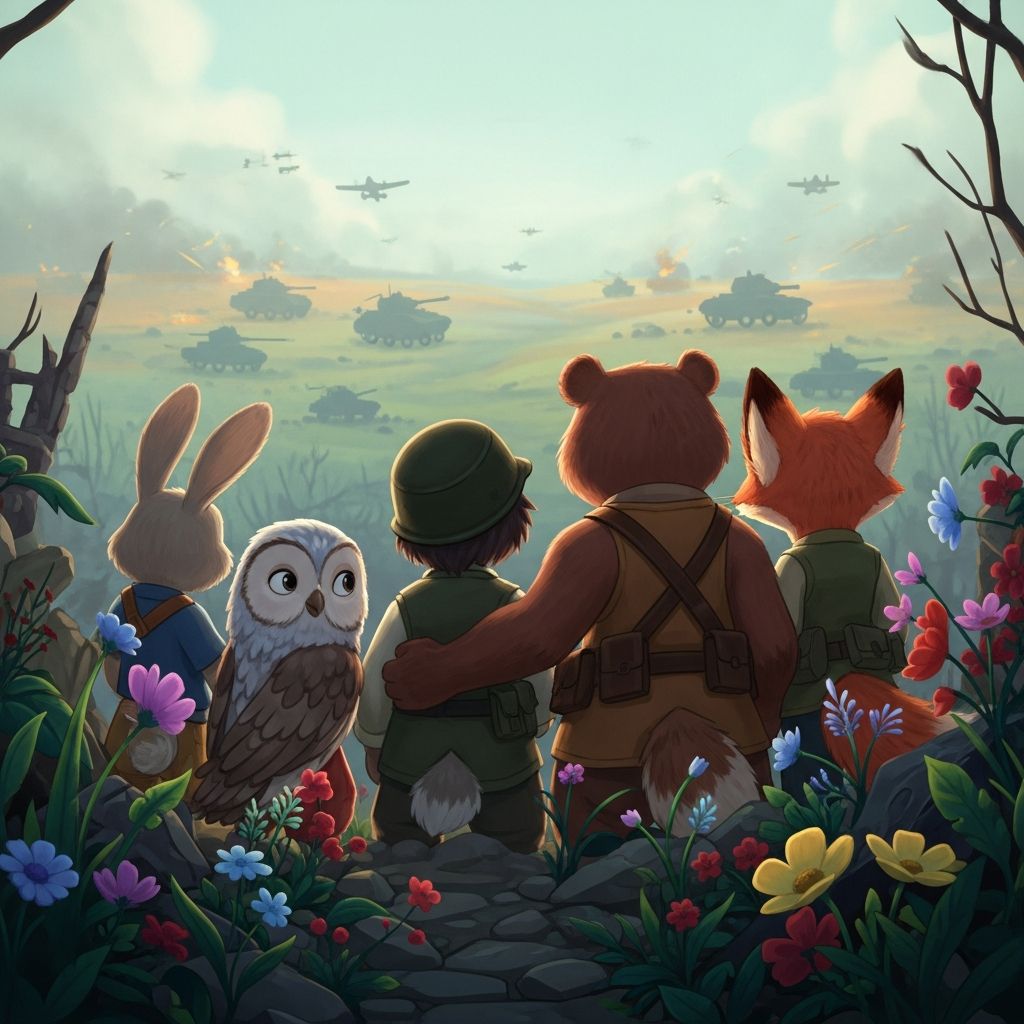
Animated films can introduce children to the realities of war and conflict in a way that is gentler, more symbolic, and often more hopeful than live-action movies. Rather than focusing only on battles, the best animated war films explore themes like fear, courage, prejudice, and the cost of violence through characters kids can relate to.
This guide offers parents and caregivers a structured way to use animated war stories to explore big questions: Why do wars happen? How do they affect ordinary people? What does it mean to be brave or compassionate during dangerous times?
Why Use Animation to Talk About War?
For many families, talking about war feels overwhelming. Yet children are frequently exposed to news headlines, classroom lessons, and playground conversations about conflict. Animated films provide a middle ground: they can depict serious themes while maintaining enough emotional distance to be manageable for young viewers.
- Visual symbolism: Animation uses stylized images to represent danger, fear, and destruction without graphic realism.
- Emotional safety: Children can process difficult topics more easily when they are wrapped in fantasy, talking animals, robots, or simplified designs.
- Strong moral frames: Animated stories tend to highlight clear ethical questions—sacrifice, loyalty, prejudice—that invite discussion.
- Global perspectives: Many animated war films come from different countries, offering diverse views on world events and cultural history.
Core Themes Kids Can Learn From Animated War Movies
Although each film is unique, several recurring themes make animated war movies particularly valuable as learning tools.
- The human cost of conflict: Characters often lose homes, routines, or loved ones, helping kids understand that war affects everyday people, not just soldiers.
- Fear and courage: Children see that being brave does not mean feeling no fear; it means acting responsibly despite it.
- Prejudice and propaganda: Stories set during events like the Cold War or revolutions can show how fear and misinformation turn neighbors into enemies.
- Empathy for “the other side”: Many films portray people on both sides of a conflict as complex, challenging the idea of simple good versus evil.
- Resistance and moral choice: Characters sometimes defy orders or unfair rules, showing that individuals still make meaningful ethical decisions during war.
Age-Based Approach to Choosing War-Themed Animation
Every child develops differently, but age ranges can help you choose how intense and complex a film’s themes should be. Animation rating systems and child development research both emphasize the importance of matching content to a child’s cognitive and emotional maturity.
| Age Range | Focus in Films | Typical On-Screen Intensity |
|---|---|---|
| 6–8 years | Adventure, friendship, basic ideas of danger and protection. | Minimal explicit violence; implied danger, brief scares, hopeful resolutions. |
| 9–12 years | Early understanding of history, ethics, loss, and moral dilemmas. | More visible conflict; some on-screen harm; clearer depiction of injustice. |
| 13+ years | Complex politics, trauma, identity, and long-term consequences of war. | Intense emotional content, oppression, and more realistic portrayals of violence. |
Animated War Stories for Younger Kids (Around 6 and Up)
In early elementary years, children benefit from stories where war is a backdrop to personal growth and friendship. The conflict should feel real enough to create stakes, but not so graphic that it overwhelms them.
Look for movies that:
- Feature a clear hero figure (often a child, animal, or robot) who learns empathy.
- Show adults working to protect children and communities.
- End with a sense of hope or meaningful sacrifice, rather than despair.
These films can help kids start to understand concepts like:
- Why people might fear outsiders during tense times (such as the Cold War).
- How misunderstanding and paranoia can escalate into conflict.
- That individual acts of kindness still matter during large-scale crises.
Discussion Ideas for Ages 6–8
- “Why were people so afraid? Were they right to be that scared?”
- “How did the main character show they were a good friend during scary moments?”
- “What would you do if you met someone others were afraid of, but who seemed kind?”
Animated War Narratives for Preteens (Around 9–12)
By upper elementary and early middle school, most children can start to understand war as a historical and political event, not just as an abstract danger. At this stage, animated war movies can connect classroom history lessons with human stories.
Helpful film characteristics for this age group include:
- Plots involving real historical settings or events (such as World War II or early 20th-century conflicts).
- Characters who struggle between personal dreams (like engineering, aviation, or art) and the demands of the war effort.
- Romantic or family subplots that show how conflict disrupts ordinary lives.
Preteens are ready to wrestle with questions such as:
- Whether contributing to war technology is heroic, harmful, or both.
- How patriotism can inspire both courage and denial about suffering.
- What it means to love one’s country while criticizing its actions.
Questions to Explore with Ages 9–12
- “Did the main character help create something that hurt people? How do you think they felt about it?”
- “Why did some people in the film support the war and others question it?”
- “What might you have done in their position?”
Challenging Animated War Films for Teens
By their mid-teens, many adolescents are capable of understanding the psychological and political complexity of war: displacement, dictatorship, and the ways violence reshapes societies. Animated films made for older audiences often confront these realities directly.
Animated teen-appropriate war stories may include:
- Revolutionary movements and regime changes.
- Street-level clashes instead of conventional battlefields.
- Surveillance, censorship, and ideological policing.
- The emotional toll on a protagonist who comes of age amid turmoil.
These movies tend to feature:
- Stylized black-and-white or highly symbolic animation that mirrors trauma.
- Narration or memoir-style storytelling, connecting personal memory with national history.
- Scenes of public executions, detentions, or violent repression, usually framed critically.
Conversation Starters for Teens
- “How does the animation style affect how you feel about the events shown?”
- “Which characters resist injustice, and what risks do they face?”
- “What parallels do you see between this story and conflicts happening in the world today?”
Balancing Honesty and Protection: A Parent’s Role
Health and psychology organizations note that children often hear about wars from peers, media, or school before adults realize it. When kids lack guided conversations, they may fill in the gaps with exaggerated fears. Thoughtfully chosen films can open the door to honest but age-appropriate dialogue.
Before Watching
- Preview content: Watch the movie yourself first whenever possible. Look for scenes that might be especially upsetting and decide in advance how you will address them.
- Share a simple framework: Briefly explain what kind of war or conflict the story involves, and reassure kids they can ask questions or pause at any time.
- Set expectations: Let children know there may be sad or scary moments, but that you will watch together and talk afterward.
During the Film
- Watch for body language: If your child gets very quiet, fidgets, or covers their face, consider pausing to ask how they’re feeling.
- Normalize emotions: Say that feeling scared, sad, or angry during certain scenes is understandable.
- Clarify reality vs. story: Remind younger viewers that characters are drawn and that you are there to keep them safe, even though the events represent real situations.
After the Credits Roll
- Invite questions first: Ask, “What stuck with you the most?” or “Was anything confusing?”
- Connect to real history: Briefly explain which parts of the story are based on real events, using child-friendly language.
- Focus on helpers: Highlight characters who protect others, resist injustice, or comfort friends, echoing advice often given about talking to kids after frightening news.
Comparing Animated and Live-Action War Films
Some caregivers wonder whether animation is a “less serious” way to address war than live-action movies. In reality, animation can be equally powerful, but with a different emotional texture.
| Animated War Films | Live-Action War Films |
|---|---|
| Use stylization to soften or abstract violence, which can make first exposure more manageable for kids. | Show real human faces and locations, which may feel more immediate and overwhelming. |
| Often highlight emotion, symbolism, and personal growth over tactical details. | May include realistic battle choreography, weapons, and destruction. |
| Accessible for a wide range of ages when carefully chosen. | Typically suited to older teens and adults due to intensity. |
Practical Tips for Choosing Specific Films
When selecting particular animated war movies for your family, use a combination of ratings, trusted reviews, and your knowledge of your child’s temperament.
- Check maturity guidelines: Organizations like Common Sense Media and official rating boards provide age recommendations and descriptions of violence, language, and themes.
- Consider your child’s sensitivities: A child anxious about separation may struggle with scenes involving lost parents or evacuations, even if the film’s rating seems appropriate.
- Start with milder titles: Introduce war via stories emphasizing friendship and personal sacrifice before moving into films centered on systemic brutality.
- Pair films with books or lessons: When possible, connect a movie to age-appropriate nonfiction or classroom units on the same historical period.
Turning Movie Night into a Learning Experience
With a bit of preparation, animated war films can do more than entertain; they can serve as gentle gateways into history, ethics, and global awareness.
- Create a context map: For older kids, sketch a simple timeline or map before watching to show where and when the story takes place.
- Use reflection prompts: Afterward, invite children to draw a favorite scene, write a short reflection, or talk about which character they admired most and why.
- Connect to current events carefully: For teens, discuss parallels between the film and modern conflicts, using credible news sources for background.
- Emphasize agency: Highlight that, even in war, people make choices—some destructive, some courageous—and that empathy and solidarity are powerful responses.
Frequently Asked Questions (FAQs)
Q: At what age can kids start watching animated movies about war?
A: Many families begin with very gentle titles around ages 6–8, where war is mostly implied and the focus is on friendship and courage. More historically detailed and emotionally intense films are generally better suited to preteens and teens, but readiness depends heavily on the individual child.
Q: How do I know if a specific war-themed animated film is too intense?
A: Read content reviews from trusted sources, look at detailed ratings, and—if possible—preview the film yourself. Pay special attention to depictions of death, separation from parents, and realistic violence, since these elements can be particularly distressing for younger viewers.
Q: Should I explain the real history before or after the movie?
A: For younger children, a very simple explanation before watching (“This is based on a real war where countries were fighting”) is often enough, with more detail after they have questions. Older kids and teens usually benefit from a bit of context in advance and a deeper conversation afterward.
Q: What if my child has nightmares after watching a war movie?
A: Stay calm, comfort them, and reassure them they are safe now. Ask what images or scenes are bothering them, correct any misunderstandings, and consider pausing from war-related content for a while. If distress continues or interferes with sleep well beyond a few nights, it can be helpful to talk with a pediatrician or mental health professional.
Q: Are animated war films educational enough to count as “history”?
A: Many animated war films are rooted in real events and can spark strong interest in history, but they still take artistic liberties. Treat them as conversation starters rather than complete lessons, and supplement with age-appropriate books, documentaries, and classroom resources.
References
- Helping Children Cope with Frightening News — American Academy of Child & Adolescent Psychiatry. 2018-06-01. https://www.aacap.org/AACAP/Families_and_Youth/Facts_for_Families/FFF-Guide/Helping-Children-After-a-Frieghtening-News-Event-088.aspx
- Media and Children — American Academy of Pediatrics. 2020-09-28. https://www.healthychildren.org/English/family-life/Media/Pages/default.aspx
- Teaching History with Film — National Council for the Social Studies. 2010-01-01. https://www.socialstudies.org/publications/socialeducation/january-february2010/teaching-history-film
- How to Talk to Children About Conflict and War — UNICEF. 2022-03-01. https://www.unicef.org/parenting/how-talk-your-children-about-conflict-and-war
Similar Articles








Read full bio of medha deb