Babies’ Hidden Brilliance: Science Reveals Their Genius
Discover how cutting-edge research proves infants possess advanced cognitive skills, from statistical reasoning to causal inference, far beyond adult expectations.
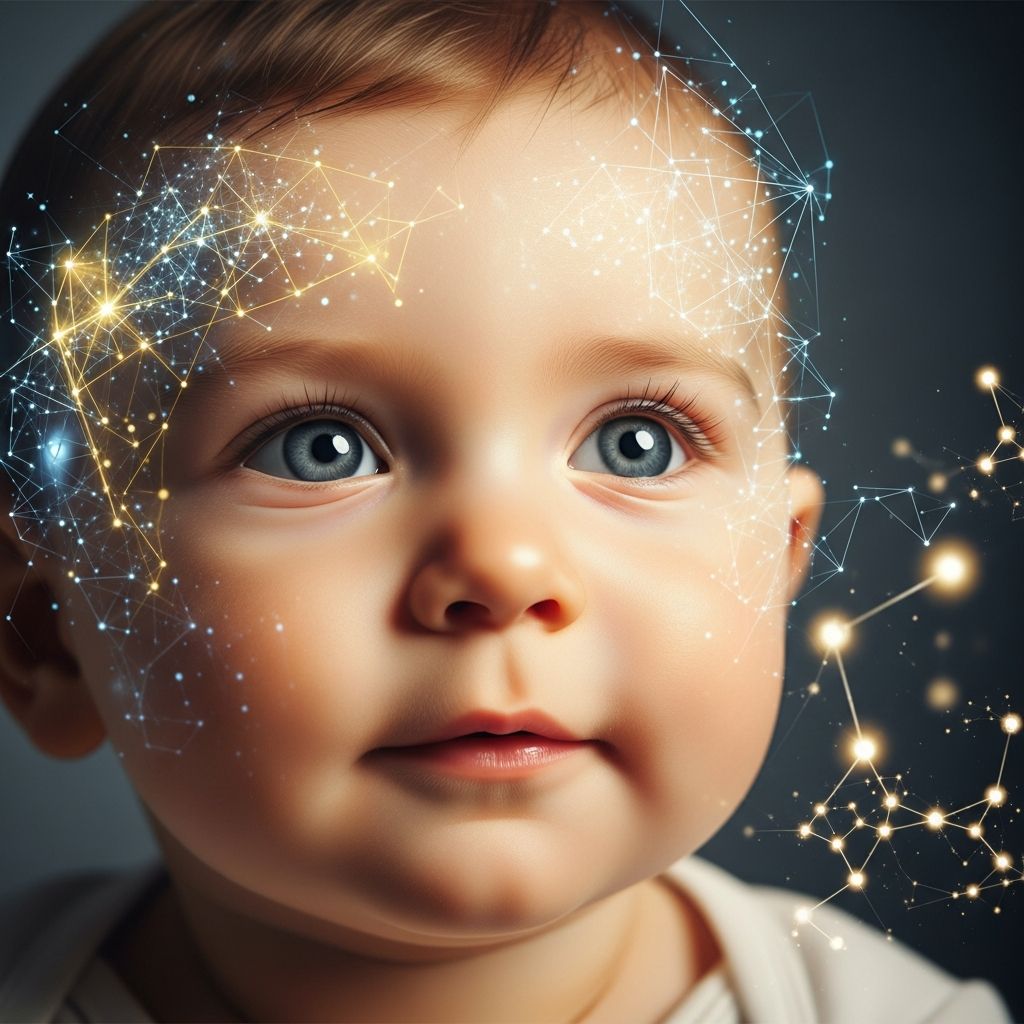
Modern cognitive science has overturned long-held assumptions about infant minds, demonstrating that babies engage in sophisticated reasoning from their earliest days. Far from being blank slates, infants actively hypothesize, test ideas, and learn through observation, often surpassing adults in flexibility and openness to new evidence.
The Myth of Infant Irrationality
Traditional views, influenced by pioneers like Jean Piaget, portrayed babies as illogical and self-centered, incapable of grasping others’ perspectives or basic causality. However, advancements in research techniques—such as eye-tracking and statistical analysis of looking times—reveal a different reality. Babies possess innate knowledge about physics, psychology, and language, deploying learning strategies akin to those of professional scientists.
Alison Gopnik, a leading researcher at UC Berkeley, argues that children’s brains are wired for rapid adaptation. By age three, a child’s brain boasts twice the neural activity of an adult’s, with up to 15,000 synapses per neuron, enabling unparalleled learning capacity. This neural exuberance fuels their ability to form and revise theories about the world.
Mastering Statistics in the Crib
One of the most striking discoveries is infants’ grasp of probability and sampling. Eight-month-olds can infer population characteristics from small samples, showing surprise at improbable outcomes. In a classic experiment, babies viewed a box with 80% white ping-pong balls and 20% red. They looked longer—indicating astonishment—when four red balls were drawn instead of the expected four white ones, proving they understand statistical norms.
Similarly, 11-month-olds predict event likelihoods based on environmental patterns. When shown a box mostly filled with red balls, they react with extended gazes if white balls dominate the draw, highlighting their intuitive Bayesian reasoning. These skills emerge without explicit teaching, underscoring babies’ role as natural statisticians.
Unraveling Cause and Effect
Babies don’t just observe; they experiment. From birth, they test hypotheses about the world, distinguishing patterns and causality. Studies show toddlers use evidence to discern mechanisms, sometimes outperforming adults. Four-year-olds excelled at identifying an unusual machine’s operation—requiring two blocks simultaneously—where adults clung to preconceptions.
- Infants evaluate similarities and differences constantly, forming predictions.
- They develop abstract theories of causation, like linking actions to outcomes.
- Young children revise beliefs based on new data, mimicking scientific methods.
This experimental mindset peaks in early childhood, when openness trumps bias.
Social Cognition: Empathy from the Start
Infants display early empathy and perspective-taking. At 18 months, toddlers understand differing preferences, offering others their favored item over their own—a foundation for social intelligence. Even 14-month-olds show rudimentary other-regard, though full perspective shifts develop later.
Newborns mimic facial expressions, signaling innate social wiring. They track faces, recognize caregivers, and infer intentions, building coherent people theories. By toddlerhood, they solve relational analogies, like predicting a wizard’s spell enlarges a toy, acing tasks akin to IQ tests.
Abstract Thinking in Tiny Minds
Contrary to the notion of concrete-only thought, babies handle abstractions effortlessly. Three-year-olds navigate proportional analogies, grasping ‘small to large’ transformations across contexts. They form implicit theories about objects, living things, and numbers, predicting behaviors with precision.
| Age Group | Cognitive Skill | Example Evidence |
|---|---|---|
| 0-8 months | Statistical inference | Ping-pong ball sampling surprise |
| 8-14 months | Causal prediction | Machine block experiments |
| 14-18 months | Perspective-taking | Preference sharing tasks |
| 3+ years | Analogical reasoning | Wizard transformation tests |
This table summarizes developmental milestones, showing progressive complexity.
Language and Babbling as Intelligence Indicators
Babbling isn’t mere noise; it’s a predictor of lifelong cognition. A 2025 CU Boulder study of over 1,000 twins linked 7-month babbling complexity to cognitive scores at age 30, via PNAS publication. Diverse sounds correlate with stronger executive function and IQ, offering early intervention windows.
Infants implicitly learn language rules, discerning grammar and phonemes rapidly. Their vocal play reflects hypothesis-testing, much like physical exploration.
Neural Foundations of Baby Genius
Early brains are hyper-connected, fostering creativity and adaptability. Toddlers entertain wild possibilities adults dismiss, enabling innovative play and problem-solving. This ‘wide-open’ state explains their distractibility but also genius for novelty.
Gopnik likens babies to scientists: curious, evidence-driven, intolerant of boredom. They prioritize patterns, predict outcomes, and update models dynamically.
Implications for Parents and Educators
Recognizing infant smarts shifts parenting. Provide rich environments for exploration—safe toys, conversations, nature exposure—to fuel their inner scientist. Avoid over-structuring; let curiosity lead.
Early education should emphasize play-based learning, leveraging neural plasticity. Policies supporting quality childcare amplify these gains, as seen in National Academy of Medicine reports.
Challenges in Studying Infant Minds
Measuring baby intelligence relies on indirect methods like gaze duration, which are reliable but nuanced. Ethical constraints limit invasive techniques, yet innovations continue unveiling depths.
Cross-cultural variations and individual differences add layers, but consensus affirms early competence.
Frequently Asked Questions
How early do babies show statistical understanding?
As young as 8 months, infants detect improbable sampling events, like skewed ball draws.
Can toddlers outperform adults cognitively?
Yes, four-year-olds better grasp novel causal rules, unhindered by adult biases.
What does babbling predict?
Babbling variety at 7 months forecasts cognitive ability into adulthood.
Are babies natural empathizers?
From 18 months, they recognize differing preferences, aiding social bonds.
How can parents nurture this intelligence?
Encourage free play, talk descriptively, and expose to varied stimuli.
The Future of Cognitive Development Research
Ongoing studies, including AI modeling of infant learning, promise deeper insights. As techniques evolve, we’ll refine support for these miniature geniuses, ensuring their brilliance flourishes.
References
- Infants and Young Children Are Smarter Than We Think — Psychology Today. 2020-04-01. https://www.psychologytoday.com/us/blog/great-kids-great-parents/202004/infants-and-young-children-are-smarter-we-think
- Babies are smarter than you think — Association for Psychological Science. N/A. https://www.psychologicalscience.org/news/babies-are-smarter-than-you-think.html
- In the new science of children’s minds, babies are smarter than adults — UC Berkeley News. 1999-08-10. https://newsarchive.berkeley.edu/news/media/releases/99legacy/8-10-1999.html
- Scientists from the Start: Babies Are More Thoughtful, More Analytical than You’d Ever Imagine — The 74. N/A. https://www.the74million.org/zero2eight/scientists-from-the-start-babies-are-more-thoughtful-more-analytical-than-youd-ever-imagine/
- Eight Facts That Show Babies are Smarter Than You Thought! — New America. N/A. https://www.newamerica.org/insights/eight-facts-babies/
- What does a baby’s babbling tell you about future intelligence? More than you think — University of Colorado Boulder. 2025-06-16. https://www.colorado.edu/today/2025/06/16/what-does-babys-babbling-tell-you-about-future-intelligence-more-you-think
Similar Articles







Read full bio of Sneha Tete