Depth Perception in Babies: 3-7 Months Guide
Unlock the fascinating journey of how babies gain depth perception between 3-7 months, with tips to nurture their visual growth.
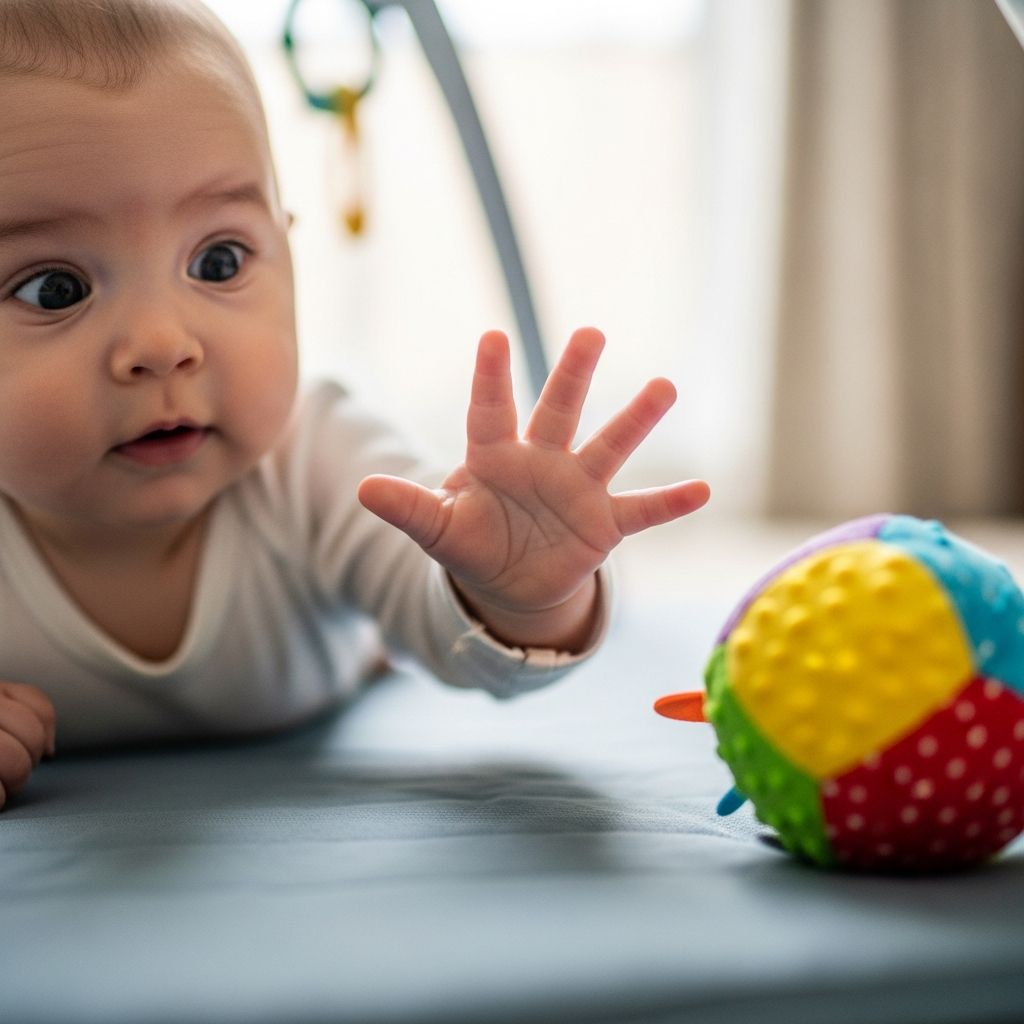
Between 3 and 7 months, infants experience a remarkable surge in visual abilities, particularly in developing
depth perception
, which allows them to judge distances and perceive the world in three dimensions. This period marks a transition from blurry, limited sight to coordinated, colorful vision that supports exploration and interaction.Foundational Visual Skills Before Depth Emerges
Prior to 3 months, newborns possess rudimentary vision, focusing best at 8-12 inches, the typical distance to a caregiver’s face during feeding. Their eyes may wander or appear crossed as coordination strengthens, and they respond to light and high-contrast patterns.
By 1-3 months, babies improve focus up to 12 inches, track moving objects up to 90 degrees, and begin distinguishing primary colors like red and blue. They stare at faces and black-and-white images, laying groundwork for advanced perception.
- Track slow-moving objects smoothly.
- Recognize familiar faces close up.
- Develop initial tears and blink responses.
The Dawn of Depth Perception: 4-6 Months
Around 4 months,
binocular vision
activates, where both eyes team up to create a 3D view, enabling true depth perception. Babies now reach accurately for objects, judge distances, and show full color vision, favoring vibrant hues.This stage coincides with enhanced eye-hand coordination. Infants grasp toys, examine their hands, and respond to mirrors by touching their reflection. Head turns follow distant sights, expanding their visual field.
| Milestone | Description | Activities to Support |
|---|---|---|
| Binocular Fusion | Eyes align for 3D depth | Mobiles at varying distances |
| Color Mastery | Sees full spectrum | Colorful rattles and blocks |
| Reaching Accuracy | Grasps nearby items | Tummy time with toys |
Depth perception isn’t innate; it matures as the visual cortex processes overlapping images from each eye, a process called stereopsis.
Refining Vision: 5-7 Months Peak
By 5-7 months, vision nears maturity. Babies see small details from feet away, track fast objects, and exhibit independent eye movements. Depth perception solidifies, aiding crawling toward distant toys and peek-a-boo play.
Visual memory emerges, recognizing objects afar, while eye-body coordination supports rolling, sitting, and precise grabs using thumb-finger pincer grip precursors.
- Turns head to scan rooms.
- Favors complex patterns.
- Plays interactive games like pat-a-cake.
At 7 months, most infants achieve adult-like acuity, though fine-tuning continues.
Activities to Boost Visual Development
Parents play a crucial role in stimulating these skills through everyday play.
Daily Routines for Eye Strength
- Tummy Time: Strengthens neck and eye muscles; place contrasting toys 10-20 inches away.
- Mobile Gazing: Hang rotating items at 12-18 inches to encourage tracking and depth judgment.
- Face Time: Interact at varying distances to build recognition and focus shifting.
Hands-On Toys and Games
Introduce soft blocks, textured balls, and mirrors. Roll balls to promote tracking; hide toys partially for depth practice. Crawling encouragement hones full-body coordination.
Avoid overstimulation; dim lights suit sensitive eyes, and pastels are less visible than bold colors.
Signs of Healthy Progress vs. Concerns
Monitor for smooth tracking, equal pupil response, and interest in surroundings. By 6 months, eyes should align consistently.
Red flags include persistent crossing, no tracking by 3 months, or lack of reaching. Consult pediatricians or optometrists early, as timely intervention prevents issues like amblyopia.
| Normal at 3-7 Months | Potential Concern |
|---|---|
| Tracks moving toys | Eyes constantly misaligned |
| Reaches for objects | No grasping attempts |
| Sees colors, depths | Only stares blankly |
Science Behind Infant Vision Maturation
The visual system develops rapidly post-birth. Fovea—the high-acuity retinal center—matures around 6 months, enabling sharp central vision. Myelinization speeds neural signals, while brain plasticity refines stereopsis.
Studies show crawling infants outperform early walkers in binocular skills, underscoring movement’s role. Genetic and environmental factors interplay; nutrition like DHA supports retinal health.
Long-Term Impact of Early Visual Growth
Strong 3-7 month vision foundations predict motor, cognitive, and social milestones. Depth perception aids safe mobility, while coordination fosters learning. Deficits can cascade, affecting reading or sports later.
By 12 months, babies judge distances for throwing and walking, setting stages for preschool visual demands like shape recognition.
Frequently Asked Questions (FAQs)
At what age does depth perception fully develop in babies?
Around 5-7 months, as binocular vision matures, though refinement continues to age 2.
How can I test my baby’s depth perception at home?
Use the visual cliff experiment safely: place a patterned surface under glass at varying ‘depths.’ Healthy babies avoid perceived drops by 6 months.
Is it normal for my 4-month-old’s eyes to cross sometimes?
Occasional crossing is common until 4-6 months as coordination improves; constant turning warrants a check.
What toys best support 3-7 month visual skills?
Boldly colored, textured mobiles, blocks, and mirrors at 8-24 inches promote tracking, reaching, and depth.
When should I see a doctor for vision concerns?
If no tracking by 3 months, unequal eye movement by 6 months, or disinterest in visuals; early screening is key.
Nutrition and Environment for Optimal Vision
Lutein-rich veggies (post-6 months) and omega-3s from breast milk aid retinal development. Limit screen time; prioritize natural light and interactive play for holistic growth.
This phase transforms passive observers into active explorers, profoundly shaping brain architecture through visual input.
References
- From Newborn to Toddler: Key Stages of Baby Vision Development — Denver Youth Vision. 2023. https://denveryouthvision.com/from-newborn-to-toddler-key-stages-of-baby-vision-development/
- Vision Development and Milestones — Optometrists.org. 2024-01-15. https://www.optometrists.org/childrens-vision/guide-to-visual-development/guide-to-vision-development/
- Parents’ Guide to Baby’s Vision Development — Pathways.org. 2023-05-20. https://pathways.org/videos/parents-guide-babys-vision-development
- What Can My Baby See? — BayCare. 2024. https://baycare.org/wellness-resources/children/infants-3-to-7-months/month-3/what-can-my-baby-see
- Infant Vision: Birth to 24 Months of Age — American Optometric Association (AOA). 2023-11-01. https://www.aoa.org/healthy-eyes/eye-health-for-life/infant-vision
- Infant Vision Birth to One Year — Nationwide Children’s Hospital. 2024. https://www.nationwidechildrens.org/family-resources-education/health-wellness-and-safety-resources/helping-hands/infant-vision-birth-to-one-year
Similar Articles







Read full bio of medha deb