Baby’s First Grasps: Hand Skills at 1-4 Months
Discover how your 1-4 month old builds essential grasping skills with toys, boosting motor growth and sensory play.
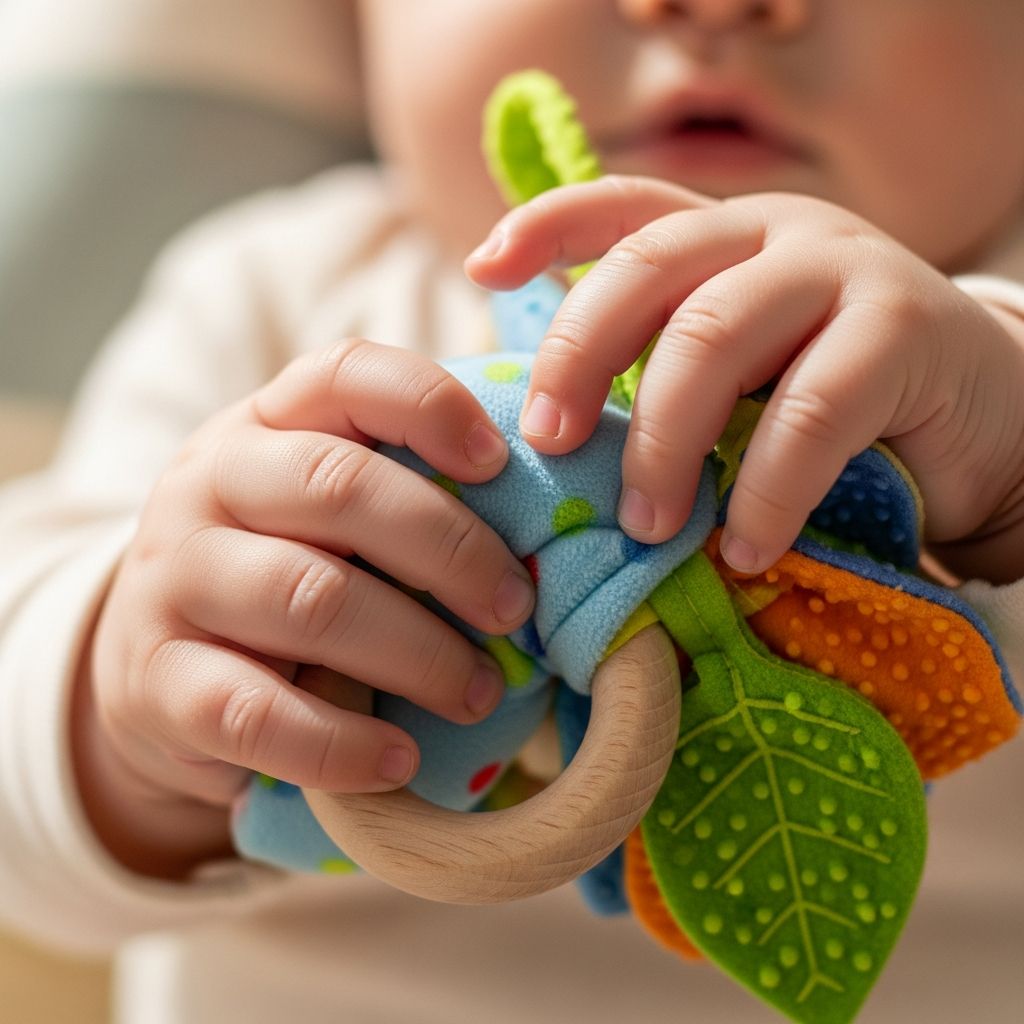
During the first four months of life, infants transition from instinctive reflexes to purposeful movements, particularly in their hands. This period marks the emergence of grasping and shaking actions with toys, laying the foundation for fine motor skills. Parents often witness tiny fingers curling around objects, a sign of burgeoning coordination between vision, touch, and muscle control.
Understanding Early Hand Movements in Newborns
In the initial weeks, a baby’s hands operate primarily on reflexes. The palmar grasp reflex causes fingers to tightly close around anything that brushes the palm, such as a parent’s finger. This automatic response ensures survival by promoting close contact. By 1-3 months, these reflexes begin to fade as voluntary control develops. Babies start opening and closing their hands intentionally, exploring their own fingers and bringing them to the mouth for tactile investigation.
Physical growth supports this evolution. Infants gain about 1.5 to 2 pounds and 1 inch in height monthly, with head circumference increasing by 0.5 inches. Stronger neck muscles allow head lifting when prone, freeing arms for swatting at dangling objects. Active leg movements accompany hand play, indicating whole-body integration.
Key Milestones: From Reflex to Reach
Hand development progresses predictably, though individual rates vary. Here’s a breakdown of typical achievements:
- 1 Month: Hands mostly fisted; brief head lifts when tummy time; alerts to sounds and tracks objects past midline.
- 2 Months: Opens/closes hands; holds and drops rattles briefly; follows faces and lights; social smiles emerge.
- 3 Months: Raises head and chest on tummy; bats at hanging toys; brings objects to mouth; distinguishes colors.
- 4 Months: Grasps rattles firmly and shakes them; rolls front to back; laughs; orients to voices.
These milestones reflect maturing neural pathways. By 4 months, most babies reach with one hand and transfer objects, showing improved dexterity. Pediatricians track progress on growth charts during checkups, ensuring consistent patterns.
The Role of Toys in Hand Development
Simple toys like soft rattles, textured rings, and hanging mobiles stimulate grasping. Shaking a rattle produces sounds that captivate, encouraging repeated motions. This sensory feedback loop—see object, grasp, shake, hear noise—strengthens hand-eye coordination. Babies prefer high-contrast patterns and faces, which draw visual focus to nearby items (8-12 inches away).
Toys should be lightweight, graspable (1-2 inches wide), and free of small parts. Examples include:
| Toy Type | Benefits | Age Suitability |
|---|---|---|
| Soft Rattle | Grasping, shaking, auditory stimulation | 2-4 months |
| Textured Ring | Tactile exploration, mouth play | 1-3 months |
| Hanging Mobile | Batting, tracking, visual development | 1-4 months |
| Crib Mirror | Face recognition, self-awareness | 2-4 months |
Introduce toys during alert periods, like after feeding. Place them within reach during tummy time to promote reaching.
Sensory Integration: Hands, Eyes, and Ears
Grasping isn’t isolated; it intertwines with other senses. Vision sharpens: by 3 months, babies follow moving objects and spot familiar faces afar. Hearing milestones include cooing, imitating vowel sounds, and rhythmic movements to voices. Touch via toys builds body awareness—babies look at hands, suck thumbs, and mouth objects for texture analysis.
Social cues amplify this: babies smile responsively, recognize parents’ voices, and coo during interactions. Cries differentiate by need (hunger vs. fatigue), signaling communication growth.
Daily Activities to Boost Grasping Skills
Parents play a pivotal role. Engage in these evidence-based activities:
- Face-to-face play: Hold baby upright, make eye contact, and gently shake a rattle near their hands.
- Tummy time: 3-5 minutes several times daily; dangle toys to encourage lifting and swatting.
- Singing and talking: Use animated voices while offering graspable toys; repeat sounds to mimic coos.
- Sound variety: Expose to wind chimes, music boxes, or ticking clocks alongside toys.
- Gentle massage: Stroke palms to relax fists and promote opening.
Aim for 20-30 minutes of interactive play daily. Supervise closely to prevent choking hazards.
Physical Growth and Its Impact on Hands
Rapid changes underpin hand skills. Neck strength improves: from head bobbing at 1 month to steady support by 3-4 months. Gross motor advances like rolling (4 months) pair with fine skills like rattle grasping. Consistent weight gain ensures energy for exploration; track via pediatric visits.
When to Consult a Pediatrician
Most babies hit milestones within windows, but delays warrant attention. Red flags by 4 months:
- No hand opening or rattle holding.
- Doesn’t track objects or smile socially.
- Persistent tight fisting or no tummy lifts.
- No cooing or voice response.
Early intervention via programs like CDC’s ‘Learn the Signs. Act Early’ can address issues.
Common Parental Questions Answered
Is tummy time essential for hand skills?
Yes, it strengthens neck/shoulders, enabling arm reaches. Start short sessions on a firm surface.
What if my baby doesn’t grasp toys yet?
Variations are normal; by 4 months, most do. Monitor and discuss at checkups.
Are store-bought toys necessary?
No—safe household items like soft scarves work. Prioritize supervision.
How does grasping aid later development?
It builds toward pincer grasp (9 months), self-feeding, and tool use.
Can screen time replace toy play?
No; hands-on interaction is superior for motor/sensory growth.
Safe Play Environments for Tiny Hands
Create baby-proof zones: no loose strings, ensure toys BPA-free. Rotate items to maintain interest. Back-to-sleep for naps, tummy time when awake. Nutrition via breastmilk/formula fuels brain/muscle growth.
By 4 months, shaking toys becomes a favorite, signaling joy and control mastery. Celebrate these steps—they predict confident explorers ahead.
References
- 1- to 3-Month-Old Developmental Milestones — CHOC Children’s. Accessed 2026. https://choc.org/ages-stages/1-to-3-months/
- Developmental Milestones: Birth to 5 years! — Stanford Medicine Pediatrics Clerkship. Accessed 2026. https://med.stanford.edu/content/dam/sm/pediatricsclerkship/documents/5-Developmental-Milestones-MedU.pdf
- Developmental Milestones: 1 Month — HealthyChildren.org (American Academy of Pediatrics). Accessed 2026. https://www.healthychildren.org/English/ages-stages/baby/Pages/Developmental-Milestones-1-Month.aspx
- Infant development: Birth to 3 months — Mayo Clinic. 2023-10-12. https://www.mayoclinic.org/healthy-lifestyle/infant-and-toddler-health/in-depth/infant-development/art-20048012
- Baby Developmental Milestones By Month — Cleveland Clinic. Accessed 2026. https://my.clevelandclinic.org/health/articles/22063-baby-development-milestones-safety
- Developmental Milestones for Infants — Ages & Stages Questionnaires (ASQ). Accessed 2026. https://agesandstages.com/developmental-milestones-articles/developmental-milestones-for-infants/
- Developmental milestones birth to 6 months — Children’s Minnesota. Accessed 2026. https://www.childrensmn.org/educationmaterials/childrensmn/article/15316/developmental-milestones-birth-to-6-months/
Similar Articles







Read full bio of Sneha Tete