Baby Hand-to-Mouth Discovery: 1-3 Months Milestones
Unlock the significance of your 1-3 month old baby's hand-to-mouth exploration in early motor, sensory, and cognitive growth.
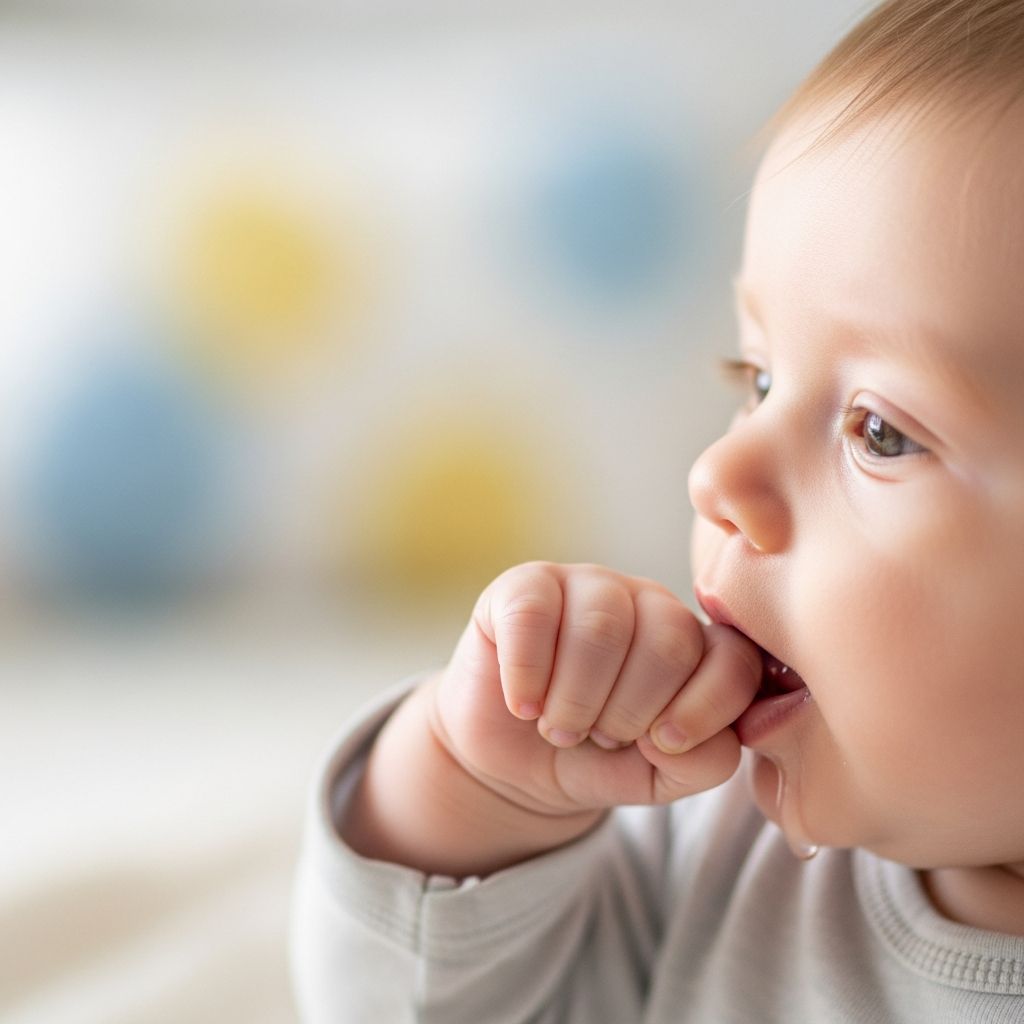
In the first three months of life, infants embark on a fascinating journey of self-discovery, with one of the most noticeable behaviors being bringing hands to the mouth. This action marks a critical step in motor control, sensory integration, and even early learning. Far from random, it reflects maturing neural pathways and muscle strength, helping babies explore their bodies and the world around them.
Understanding the Hand-to-Mouth Phase in Newborns
During the 1-3 month period, babies’ hands transition from tightly clenched fists to more open and purposeful movements. Initially dominated by reflexes like the mouthing and rooting responses, this phase evolves into voluntary actions. By around 3 months, most infants can bring their hands together at the midline of their body and guide them toward their mouth, a milestone that enhances hand-eye coordination and oral sensory feedback.
This behavior serves multiple purposes: it satisfies innate sucking needs, aids in soothing self-regulation, and introduces tactile sensations. As neck muscles strengthen, babies lift their heads briefly during tummy time, pairing upper body control with arm movements. Leg kicking and arm waving also intensify, creating a full-body symphony of emerging skills.
Key Motor Skill Milestones from 1 to 3 Months
Motor development accelerates rapidly in these early weeks. Here’s a breakdown of what parents can expect:
- Month 1: Hands mostly fisted; reflexive grasping when palm is stroked. Babies turn heads side-to-side on tummy and respond to sounds with subtle movements.
- Month 2: Hands begin opening and closing; brief head lifts during prone position. Arm swings may accidentally contact dangling toys.
- Month 3: Hands meet at chest; deliberate hand-to-mouth bringing. Rattles are swiped at, and babies push down on legs when feet touch a surface.
These milestones build foundational gross and fine motor abilities, setting the stage for reaching and grasping in later months.
Sensory and Cognitive Advances Tied to Hand Exploration
Hand-to-mouth actions are deeply intertwined with sensory processing. Infants start tracking moving objects with their eyes, following lights or faces up to 8-12 inches away. They recognize familiar voices, smiling socially by 2 months and cooing in response.
| Age | Sensory Milestone | Related Hand Behavior |
|---|---|---|
| 1 Month | Prefers faces and patterns; quiets to familiar voices | Reflexive mouthing of hands |
| 2 Months | Tracks objects smoothly; smiles at smiles | Hands open; bats at toys |
| 3 Months | Distinguishes colors; turns toward sounds | Brings hands/objects to mouth intentionally |
Cognitively, this period fosters awareness of one’s body. Babies ‘discover’ their hands, staring at them in fascination, which boosts visual-motor integration.
Why Hand-to-Mouth Matters for Overall Growth
This milestone is a gateway to advanced skills. Mouthing provides proprioceptive input—awareness of body position—crucial for balance and coordination. It also refines oral motor control, preparing for feeding transitions and speech sounds like babbling.
Research from pediatric authorities highlights that consistent hand exploration correlates with stronger neural connections in the brain’s motor cortex. Delays here might signal needs for early intervention, emphasizing the importance of monitoring.
Daily Activities to Encourage Healthy Development
Parents play a pivotal role in nurturing these skills. Simple, engaging interactions yield big results:
- Position baby tummy-down on a firm surface 3-5 times daily for 1-3 minutes, gradually increasing as head control improves. Use a mirror or black-and-white patterns to captivate attention.
- Dangle safe, lightweight toys like soft rattles 8-10 inches from baby’s face to prompt batting and reaching.
- During face-to-face play, mimic expressions and narrate actions: ‘Look at your busy hands!’ Sing lullabies or gentle tunes to pair sounds with movements.
- Offer varied tactile experiences: stroke backs of hands to encourage opening, or let baby pat your face.
- Maintain skin-to-skin contact during feeds or cuddles to stimulate arm movements and bonding.
Incorporate these into routines like diaper changes or baths for natural integration. Track progress weekly to celebrate small victories.
Feeding Patterns and Self-Soothing Connections
Hand-to-mouth often signals hunger—rooting reflex activates when cheeks or hands are touched. Breastfed babies nurse 8-12 times daily; formula-fed ones space to 3-4 hours with 4-6 ounces per feed by 3 months.
As reflexes wane, voluntary sucking on hands becomes a self-soothing tool, helping babies manage fussiness. This promotes emotional regulation and sleep consolidation.
Red Flags: When to Reach Out to Your Pediatrician
While variations are normal, certain signs warrant professional evaluation by the 3-month checkup:
- Hands remain persistently fisted with stiff legs.
- No head lifting or turning during tummy time.
- Lack of eye contact, object tracking, or response to sounds/voices.
- Absence of social smiling or calming with holding/rocking.
- Feeding difficulties, like poor latching or excessive milk loss.
- No cries signaling needs or excessive irritability without response.
Early detection via tools like CDC milestones ensures timely support. Consult your doctor promptly if concerned.
Frequently Asked Questions (FAQs)
Is hand-to-mouth a hunger cue at 1-3 months?
Yes, it often indicates hunger alongside rooting or lip-smacking, but also serves exploration and soothing purposes.
How can I help my baby open their fists?
Gently stroke the back of hands, uncurl fingers softly, or rub palms together during playtime.
When do babies start batting at toys?
Around 2-3 months, as hands open and vision sharpens for better tracking.
Should I worry if my 3-month-old doesn’t bring hands to mouth yet?
Monitor alongside other milestones; consult pediatrician if no progress or other delays appear.
How much tummy time is ideal daily?
Start with 3-5 short sessions totaling 15-30 minutes, supervised on a safe surface.
Long-Term Benefits of Early Hand Skills
Mastering hand-to-mouth paves the way for pincer grasp by 9-12 months, tool use, and eventual fine motor tasks like writing. It enhances problem-solving as babies experiment with cause-effect, like shaking a rattle for sound.
Parental involvement amplifies outcomes: responsive caregiving strengthens attachment, boosting confidence for future independence.
By 4-6 months, expect reaching with both hands, transferring objects, and prolonged mouthing of safe toys—extensions of these foundational months.
References
- 1-3 Months Old Baby Development — CHOC Children’s. Accessed 2026. https://choc.org/ages-stages/1-to-3-months/
- Infant development: Birth to 3 months — Mayo Clinic. 2023-10-12. https://www.mayoclinic.org/healthy-lifestyle/infant-and-toddler-health/in-depth/infant-development/art-20048012
- Developmental Milestones: 3 Months — HealthyChildren.org (American Academy of Pediatrics). 2023-05-01. https://www.healthychildren.org/English/ages-stages/baby/Pages/Developmental-Milestones-3-Months.aspx
- Milestones by 2 Months — Centers for Disease Control and Prevention (CDC). 2024-11-15. https://www.cdc.gov/act-early/milestones/2-months.html
- Developmental Milestones: 0 to 6 Months — Nationwide Children’s Hospital. 2024-02-20. https://www.nationwidechildrens.org/family-resources-education/health-wellness-and-safety-resources/helping-hands/developmental-milestones-0-to-6-months
- Child Developmental Milestones for Infants (Months 1-3) — OCOEE Pediatrics. 2020-01-24. https://ocoeepeds.com/2020/01/24/child-developmental-milestones/
Similar Articles







Read full bio of Sneha Tete