Understanding Baby Social Smiling: Development & Parental Response
Learn how your baby develops social smiles and the crucial role you play in this developmental milestone.
The Foundation of Early Social Connection Through Smiling
One of the most rewarding moments in early parenthood arrives when your baby offers their first genuine smile directed at you. This pivotal developmental milestone marks far more than a cute expression—it represents a fundamental shift in how your infant communicates, connects with others, and begins to understand the social world around them. During the first three months of life, your baby undergoes remarkable transformations in their ability to recognize faces, process social cues, and respond to the people who care for them.
The emergence of intentional smiling during this period establishes the foundation for all future social relationships and emotional development. As your baby progresses from reflexive movements to purposeful facial expressions, they’re simultaneously developing the neural pathways that will support complex social interactions throughout their life. Understanding this developmental progression helps parents recognize important milestones while creating optimal conditions for their baby’s social growth.
Distinguishing Reflexive Movements From Intentional Social Expressions
In the earliest weeks of life, babies produce numerous facial expressions that may resemble smiles but operate quite differently from genuine social smiling. Between birth and approximately 5 to 8 weeks of age, your infant will display reflexive grins, grimaces, and other mouth movements that occur automatically without conscious intention. These primitive facial movements serve an important biological function—they help strengthen the facial muscles your baby will eventually use for intentional communication.
During the first month, parents often observe these reflexive smiles appearing randomly, sometimes in response to gas, feeding, or other bodily sensations rather than social engagement. Many parents mistake these early expressions for signs of recognition or joy, which understandably leads to excitement about their baby’s responsiveness. However, distinguishing between reflexive and intentional smiles is crucial for understanding your baby’s actual social development.
The transition from reflexive to intentional smiling marks a significant neurological shift. As your baby’s brain develops improved capacity for visual processing and social recognition, genuine social smiles begin to emerge around 6 to 8 weeks of age. These responsive smiles represent your baby’s first true attempts at deliberate communication and social engagement with caregivers. The smile becomes a tool for initiating and maintaining interaction rather than an involuntary physical response.
Vision Development and Its Role in Social Smile Emergence
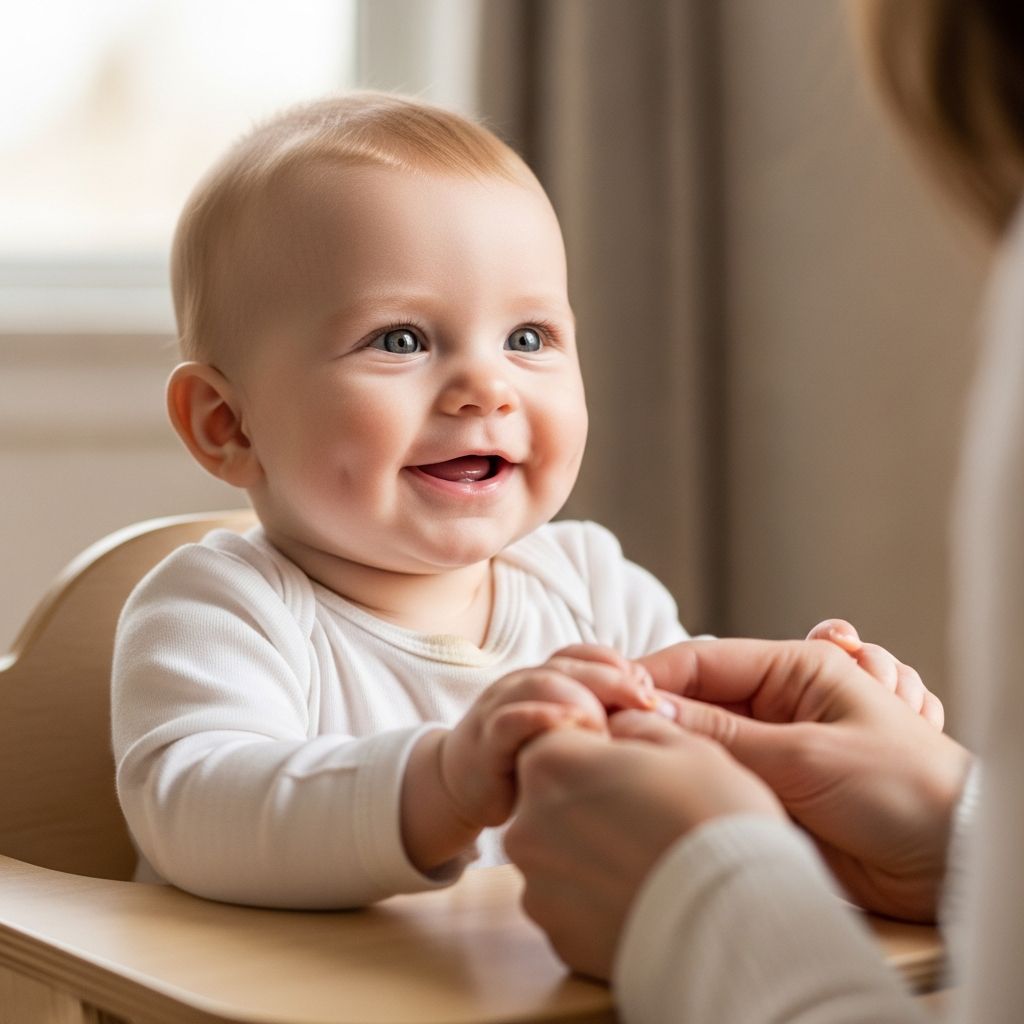
The development of your baby’s visual system directly enables the emergence of social smiling. During the first month of life, newborns possess limited visual focus and struggle to track moving objects or maintain sustained attention on faces. However, around 2 months of age, your baby’s visual capabilities undergo substantial improvement. The eyes begin focusing more effectively on faces and facial features, allowing your infant to distinguish between familiar and unfamiliar people with greater clarity.
This enhanced visual processing coincides precisely with the appearance of genuine social smiles. As your baby’s developing brain gains the ability to interpret and understand facial expressions, they simultaneously develop the motivation to respond to those expressions. When you smile at your baby, they can now clearly see your facial expression, interpret it as a friendly signal, and consciously respond with their own smile. This creates a meaningful exchange rather than a one-sided display of facial movement.
The maturation of visual acuity extends beyond simply seeing faces more clearly. Your baby’s brain begins processing the subtle nuances of human expressions—the eye narrowing that accompanies a genuine smile, the mouth shape, the overall facial configuration. This increasingly sophisticated visual understanding supports your baby’s ability to recognize different emotional expressions and respond appropriately to social cues from their caregivers.
The Timeline of Social Smile Development in Early Infancy
While all babies develop at their own pace, research identifies fairly consistent patterns in the emergence of social smiling during the first three months. Understanding this typical progression helps parents recognize when their baby is hitting expected developmental markers while remaining aware that variations are perfectly normal.
Six to Eight Weeks: The Emergence of Response
Around 6 weeks of age, your baby may begin displaying their first intentional, responsive smiles. At this stage, the smile typically appears in direct response to specific stimuli—hearing your voice, seeing your face, or receiving gentle physical affection. These early social smiles differ markedly from the reflexive grins of earlier weeks. Your baby is beginning to understand cause and effect: when you engage with them, they can respond with a smile.
These responsive smiles may appear somewhat tentative or brief, lacking the full-faced engagement of more developed smiles. You might notice that your baby’s mouth curves upward, but their eyes may not fully crinkle or their whole body may not participate in the expression. Nevertheless, these early responsive smiles represent genuine intentional communication and should be celebrated as an important developmental achievement.
Eight to Twelve Weeks: Strengthening Social Connection
By approximately 8 weeks (2 months), social smiling becomes more consistent and recognizable. Your baby’s smiles now last longer, appear more symmetrical, and involve greater engagement of the facial muscles. Around this same period, your baby may begin smiling in recognition of familiar people, understanding that certain individuals—especially parents—are special and worthy of social response.
During this phase, smiling becomes an important tool in your baby’s expanding communication repertoire. Where crying previously served as your baby’s primary method of expressing needs and gaining attention, smiling now offers an alternative avenue for connection. Your baby is beginning to discover the power of their smile in shaping your responses and maintaining social engagement.
Two to Three Months: Purposeful Social Engagement
Between 2 and 3 months of age, smiling transitions more fully into intentional social behavior. Your baby now smiles with clear purpose, typically in recognition of particular people who are important in their life. The smiles become noticeably more symmetrical, more prolonged, and involve the entire face—from the curving mouth to the crinkling eyes and overall facial muscles engaging in the expression.
During this period, you’ll observe that your baby’s smiles vary based on context and the person receiving the smile. A familiar caregiver might receive a broad, enthusiastic smile with accompanying sounds and body movement, while strangers may elicit only curious stares or fleeting, tentative smiles. This selectivity in smiling demonstrates your baby’s growing ability to differentiate between people in their environment and assign different levels of familiarity and trust to different individuals.
The Full-Body Participation in Your Baby’s Developing Smiles
As your baby’s social smiling matures, you’ll notice that their entire body becomes engaged in the expression. A genuine social smile in a 2 to 3-month-old involves far more than facial movement—the whole infant participates in the joyful expression. Their hands may open wide, their arms lift up, and their limbs move in rhythm with your voice and facial expressions. This full-body engagement signals your baby’s genuine pleasure and excitement at the social interaction.
This wholehearted participation in smiling serves important developmental purposes. It demonstrates your baby’s growing motor control and their ability to coordinate multiple body systems in service of social communication. Additionally, the enthusiastic physical response reinforces the positive feedback loop between parent and infant—your animated response to your baby’s broad smile and body engagement motivates your baby to continue engaging socially.
You may also notice that your baby’s facial movements mirror your own expressions, particularly if you stick out your tongue or make exaggerated facial gestures. This mirroring behavior reflects your baby’s innate capacity to learn through observation and imitation, and it creates a delightful interactive dance between caregiver and infant. The mirroring behavior also indicates that your baby is paying close attention to your face and finding your expressions worthy of mimicry.
Building Preference and Recognition in Early Social Relationships
During the first three months, your baby begins developing clear preferences regarding which people elicit their smiles and social engagement. Typically, parents receive the most enthusiastic and frequent smiles, representing your baby’s recognition of you as primary caregivers and the individuals most important in their daily life. Grandparents and familiar caregivers might receive smiles, though sometimes with a hesitant quality suggesting less immediate familiarity than parental smiles.
Strangers or unfamiliar people often receive only curious stares, minimal smiling, or no smiling at all. Rather than indicating an unfriendly temperament, this selective social behavior demonstrates healthy development. Your baby is learning to distinguish between different people in their environment and is developing appropriate wariness toward unknown individuals. This selectivity indicates that your baby’s memory and recognition abilities are developing normally.
Around 3 to 4 months of age, your baby’s interest in other children typically begins to increase. If your baby has older siblings, you’ll observe them beaming and responding to the sibling’s voice and attention. This emerging fascination with other children represents an expansion of your baby’s social world beyond their primary caregivers, laying the foundation for peer relationships that will become increasingly important as they grow.
Practical Strategies for Encouraging Social Smiling
While smiling develops naturally during this period, parents can create optimal conditions and actively encourage increased smiling through responsive interactions:
Employing Parentese and Gentle Vocalization
Research demonstrates that babies often produce their first social smiles in response to parentese—the gentle, lilting, sing-song voice that naturally emerges when adults interact with infants. This specialized form of speech combines musical elements, exaggerated intonation, and slower delivery with the content of your message. When you combine parentese with gentle physical touch and mutual gaze, you create ideal conditions for eliciting social smiles.
Rather than using standard adult speech patterns, consciously adopting a higher pitch, slower pace, and more exaggerated emotional expression supports your baby’s engagement and responsiveness. Your baby finds this particular style of communication inherently engaging and responsive to it with increased smiling and vocalization.
Integrating Social Interaction Into Daily Routines
Every daily activity offers opportunities to engage your baby socially and encourage smiling. During bathtime, diaper changes, and feedings—moments when you have your baby’s attention—create miniature games and songs that prompt interaction. For example, singing a descriptive song about the diaper-changing process or narrating your movements in a playful manner transforms routine caregiving into social engagement opportunities.
Pausing in the middle of an activity to smile at your baby and observe their response creates expectation and excitement. When your baby glances at you during these pauses, your enthusiastic smile and response reinforce that mutual gaze and smiling are rewarded with positive parental attention. Over time, your baby learns that engaging with you through eye contact and smiling maintains your positive attention and interaction.
Prioritizing Eye Contact and Facial Engagement
Sustained eye contact paired with smiling provides powerful social signals that support your baby’s development. When you maintain gentle eye contact while smiling at your baby, you’re communicating that they are worth your attention and worthy of connection. This nonverbal communication fosters bonding while simultaneously teaching your baby that eye contact and smiling facilitate positive social interaction.
Researchers find that babies who receive consistent responsive smiling and eye contact from caregivers develop superior social learning abilities. Your baby learns through these repeated interactions that smiling serves as a tool for maintaining social engagement and that their facial expressions influence your behavior and responses.
Mirroring and Responsive Imitation
When your baby attempts to mimic your facial expressions, enthusiastically mirror their efforts in return. If your baby purses their lips or attempts to stick out their tongue in imitation of you, exaggerate the expression while maintaining warm eye contact. This responsive imitation validates your baby’s attempts at communication and encourages continued social engagement.
The Developmental Significance of Early Social Smiling
The emergence of intentional social smiling during the first three months represents far more than a delightful behavioral milestone. These early smiles establish the foundation for your baby’s social and emotional development throughout their entire life. When you respond quickly and enthusiastically to your baby’s smiles and engage them in reciprocal social exchanges, you communicate three critical messages: that they are important to you, that they can depend on you to respond to their needs, and that they possess some degree of control and influence over their social world.
These early interactive exchanges create neural patterns in your baby’s developing brain that support healthy social-emotional development. Babies who experience responsive, engaging interactions with caregivers during this critical period develop stronger capacities for empathy, social understanding, and healthy relationship formation later in life. The smiles exchanged during these early months are quite literally building your baby’s brain architecture for social connection.
When Development Doesn’t Follow Expected Timelines
While the outlined timeline represents typical development, it’s important to remember that all babies develop at their own pace. If your baby hasn’t displayed clear social smiles by 2 to 3 months, there’s typically no cause for concern. Some babies simply take slightly longer to reach this milestone, and minor variations in timing remain entirely normal.
However, if your baby shows significant delays in social responsiveness, seems uninterested in faces, or demonstrates very limited facial expression by 3 months, discussing these observations with your pediatrician provides valuable perspective. Early intervention services can offer support if genuine developmental delays are identified, though most babies eventually reach smiling milestones even if they arrive somewhat later than average.
Frequently Asked Questions About Baby Social Smiling
Q: Is my newborn smiling or just passing gas?
A: In the first few weeks, most baby smiles are reflexive and unrelated to social engagement. True social smiles typically don’t emerge until around 6 to 8 weeks of age. Reflexive smiles often look lopsided or incomplete, while social smiles involve the entire face, including eye engagement, and usually occur in response to your voice, face, or touch.
Q: My baby smiles more at strangers than at me—is this normal?
A: This can vary widely between babies, though most babies eventually show preference for familiar caregivers. Some babies are naturally more indiscriminate in their smiling during the early months. By 3 to 4 months, selectivity typically increases, with familiar people receiving more enthusiastic smiles than strangers.
Q: How often should my 2-month-old be smiling?
A: Frequency varies considerably between babies and doesn’t correlate with health or development. Some babies smile frequently while others smile less often but just as intentionally. What matters more than frequency is that your baby demonstrates increasing responsiveness and selectivity in their smiling.
Q: Can I encourage smiling too much?
A: No, responsive engagement and encouragement of early smiling supports healthy development. Your baby benefits from frequent, warm social interaction. However, babies also need periods of rest and lower-stimulation interaction, so balance engaging playtime with quieter, calming moments.
Q: When does laughing develop?
A: While social smiling emerges around 6 to 8 weeks, genuine laughter typically develops later, usually between 4 to 6 months of age. Laughing represents a more advanced social-emotional response than smiling and emerges as your baby’s cognitive abilities continue maturing.
References
- Emotional & Social Development: Birth to 3 Months — American Academy of Pediatrics. Accessed February 2026. https://www.healthychildren.org/English/ages-stages/baby/Pages/Emotional-and-Social-Development-Birth-to-3-Months.aspx
- Smiling: When Will It Happen and How to Encourage It — Lovevery Blog. Accessed February 2026. https://blog.lovevery.com/skills-stages/smiling/
- Newborn Milestones 0–3 Months — Enfamil. Accessed February 2026. https://www.enfamil.com/articles/newborn-milestones-0-3-months/
- When Do Babies Start Smiling and Laughing? — Cleveland Clinic. Accessed February 2026. https://health.clevelandclinic.org/when-do-babies-start-laughing-smiling
- All About Your Baby’s Smile from 0 – 12 Months — Smile Wonders. Accessed February 2026. https://www.smilewonders.com/articles/all-about-your-babys-smile-from-0-12-months
Similar Articles





Read full bio of medha deb