
Lithuanian Girl Names: 20 Beautiful Choices With Meaning
Discover names that weave heritage, nature, and quiet strength into your daughter's identity.
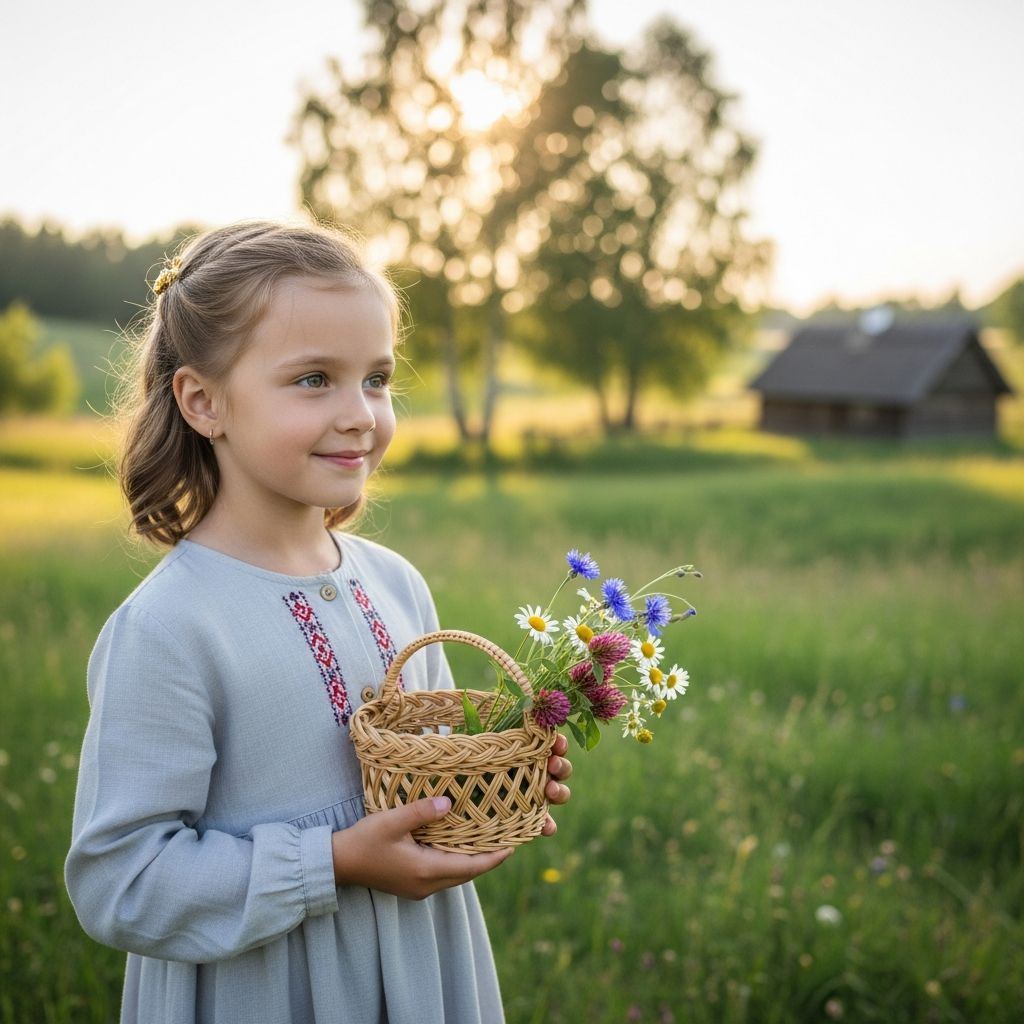
Lithuanian Girl Names: Timeless Charm
Lithuanian names for girls draw from a rich tapestry of ancient folklore, natural beauty, and resilient history. Rooted in one of Europe’s oldest living languages, these names often reflect the landscapes of forests, rivers, and skies that shape Lithuania’s identity. Parents seeking something distinctive yet grounded in tradition find Lithuanian options appealing for their melodic sounds and profound meanings. This guide offers a thoughtful selection, helping you connect with names that carry stories across generations.
The Essence of Lithuanian Naming Traditions
The Lithuanian language preserves Indo-European roots with minimal external influence, resulting in names that end predominantly in vowels like ‘a’ or ‘ė’ for girls. This linguistic purity links modern choices to pagan mythology, Christian saints, and everyday virtues. Names frequently evoke nature—think dawn, amber, or dew—or embody qualities like purity and strength. In family settings, these names foster a sense of belonging to the Baltic region, where folklore features goddesses of fate, fire, and bees. Selecting one can be a gentle nod to ancestry or simply an appreciation for evocative, uncommon sounds in a globalized world.
Many names trace back to pre-Christian times, blending with later Polish and Slavic influences due to historical unions. Today, they appear in vibrant communities worldwide, from Vilnius’s cobblestone streets to diaspora families. Their appeal lies in balance: familiar phonetics paired with rarity, making them versatile for international use.
Names Inspired by Nature and Seasons
Lithuania’s names often mirror its temperate climate and lush greenery, capturing fleeting moments like sunrise or summer warmth. These selections highlight that poetic connection.
- Aušra: Meaning ‘dawn,’ this name symbolizes new beginnings and the first light of day. Pronounced ‘OWSH-rah,’ it evokes hope and renewal, popular in Lithuania for its bright, optimistic vibe.
- Rasa: Translates to ‘dew,’ representing morning freshness and purity. With a soft ‘RAH-sah’ pronunciation, it’s a delicate choice for a gentle spirit.
- Smiltė: Derived from ‘sand,’ suggesting beach dunes and coastal serenity. Spoken as ‘SMIL-teh,’ it grounds a child in earth’s simple beauty.
- Saulė: The word for ‘sun,’ embodying warmth and life-giving energy. Pronounced ‘SOW-leh,’ it’s a radiant pick for a joyful personality.
- Miglė: Means ‘mist’ or ‘haze,’ inspired by foggy meadows. Its ‘MEE-glay’ sound adds a dreamy, ethereal layer.
These nature-themed names suit families who value environmental ties or seek soft, flowing syllables that age gracefully from playground to professional life.
Mythological and Folklore Treasures
Lithuanian mythology features powerful female deities, preserved in names that honor ancient beliefs. Passed down orally for centuries, these figures represent protection, love, and destiny.
- Austėja: The bee goddess, guardian of the household and fertility. Pronounced ‘ows-TAY-juh,’ it conveys industriousness and sweetness.
- Gabija: Fire deity, symbolizing hearth and purification. ‘GAH-bee-yuh’ rolls off the tongue with protective warmth.
- Laima: Fate goddess who weaves life’s threads. As ‘LYE-mah,’ it suggests good fortune and balance.
- Milda: Love and pleasure deity, akin to a Baltic Venus. ‘MEEL-dah’ offers a playful path to nickname Millie.
- Eglė: From the epic ‘Eglė the Queen of Serpents,’ meaning ‘spruce tree.’ Pronounced ‘EH-glay,’ it tells of bravery and nature’s secrets.
Choosing a mythological name immerses a child in storytelling heritage, sparking curiosity about legends where women wield elemental power.
Classic and Virtuous Choices
Some names emphasize moral qualities or historical depth, blending everyday grace with timeless appeal.
- Agnė: Rooted in purity, from Saint Agnes. ‘AHG-nay’ is crisp and saintly.
- Aldona: Borne by a 14th-century Lithuanian princess married to Poland’s king. Meaning uncertain but pagan-linked, pronounced ‘ahl-DOH-nah.’
- Audra: Stands for ‘storm,’ implying noble strength. ‘OW-drah’ has a dynamic, weather-inspired edge.
- Birutė: Grand Duke’s wife, symbolizing piety and leadership. ‘bee-ROO-teh’ carries regal weight.
- Daina: Means ‘song,’ celebrating music and poetry. ‘DYE-nah’ sings with creativity.
These virtuous names provide stability, often shortening to endearing nicknames like Audra to Audi or Daina to Dai.
Modern Favorites with Vintage Roots
Contemporary Lithuanian girls’ names revive old forms with fresh twists, topping charts while staying authentic.
- Gintarė: From ‘gintaras’ or amber, Lithuania’s golden fossil. ‘geen-TAH-ray’ glows with Baltic Sea treasure.
- Deimantė: ‘Diamond,’ for enduring sparkle. Pronounced ‘day-MAHN-tay,’ it’s luxurious yet approachable.
- Aistė: Inspired by white stork, a symbol of family. ‘EYS-teh’ brings migratory grace.
- Danutė: Diminutive of Dana, meaning ‘gift from God.’ ‘dah-NOO-teh’ feels cozy and blessed.
- Gražina: From ‘beautiful,’ popularized by epic poetry. ‘grah-ZHEE-nah’ exudes elegance.
These blend popularity in Lithuania with global rarity, ideal for parents wanting trend-aware yet heritage-rich options.
Adapting Lithuanian Names Worldwide
Beyond Lithuania, these names thrive in multicultural settings. Audra echoes Audrey, Rasa resembles Rosa, and Laima pairs with Layla. Pronunciation guides help: stress often falls on the first syllable, with ‘š’ as ‘sh’ and ‘č’ as ‘ch.’ Spelling variants like Ausra (without diacritics) ease paperwork. In the U.S. or U.K., they stand out without overwhelming, supported by growing interest in Eastern European roots—think celebrities like Pink tracing Baltic ancestry.
Consider nicknames for versatility: Eglė to Egly, Gabija to Gabi. Legal name changes are rare, but diacritic-free versions work for passports. Schools appreciate phonetic spellings, fostering confidence in a child’s unique identity.
Selecting the Perfect Name for Your Family
Begin by reflecting on values: nature, mythology, or virtue? Test sounds aloud with surnames—’Rasa Smith’ flows smoothly, ‘Gabija Jones’ adds rhythm. Consult family for heritage ties; Lithuanian-Americans might favor Birutė for grandmothers. Check initials for acronyms and future-proof for careers—melodic names like Aušra suit professionals.
Popularity data shows Aušra and Gabija leading, but rarer picks like Smiltė offer exclusivity. Pair with middle names: Aušra Rose or Laima Grace bridges cultures. Ultimately, choose what resonates emotionally, evoking the quiet strength of Baltic winds.
Frequently Asked Questions
Can Lithuanian names be easily pronounced in English-speaking countries?
Yes, most like Audra (‘OW-drah’) or Rasa (‘RAH-sah’) use familiar sounds, with simple guides preventing mispronunciations unique to Baltic phonetics like ‘ė’ as ‘eh.’
Are there Lithuanian names linked to specific patron saints?
Agnė ties to Saint Agnes for purity, while others like Liudvika connect to Saint Ludovica, blending Christian and pagan layers not detailed earlier.
How do Lithuanian names differ from Latvian or Polish ones?
Lithuanian favors vowel endings and nature motifs, distinct from Polish ‘a’-heavy forms or Latvian soft consonants, preserving unique Indo-European traits.
References
- Lithuanian Names For Girls — Nameberry. 2022-04-12. https://nameberry.com/userlist/view/190064
- 122 Inspiring Lithuanian Baby Names & Meanings — Peanut App. 2023-04-26. https://www.peanut-app.io/blog/lithuanian-baby-names
- Category:Lithuanian feminine given names — Wikipedia. Accessed 2026. https://en.wikipedia.org/wiki/Category:Lithuanian_feminine_given_names
Similar Articles








Read full bio of medha deb