
Popular Russian Surnames and Their Meanings
Discover heritage in every syllable: Surnames that whisper stories of strength and legacy.
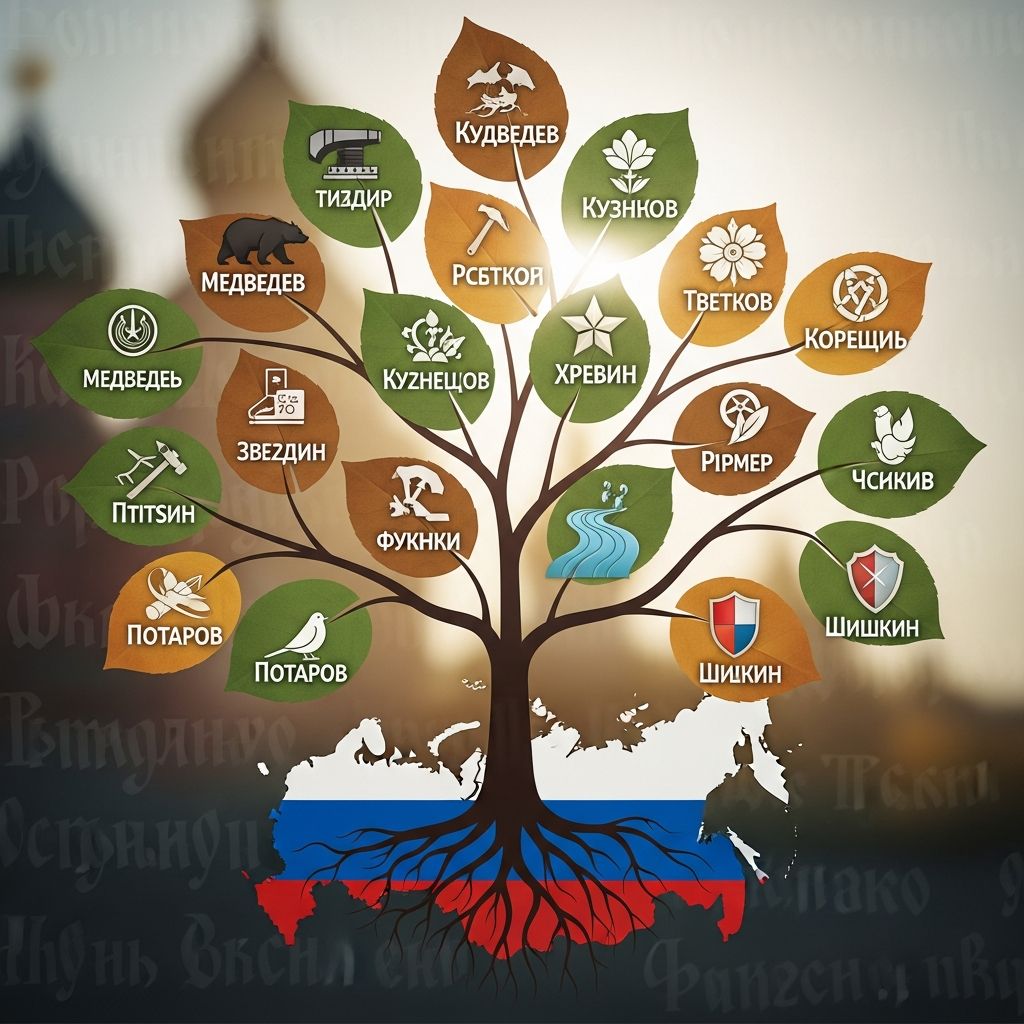
Russian surnames carry layers of history, often rooted in nature, occupations, personal traits, or family lineage. These names provide a window into Russia’s vast cultural landscape, blending Slavic traditions with influences from neighboring regions. For parents considering surnames as middle names, hyphenated options, or inspirations for first names, understanding their meanings can deepen the connection to ancestry.
The Roots of Russian Family Names
Most Russian surnames emerged in the 15th to 17th centuries, evolving from patronymics like ‘son of Ivan’ becoming Ivanov. They fall into categories: patronymic (from father’s name), occupational (like Kuznetsov for blacksmith), descriptive (Volkov for wolf-like), or locative (from places). This structure reflects a society where identity tied closely to role, appearance, or birthplace.
Patronymics dominate, with endings like -ov, -ev, -in for males and -ova, -eva, -ina for females, emphasizing lineage. Descriptive names draw from animals or plants, symbolizing admired qualities. Occupational ones highlight trades central to peasant life, while locatives point to geography, from rivers to hills.
Common Patronymic Surnames
These names trace directly to first names, forming the backbone of Russian nomenclature. Ivanov, meaning ‘son of Ivan,’ is ubiquitous, akin to Smith in English-speaking cultures.
- Ivanov/Ivanova: From Ivan (John), symbolizing ‘God is gracious.’ Widespread due to the popularity of Ivan among tsars and common folk.
- Petrov/Petrova: ‘Son of Peter,’ evoking ‘rock’ or steadfastness. Common in rural and urban families alike.
- Alekseev/Alekseeva: Derived from Alexei, meaning ‘defender.’ Linked to protective family roles.
- Dmitriev/Dmitrieva: From Dmitry, ‘devoted to Demeter,’ tied to earth and fertility.
- Semyonov/Semyonova: ‘Son of Semyon’ (Simon), implying ‘heard by God.’
- Vasiliev/Vasilieva: From Vasily, ‘royal’ or ‘kingly,’ suggesting noble bearing.
These surnames underscore the importance of paternal heritage, often passed unchanged for generations.
Surnames Inspired by Nature and Animals
Nature-themed names poetically capture Russia’s landscapes, from Siberian wolves to steppe hares. They were nicknames turned hereditary, ideal for evoking resilience.
- Volkov/Volkova: ‘Wolf,’ for someone fierce or solitary. One of the most common, symbolizing cunning strength.
- Baranov/Baranova: ‘Ram,’ perhaps for gentle yet stubborn traits. Tied to pastoral life.
- Kozlov/Kozlova: ‘Goat,’ denoting agility or hill-dwelling ancestors.
- Zaitsev/Zaitseva: ‘Hare,’ implying speed or timidity.
- Sokolov/Sokolova: ‘Falcon,’ for keen vision or nobility. Highly prevalent.
- Golubev/Golubeva: ‘Dove,’ signifying peace.
- Lebedev/Lebedeva: ‘Swan,’ graceful and pure.
Animal surnames reflect folklore where creatures embodied human virtues, making them timeless for modern families.
Occupational and Trade-Based Surnames
Many Russians were artisans or farmers, so surnames like these honor vocational pride. They offer practical insights into ancestral professions.
- Kuznetsov/Kuznetsova: ‘Blacksmith,’ from kuznets, essential for tools and horseshoes.
- Popov/Popova: ‘Priest’ or ‘clergyman,’ from pop, reflecting Orthodox influence.
- Fedorov/Fedorova: ‘God’s gift,’ from Fyodor (Theodore).
- Komarov/Komarova: ‘Gnat’ or mosquito, possibly for someone pesky or from marshy areas.
These names highlight communal roles, resonating with parents valuing industrious heritage.
Descriptive and Nickname-Derived Surnames
Personal traits inspired vivid names, from colors to habits, adding character.
- Smirnov/Smirnova: ‘Quiet’ or ‘peaceful,’ for calm individuals.
- Belyayev/Belyaeva: ‘White’ or ‘blonde,’ descriptive of hair or complexion.
- Morozov/Morozova: ‘Frost,’ evoking winter resilience.
- Biryukov/Biryukova: ‘Wolf’ variant, for lone wolves.
- Baryshev/Barysheva: ‘Profit,’ for the wealthy or shrewd.
- Dolgopolov/Dolgopolova: ‘Long skirt,’ teasingly for clergy robes.
Such names personalize identity, perfect for storytelling in family lore.
Unique and Less Common Surnames
Rarer names offer distinction, often from dialects or specific locales.
- Bannikov/Bannikova: From bannik, bathhouse spirit or attendant.
- Batyaev/Batyaeva: ‘Father’ or ‘strong,’ with Mongol roots.
- Blokhin/Blokhina: ‘Flea,’ quirky nickname.
- Chugunov/Chugunova: Related to cast iron.
- Novikov/Novikova: ‘Newcomer,’ for settlers.
These provide fresh options amid common ones.
Cultural Significance in Modern Naming
Russian surnames influence global naming, especially in diaspora communities. Feminine forms maintain gender distinction, preserving tradition. For parents, they blend as middle names or inspire first names like Moroz for a winter baby. Pronunciation varies: stress often on second syllable, like Vo-LKOV.
In naming, consider heritage: Ivanov suits broad appeal, Volkov for bold spirits. Hyphenation allows dual surnames, honoring both parents.
Choosing a Russian Surname for Your Family
Start with ancestry research to match meanings to values. Test pronunciation for daily use. Variants like Bataev (Batyaev) offer flexibility. Popular ones like Ivanov ensure familiarity, rarer like Bannikov add uniqueness. Discuss flow with first names, e.g., Anna Volkov sounds melodic.
Embrace evolution: some adapt spellings abroad, but originals preserve authenticity.
Frequently Asked Questions
How do Russian surnames change for women?
Russian convention adds -ova, -eva, or -ina to masculine forms, e.g., Ivanov becomes Ivanova, reflecting marital or familial ties without altering core meaning.
Can Russian surnames be used as first names?
Yes, increasingly in creative naming; Volkov as a boy’s first name evokes wolf strength, while Morozova inspires feminine variants.
What if my ancestry mixes Russian with other cultures?
Hyphenate, like Ivanov-Smith, or choose descriptives like Sokolov for universal appeal across heritages.
Are there regional differences in surname popularity?
Yes, locative names like Donskoy cluster near the Don River, while animal themes prevail in rural Siberia.
References
- Russian-English Name Cross-Index — Doukhobor Heritage. N/A. https://doukhobor.org/russian-english-names/
- 100 Russian Last Names and Surnames — Parade. N/A. https://parade.com/1379876/kelseypelzer/russian-last-names/
- Some Russian Surnames and Their Meanings — YouTube (Ancestral video). N/A. https://www.youtube.com/watch?v=Cr4AXiv3_Do
- How Do Russian Names Work? A Detailed Guide — ICLS. N/A. https://www.icls.edu/blog/how-do-russian-names-work-a-detailed-guide
Similar Articles



Read full bio of medha deb