Baby’s First Social Smiles: 1-3 Months Guide
Unlock the joy of your baby's emerging social smiles from 1-3 months and nurture their emotional bonds through interactive play.
Baby’s First Social Smiles: A Milestone in Early Development
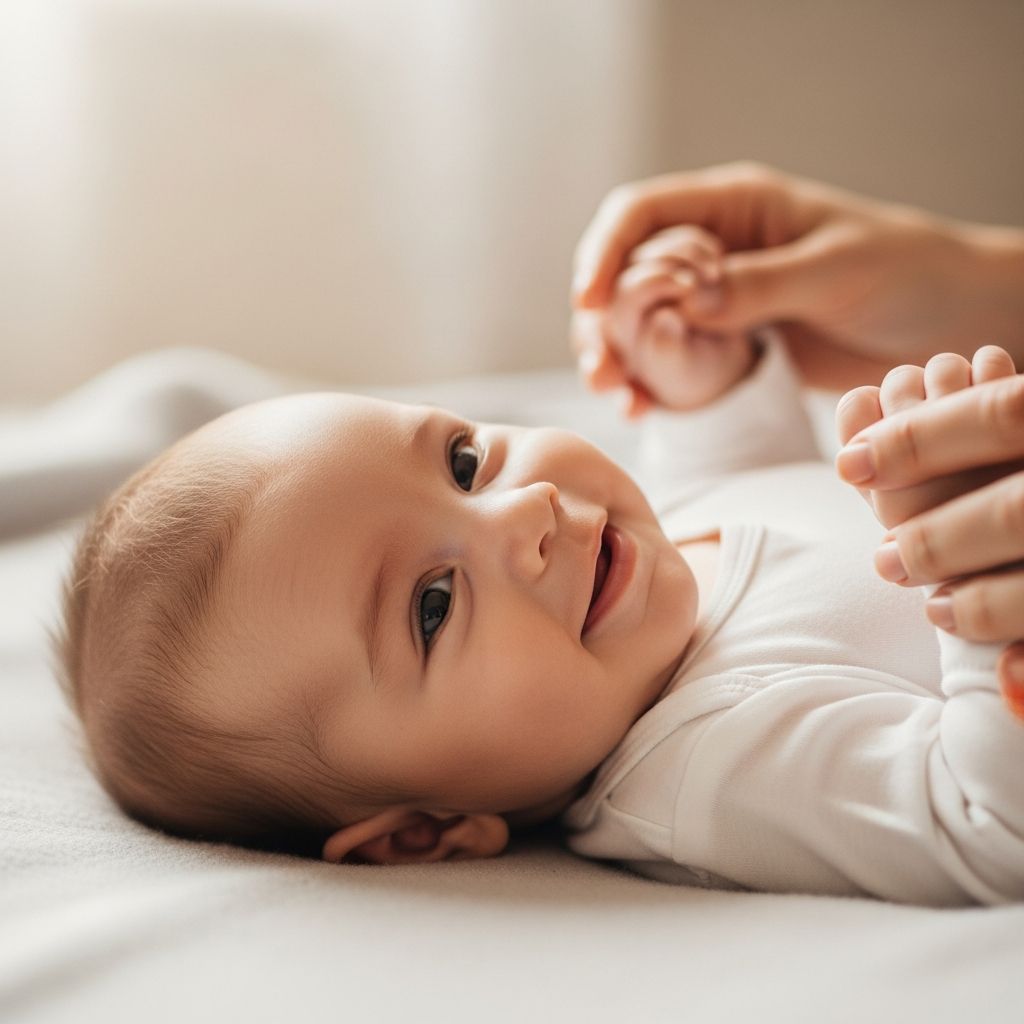
In the enchanting early weeks of life, one of the most heartwarming moments for parents is witnessing their baby’s first genuine social smile. Between 1 and 3 months, infants transition from reflexive facial twitches to purposeful expressions of joy that signal the dawn of social awareness. This period marks a pivotal shift in how babies connect with the world, particularly with caregivers, laying the foundation for emotional and cognitive growth.
Understanding the Evolution of Infant Smiles
Newborns exhibit smiles right from birth, but these initial expressions are primarily reflexive, often occurring during sleep or in response to internal sensations like digestion. Research indicates that true social smiles, which involve deliberate engagement with others, typically emerge around 6 to 8 weeks of age. By 3 months, most babies actively participate in ‘smile conversations,’ pairing grins with coos and eye contact to initiate back-and-forth interactions.
This progression aligns with rapid neurological and visual maturation. At birth, a baby’s vision is limited to about 8-12 inches, ideal for focusing on a parent’s face during feeding. By 2 months, improved focus allows recognition of familiar faces, triggering those first intentional smiles. These Duchenne smiles—characterized by crinkled eyes and uplifted cheeks—differ markedly from earlier smirks, reflecting genuine pleasure and social intent.
Key Developmental Stages of Smiling (1-3 Months)
- 0-6 Weeks: Reflexive Phase – Fleeting smiles during REM sleep or post-feeding, not directed at people. These build facial muscle control but lack social purpose.
- 6-8 Weeks: Emerging Responsiveness – Babies smile in reaction to voices, touches, or faces. Eyes may brighten, marking the onset of social reciprocity.
- 2-3 Months: Full Social Engagement – Symmetrical, prolonged smiles with whole-face involvement, often accompanied by squeals or wiggles. Babies now anticipate responses, fostering interaction loops.
| Age Range | Smile Type | Characteristics | Triggers |
|---|---|---|---|
| 0-6 Weeks | Reflexive | Brief, asymmetric, during sleep | Internal (e.g., gas, dreams) |
| 6-8 Weeks | Responsive | Lopsided, eyes light up | Voice, touch, face |
| 2-3 Months | Social | Symmetrical, prolonged, with coos | Eye contact, parentese speech |
Why Social Smiles Matter for Long-Term Growth
Social smiling is more than adorable—it’s a cornerstone of emotional regulation and attachment. When parents respond promptly, babies learn that their signals elicit care, boosting self-esteem and confidence in influencing their environment. This mirrors secure attachment theory, where consistent caregiver responses build trust and social competence.
Studies show that frequent social interactions during this window enhance brain development in areas linked to empathy and language. Babies who experience reciprocal smiling display advanced social skills by 6 months, including selective smiling toward familiar faces. Moreover, these early exchanges stimulate oxytocin release, strengthening parent-child bonds and reducing parental stress.
Practical Strategies to Encourage Social Smiling
Parents play a crucial role in eliciting and reinforcing these milestones. Here are evidence-based techniques:
- Use Expressive Parentese: Speak in a high-pitched, sing-song voice while maintaining eye contact. Research confirms this prompts smiles in 80% of 6-week-olds.
- Incorporate Touch and Movement: Gently stroke their cheek or tap feet during talks. Combine with mirrors to help babies recognize their own reflections.
- Make Daily Routines Interactive: During diaper changes or baths, narrate actions with smiles and pauses, inviting responses.
- Keep Sessions Brief: Limit to 2-5 minutes to match attention spans, gradually increasing as baby engages.
- Smile Back Consistently: Mirror their expressions to teach turn-taking, essential for later communication.
These methods not only coax smiles but also support overall sensory integration and motor skills.
Recognizing Variations and Red Flags
While most babies smile socially by 3 months, timelines vary by prematurity, temperament, or health factors. Preemies may reach milestones adjusted for gestational age. However, absence of smiles by 12 weeks warrants a pediatric check, as it could signal vision issues, neurological concerns, or developmental delays.
Track progress alongside other signs: head lifting during tummy time (by 2 months), cooing (8 weeks), and face tracking. If your baby seems unresponsive to stimuli, consult a professional early—intervention yields the best outcomes.
Integrating Smiles into Broader Milestones
Social smiling intertwines with physical and cognitive advances. By 3 months, babies combine smiles with vocalizations, laying groundwork for babbling. This period also sees improved hand-eye coordination, grasping toys during smile exchanges.
Parents can enhance development with play kits featuring high-contrast cards or soft toys, used during face-to-face play. Nutrition supports this: breast milk or fortified formulas provide DHA for brain growth, indirectly aiding social cues.
Frequently Asked Questions (FAQs)
At what exact age do babies start social smiling?
Typically 6-8 weeks, though some as early as 5 weeks or later up to 12 weeks. Respond to stimuli like your face or voice.
How can I tell a social smile from a reflexive one?
Social smiles are broader, involve eye crinkling (Duchenne), last longer, and occur when awake and engaged.
What if my baby isn’t smiling by 3 months?
Monitor other milestones and consult your pediatrician at the 2-month visit. Early screening ensures timely support.
Does tummy time help with smiling?
Yes, it strengthens neck muscles for better face orientation toward you, facilitating eye contact and smiles.
Can screen time replace parent interaction for smiles?
No—live interactions are superior for bonding and development. Limit screens; prioritize face-to-face play.
Building Lasting Bonds Through Smiles
Celebrate each grin as a bridge to deeper connections. As babies progress to laughter around 4 months, these early smiles evolve into complex emotional expressions. Document them via photos or journals to track growth and share family joy.
Empower your parenting by staying attuned: respond warmly, observe cues, and seek guidance when needed. This phase, though fleeting, shapes a lifetime of secure relationships and social savvy.
(Word count: 1678)
References
- Begins to Develop Social Smile (1-3 Months) — Parenting Counts. Accessed 2026. https://www.parentingcounts.org/begins-to-develop-social-smile-1-3-months/
- Newborn Milestones 0–3 Months — Enfamil. Accessed 2026. https://www.enfamil.com/articles/newborn-milestones-0-3-months/
- Smiling: When will it happen and how to encourage it — Lovevery Blog. Accessed 2026. https://blog.lovevery.com/skills-stages/smiling/
- All About your Baby’s Smile from 0-12 Months — Smile Wonders. Accessed 2026. https://www.smilewonders.com/articles/all-about-your-babys-smile-from-0-12-months
- When do babies first smile? — American Academy of Pediatrics (HealthyChildren.org). Accessed 2026. https://www.healthychildren.org/English/tips-tools/ask-the-pediatrician/Pages/When-do-babies-first-smile.aspx
Similar Articles





Read full bio of Sneha Tete