Brainwave Tech for ADHD: Hype vs. Evidence
Unpacking the science behind brainwave tests and therapies for ADHD diagnosis and treatment.
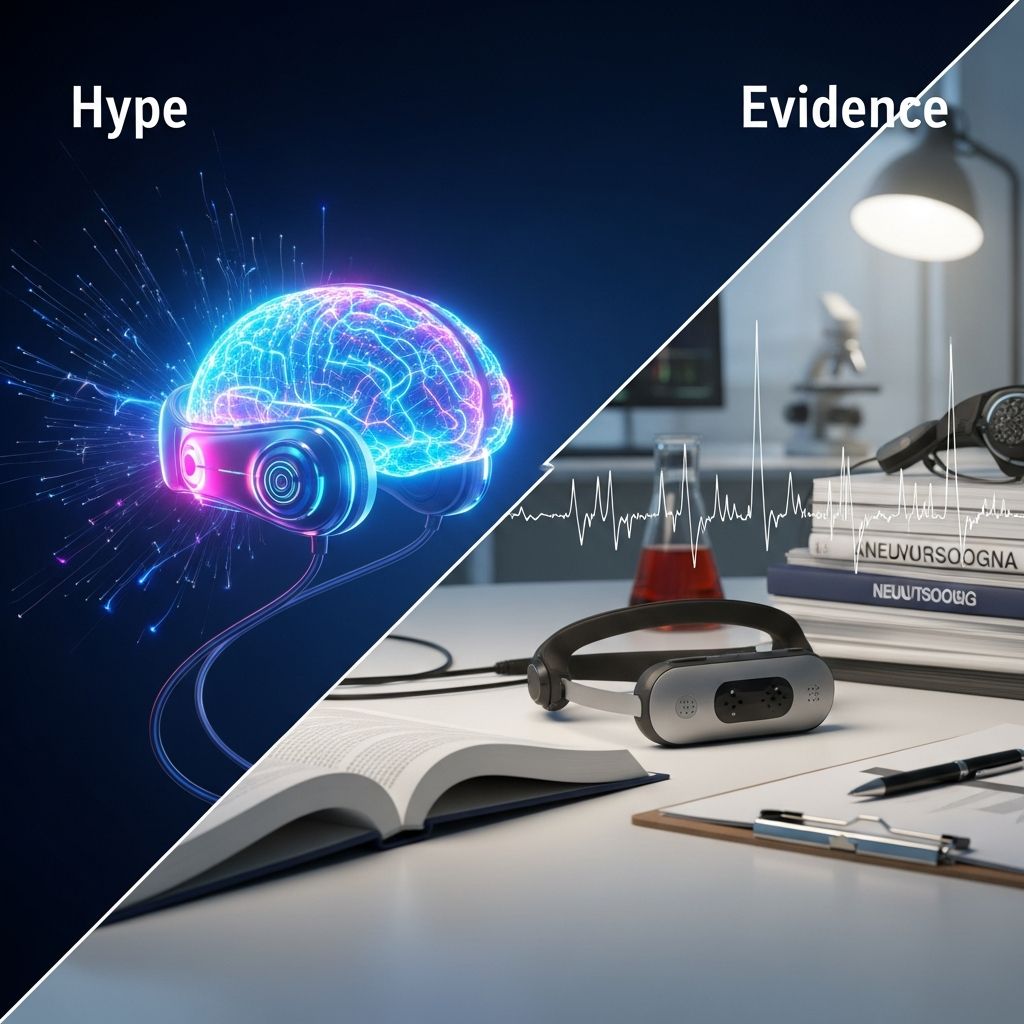
Attention Deficit Hyperactivity Disorder (ADHD) affects millions worldwide, prompting interest in innovative diagnostic and therapeutic tools. Brainwave technologies, such as electroencephalography (EEG) and neurofeedback, promise objective insights into brain function. However, while research shows potential, many commercial applications lack rigorous validation. This article delves into the science, critiques popular claims, and highlights evidence-based paths forward.
Understanding Brainwaves and Their Link to ADHD
Brainwaves are electrical patterns generated by neuronal activity, measurable via EEG. They are categorized by frequency: delta (0.5-4 Hz, deep sleep), theta (4-8 Hz, drowsiness), alpha (8-12 Hz, relaxation), beta (12-30 Hz, focus), and gamma (30+ Hz, high cognition). In ADHD, irregularities like elevated
theta
waves and reducedbeta
activity often correlate with inattention and impulsivity.Studies indicate that unstable theta waves in frontal brain regions contribute to cognitive inconsistencies in ADHD. For instance, young adults with ADHD exhibit fluctuating performance on attention tasks tied to these patterns. This has fueled exploration of brainwave modulation for diagnosis and treatment.
Can EEG Accurately Diagnose ADHD?
EEG records brain electrical activity through scalp electrodes, offering a non-invasive snapshot. Proponents claim it can differentiate ADHD brains from neurotypical ones with high accuracy. A systematic review of adult ADHD diagnosis found mixed results: some studies reported 95.6% accuracy using advanced wavelet-synchronization methods on small samples (47 patients).
However, inconsistencies abound. Alpha wave findings vary—some show decreased activity at rest, others increased. Overall, EEG power spectra differ between ADHD and controls, but no single biomarker exists. Commercial devices often oversimplify these complexities, marketing ‘ADHD signatures’ without FDA approval for diagnosis.
| Brainwave Type | ADHD Pattern | Evidence Level |
|---|---|---|
| Theta (4-8 Hz) | Increased power | Strong |
| Beta (12-30 Hz) | Decreased relative power | Moderate |
| Alpha (8-12 Hz) | Inconsistent | Weak |
Experts caution that EEG should complement, not replace, clinical assessments involving behavior ratings and history.
Neurofeedback: Training the Brain with EEG
Neurofeedback (NF), or EEG biofeedback, trains users to regulate brainwaves in real-time. Sensors monitor activity; visual/auditory feedback rewards desired patterns, like boosting beta while suppressing theta (theta/beta protocol). Sessions typically last 30-40 minutes, 2-3 times weekly for months.
Meta-analyses show NF reduces ADHD symptoms. One review of 10 studies found significant improvements in attention, impulsivity, and hyperactivity. Another confirmed lower symptom scores post-NF versus controls. Brainwave normalization persists even after stopping medication in some cases.
- Key Benefits: Drug-free, lasting effects on executive function.
- Protocol Example: Theta/beta ratio training targets inattention.
- Limitations: Not all studies are randomized; placebo effects possible.
Emerging Interventions: From Binaural Beats to TMS
Beyond NF, brainwave entrainment uses audio (binaural beats) to synchronize waves. A small study on ADHD individuals tested 50 Hz gamma beats during puzzles. Participants reported better focus, with some performance gains in an ABA design.
Repetitive transcranial magnetic stimulation (rTMS) directly modulates waves. A 2025-funded trial targets theta instability in 18-25-year-olds with ADHD, aiming to enhance cognitive consistency without drugs. Professor Katya Rubia notes rTMS could address core brain differences underlying ADHD challenges.
Quantitative EEG (qEEG) subtypes refine protocols. Reviews link specific EEG patterns to ADHD variants, improving NF outcomes.
Risks and Limitations of Brainwave Approaches
Despite promise, caveats persist. Small sample sizes plague many studies—e.g., four participants in the entrainment trial. Lack of blinding and controls inflates effects. Commercial EEG tests often lack peer-reviewed validation, risking misdiagnosis.
Stimulants remain first-line, effective short-term but with side effects. NF and TMS offer alternatives, yet accessibility and cost are barriers. AI-enhanced qEEG shows high accuracy, but requires clinical oversight.
Pros and Cons of Brainwave Therapies
| Aspect | Pros | Cons |
|---|---|---|
| Efficacy | Symptom reduction in RCTs | Inconsistent replication |
| Side Effects | Minimal, non-invasive | Time-intensive (20-40 sessions) |
| Cost | Potential long-term savings | $100-200/session, not always insured |
| Evidence | Growing for NF/TMS | Diagnostic use unproven |
What Does the Research Say About Effectiveness?
Six partially controlled NF studies support ADHD intervention. A PMC review affirmed NF’s role via theta/beta training. Entrainment aids problem-solving in ADHD, potentially aiding academics. TMS trials could validate theta targeting.
CHADD endorses NF cautiously, pending larger trials. Frontiers review urges theory-driven EEG for robust diagnostics.
Practical Advice for ADHD Management
Consult professionals before brainwave tech. Combine with behavioral therapy, exercise, and sleep hygiene. Track symptoms via validated scales.
- Prioritize FDA-approved stimulants if suitable.
- Explore NF via certified providers.
- Monitor emerging TMS research.
Frequently Asked Questions
What is the most reliable way to diagnose ADHD?
Comprehensive evaluation by clinicians using DSM criteria, interviews, and ratings—not standalone EEG.
Does neurofeedback cure ADHD?
No, but it can reduce symptoms like inattention; effects may persist post-treatment.
Are brainwave apps effective for ADHD?
Consumer apps lack evidence; seek clinical-grade tools.
How many neurofeedback sessions for results?
Typically 20-40, with individual variation.
Is TMS safe for ADHD?
Non-invasive and safe in trials; ongoing research.
Future Directions in Brainwave Research
AI integration with qEEG promises precise subtyping. Larger RCTs for NF and TMS are needed. Personalized protocols based on baseline EEG could optimize outcomes.
Ultimately, brainwave tech complements—not replaces—holistic ADHD care. Stay informed via reputable sources.
References
- Brainwave Entrainment to Improve Problem-solving skills in People with ADHD — Miguel Lopez, California State University Stanislaus. 2022-07. https://www.csustan.edu/sites/default/files/2022-07/dir_lopez_miguel.pdf
- Targeting brain waves to reduce cognitive challenges in ADHD — King’s College London. 2025-09-09. https://www.kcl.ac.uk/news/brain-waves-adhd
- Reducing symptoms of attention deficit/hyperactivity disorder (ADHD) using neurofeedback — PMC/NCBI. 2024. https://pmc.ncbi.nlm.nih.gov/articles/PMC11060259/
- EEG for Diagnosis of Adult ADHD: A Systematic Review — Frontiers in Psychiatry. 2020-10-08. https://www.frontiersin.org/journals/psychiatry/articles/10.3389/fpsyt.2020.00871/full
- Neurofeedback Therapy: Can It Effectively Treat ADHD? — ADDitude Magazine. Recent. https://www.additudemag.com/neurofeedback-therapy-treat-adhd/
- Neurofeedback (EEG Biofeedback) — CHADD. Recent. https://chadd.org/about-adhd/neurofeedback-eeg-biofeedback/
Similar Articles







Read full bio of medha deb