Mastering Camouflage Hide-and-Seek: Ultimate Family Fun
Elevate classic hide-and-seek with camouflage twists for endless outdoor adventures and skill-building joy with kids.
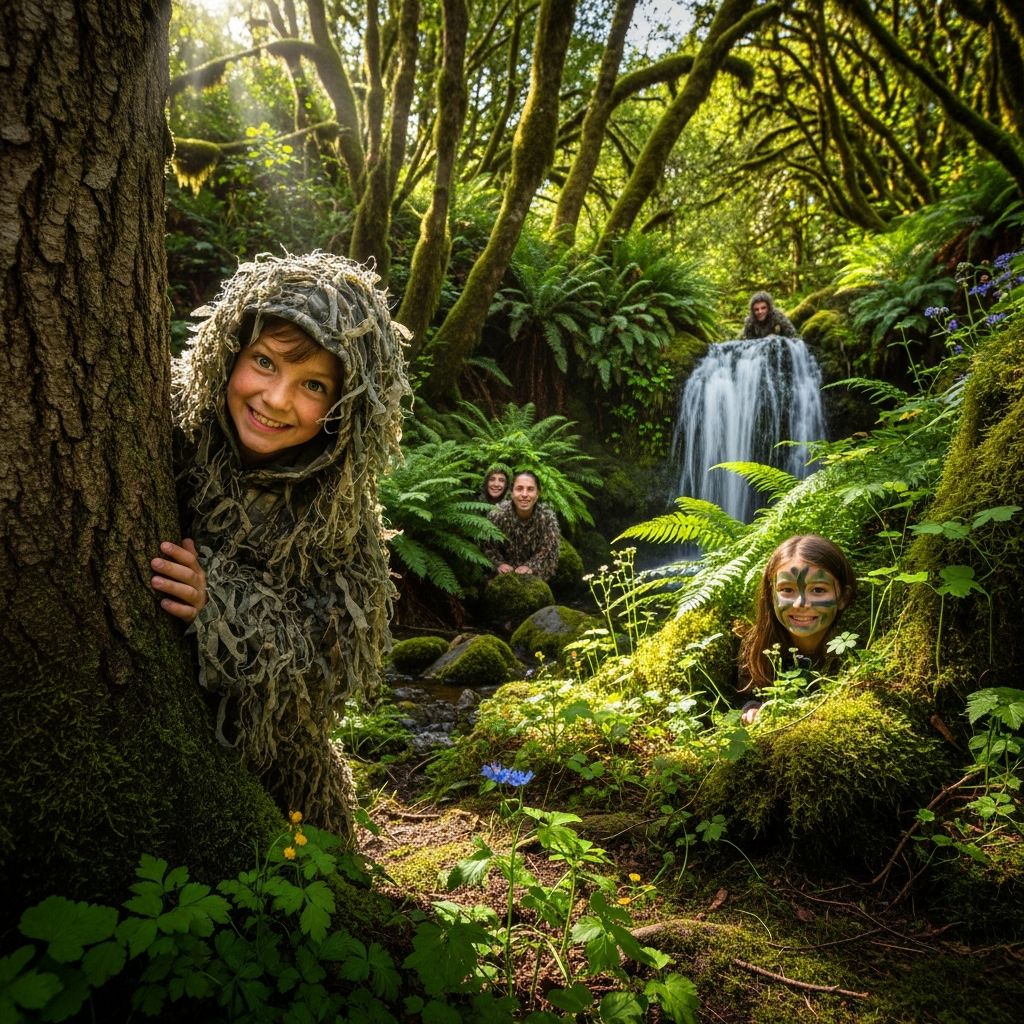
Camouflage hide-and-seek takes the timeless thrill of concealment and discovery to new heights by emphasizing blending into natural surroundings. This evolved version encourages players to use environmental elements like foliage, shadows, and terrain for superior hiding, turning backyards or parks into tactical playgrounds. Ideal for families seeking active, imaginative play, it fosters patience, observation, and a deeper connection with nature.
The Roots of Hide-and-Seek and Its Camouflage Evolution
Hide-and-seek traces back over two millennia, with early references in ancient Greek texts by writer Julius Pollux in the 2nd century BCE, describing a game called apodidraskinda involving pursuit and evasion. By Elizabethan England, it appeared in Shakespeare’s works and historical accounts, often with blindfolds for added challenge. Globally, variants like Nigeria’s oro combine hiding with tag around a safe circle, showcasing its universal appeal.
Camouflage hide-and-seek builds on this foundation by prioritizing natural mimicry over simple concealment. Players must observe patterns in leaves, bark, or grass to disappear effectively, mimicking animal survival tactics. This twist transforms casual play into a lesson in ecology and strategy, making it perfect for parents introducing children to wildlife adaptation principles.
Core Rules for Camouflage Hide-and-Seek
Start with 3-10 players in an open outdoor space like a wooded area or large yard. Designate a counting spot, such as a tree or porch, as “base.” One player counts to 60 with eyes closed while others scatter to hide using camouflage techniques.
- Blending Priority: Hiders must incorporate natural materials—no standing in plain sight. Cover clothing with leaves or position behind textured backgrounds.
- Seeker Tactics: The seeker scans methodically, noting movement or unnatural shapes rather than random guesses.
- Safe Return: Once spotted, hiders sprint to base; touching it grants immunity. Last hider found wins and chooses the next seeker.
- Time Limit: End rounds after 10 minutes if not all are found, awarding points for undetected hiders.
This structure ensures fairness and excitement, accommodating various ages by adjusting count times or boundaries.
Why Camouflage Adds Thrill to Traditional Play
Standard hide-and-seek relies on speed and small spaces, but camouflage demands creativity and stillness. Children learn to “read” their environment, spotting how light filters through branches or how dirt tones match skin. This engages multiple senses, promoting mindfulness amid digital distractions.
Physically, it encourages low crawls, quiet steps, and sustained poses, building core strength and balance. Mentally, it sharpens problem-solving as hiders improvise spots and seekers deduce patterns. Families report stronger bonds, with laughter echoing from clever discoveries.
Top Variations to Keep the Game Fresh
Endless twists prevent repetition. Here’s a table of popular camouflage-adapted versions:
| Variation | Description | Best For |
|---|---|---|
| Team Camouflage Hunt | Divide into seeker and hider teams; found hiders join seekers. | Large groups (6+) |
| Sardine Shadows | One hides; finders squeeze in silently, using group camouflage. | Quiet skill-building |
| Moving Mirage | Hiders can relocate stealthily when seeker’s back is turned. | Advanced players |
| Object Eclipse | Hide toys instead of people, mapping spots for seekers. | Younger kids (3-6) |
| Wave Whisper | Found hiders signal hidden allies secretly before joining seekers. | Team strategy |
These draw from global traditions like Italy’s nascondino, which inspired world championships. Adapt for indoors using blankets as “foliage.”
Skill-Building Benefits for Growing Minds
Beyond fun, camouflage play hones essential abilities. Stealth cultivates patience and impulse control, vital for emotional regulation. Spotting disguised friends boosts visual discrimination and spatial awareness, skills linked to early math and reading success.
In nature settings, it sparks curiosity about animal camouflage—think chameleons or stick insects—fostering environmental stewardship. Studies on outdoor play affirm reduced stress and improved focus from such activities, though direct research on variants is emerging.
- Social Growth: Negotiating rules teaches cooperation and fairness.
- Physical Fitness: Crawling and dashing enhance agility without structured sports.
- Creativity Boost: Improvising hides encourages divergent thinking.
Setting Up the Perfect Camouflage Arena
Choose locations rich in variety: forests for leaf litter, beaches for sand dunes, or urban parks for benches mimicking rocks. Safety first—avoid hazards like ponds or roads.
Enhance with props: natural dyes for face paint or leaf capes. For dusk games, glow sticks mark base, adding night-vision camouflage challenges. Weather-proof by scheduling for mild days, rotating spots weekly.
Age-Adapted Strategies for All Kids
Toddlers (3-5): Short counts (20 seconds), obvious spots like bushes. Pair with parents for guidance.
School-age (6-10): Introduce movement rules, score hidden durations.
Teens (11+): Competitive scoring, larger territories, or night variants for thrill.
Inclusive tips: For less mobile kids, assign “scout” roles spotting from afar.
Frequently Asked Questions
What makes camouflage hide-and-seek better than regular versions?
It emphasizes strategy and nature immersion, turning play into an educational adventure that builds observation skills beyond mere hiding.
Is it safe for young children?
Yes, with supervision in bounded areas. Focus on fun over competition to avoid frustration.
How many players do you need?
Minimum 3, but 5-8 optimizes excitement. Scale variations for pairs or crowds.
Can you play indoors?
Absolutely—use furniture shadows, curtains as “foliage,” or forts for urban camouflage.
What if no one gets found?
Use a timer; award creative hides. Reveal with clues to maintain engagement.
Pro Tips from Seasoned Players
Wind acts as a revealer—practice stillness against rustling leaves. Seekers should zig-zag paths to cover ground efficiently. Rotate roles to build empathy. Track wins in a family journal for motivation.
Seasonal twists: Autumn for leaf piles, winter for snow burrows (with warm layers). Combine with picnics for full-day events.
Global Inspirations and Championships
From Nigeria’s oro circle chases to Italy’s Hide-and-Seek World Championship (2010-2017) in ghost towns, camouflage echoes worldwide. Host your own tourney with prizes like “Master of Disguise.”
This game endures because it taps primal instincts—hunt, hide, triumph—while adapting to modern families craving screen-free joy.
References
- Hide-and-seek — Wikipedia. Accessed 2026. https://en.wikipedia.org/wiki/Hide-and-seek
- 15 Hide And Seek Variations – Twists On The Classic Game — Early Impact Learning. Accessed 2026. https://earlyimpactlearning.com/15-hide-and-seek-variations-twists-on-the-classic-game/
- Here’s Why Literally Everyone Knows How To Play Hide-And-Seek — Romper. Accessed 2026. https://www.romper.com/p/where-is-hide-seek-from-the-game-is-a-classic-for-a-reason-16981423
- Hide-and-seek | Definition, Rules, & Facts — Encyclopaedia Britannica. 2020-05-04 (last updated). https://www.britannica.com/topic/hide-and-seek-game
- HIDE & SEEK: Origins, Rules, and Global Variations Explained — Studocu (Silliman University). Accessed 2026. https://www.studocu.com/ph/document/silliman-university/literacy-training-service-nstp/hide-and-seek-how-to-play-origin/23867206
Similar Articles








Read full bio of Sneha Tete