Empowering Mothers: Choosing Work, Home, or Balance
Mothers deserve full control over work-life decisions without employer penalties or societal pressures shaping their paths.
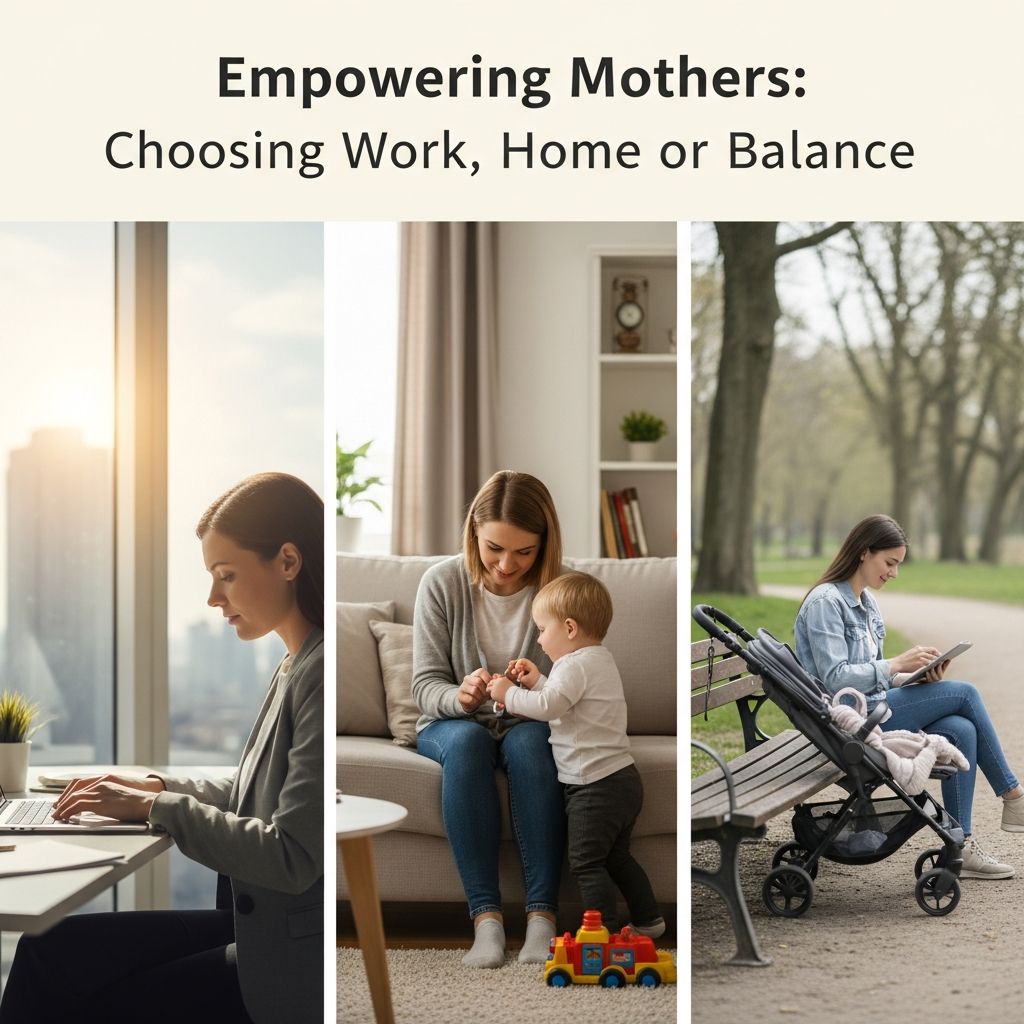
Mothers face profound choices in balancing career ambitions with family responsibilities, and these decisions should rest solely with them, free from employer biases or external mandates. Recent data reveals that about 25% of U.S. mothers with children under 18 opt to stay home, yet re-entering the workforce often brings significant hurdles like hiring discrimination. This article delves into the realities of these choices, supported by labor statistics, psychological insights, and policy recommendations to foster true flexibility.
The Realities of Maternal Workforce Participation
In 2024, 68.3% of mothers with children under age 6 were in the labor force, rising to 78% for those with school-aged kids, according to Bureau of Labor Statistics data. These figures highlight a recovery from pandemic-era drops, with maternal employment up 1.9% since early 2020. However, beneath these averages lie diverse preferences: a Pew Research survey found 47% of mothers idealize part-time work, compared to 32% favoring full-time and 20% preferring to stay home.
This diversity underscores that no single model fits all families. Full-time working mothers often grapple with childcare costs that rival or exceed wages, pushing some toward temporary exits from employment. Meanwhile, stay-at-home parents invest deeply in child-rearing, only to face ‘ideal worker norm’ violations upon return, where employers view career gaps for parenting as commitment shortfalls.
Financial Calculations Behind the Choice
Deciding to pause a career involves more than emotions; it’s a financial pivot. Families weigh childcare expenses—often $10,000-$20,000 annually per child—against lost income, benefits erosion, and future earning potential. Long-term, stay-at-home mothers may see wages drop 4-7% per child due to experience gaps, per economic studies.
| Factor | Working Full-Time | Part-Time | Stay-at-Home |
|---|---|---|---|
| Income | High steady | Moderate | Zero direct |
| Childcare Cost | High | Medium | None |
| Health Impact | Stress risk | Balanced | Lower stress |
| Re-entry Barrier | Low | Medium | High |
Part-time roles emerge as a sweet spot: National Institute for Child Health and Human Development research shows these mothers report less depression, better health, reduced work-family conflict, and greater school involvement than full-time or stay-at-home counterparts. Yet access remains limited, with many employers prioritizing full-time availability.
Psychological and Family Well-Being Impacts
Time allocation matters for child development. Children of full-time working mothers log about six fewer unstructured activity hours weekly than those with stay-at-home moms, per a PMC study. Unstructured play fosters creativity and emotional regulation, suggesting at-home parenting offers unique benefits during early years.
- Stay-at-Home Benefits: Deeper bonding, customized routines, and hands-on monitoring of milestones.
- Working Mom Advantages: Role modeling ambition, financial stability, and diverse social exposures via childcare.
- Part-Time Hybrid: Best health outcomes and flexibility for family engagement.
Financially strained stay-at-home families—one in three experience poverty—highlight the need for support networks. Emotionally, mothers report fulfillment across paths, but guilt and judgment persist, amplified by societal narratives favoring constant productivity.
Employer Biases and Hiring Challenges
Stay-at-home parents encounter stark re-entry barriers. Employers are twice as likely to hire someone unemployed due to layoffs over a parent out for 18 months raising children. This stems from perceptions of divided loyalties, even among college-educated applicants. Without protections, temporary caregiving penalizes future prospects, undermining choice.
Current laws emphasize retaining continuous workers via subsidies and leave, ignoring the 7% of fathers and 25% of mothers who pause careers. This gap perpetuates inequality, as mothers disproportionately bear career costs.
Policy Reforms to Support Flexible Parenting
To empower choices, targeted interventions are essential. Expanding the Work Opportunity Tax Credit (WOTC)—offering $2,400-$9,600 per hire from target groups—could include stay-at-home parents, incentivizing employers financially. Firms file simple forms for certification, making it administratively feasible.
Broader still, amending Title VII of the Civil Rights Act to protect ‘parental status’ or ‘caregiver status’ would ban discrimination, akin to existing categories like gender or disability. WOTC provides quick wins via incentives; Title VII ensures enduring rights, though politically tougher.
Family-friendly policies yield business gains: reduced turnover, higher productivity, and diverse talent pools. Governments could pilot re-entry programs, subsidize part-time transitions, or mandate bias training.
Practical Strategies for Mothers Navigating Choices
Individuals can strategize amid systemic gaps:
- Assess Finances: Model scenarios with tools tracking lost retirement contributions and skill depreciation.
- Build Networks: Join mom groups or alumni for re-entry leads.
- Upskill Flexibly: Online certifications during home phases preserve marketability.
- Negotiate Boldly: Request part-time or remote upon return.
- Seek Allies: Partners sharing childcare eases burdens.
Reframe gaps positively in resumes: ‘Led family operations, honing multitasking and crisis management transferable to professional settings.’
Frequently Asked Questions (FAQs)
What percentage of mothers prefer part-time work?
A: 47%, per Pew Research, balancing income with family time better than full-time or none.
Do stay-at-home parents face hiring bias?
A: Yes, employers favor laid-off candidates over parents with equal gaps, twice as likely.
Is part-time best for maternal health?
A: Studies show lower depression and conflict versus full-time or stay-at-home.
How can policies help re-entry?
A: Tax credits like expanded WOTC ($2,400+) and Title VII protections against caregiver discrimination.
Does maternal employment affect kids’ activities?
A: Full-time moms’ kids have 6 fewer unstructured hours weekly.
Conclusion: Reclaiming Maternal Autonomy
Mothers’ paths—work, home, or hybrid—must honor personal and family needs over corporate timelines. With supportive policies and personal tactics, true choice becomes viable, benefiting families and economies alike. Society advances when parents thrive on their terms.
References
- Facilitating Future Workforce Participation for Stay-at-Home Parents: Mitigating the Career Costs of Parenthood — Yale Law Journal. 2023. https://yalelawjournal.org/forum/facilitating-future-workforce-participation-for-stay-at-home-parents-mitigating-the-career-costs-of-parenthood
- Leaving the workforce to stay home with children — BNY Mellon Wealth Management. 2024-10-15. https://www.bbh.com/us/en/insights/capital-partners-insights/leaving-the-workforce-to-stay-home-with-children.html
- Is Part-Time Employment the Ideal Situation for Working Parents? — Parent.com. 2023. https://www.parent.com/blogs/conversations/2023-is-part-time-employment-the-ideal-situation-for-working-parents
- When Does Time Matter? Maternal Employment, Children’s Activities, and Adjustment — PMC / National Institutes of Health. 2016-05-01. https://pmc.ncbi.nlm.nih.gov/articles/PMC4860719/
- Women in the Labor Force and Labor Force Participation Rates — U.S. Bureau of Labor Statistics. 2024. https://www.bls.gov/opub/reports/womens-databook/2024/home.htm
Similar Articles








Read full bio of medha deb