Baby Play Mats: Essential Guide For Every Stage Of Growth
Discover how quality play mats boost your baby's motor skills, senses, and safety during key growth stages.
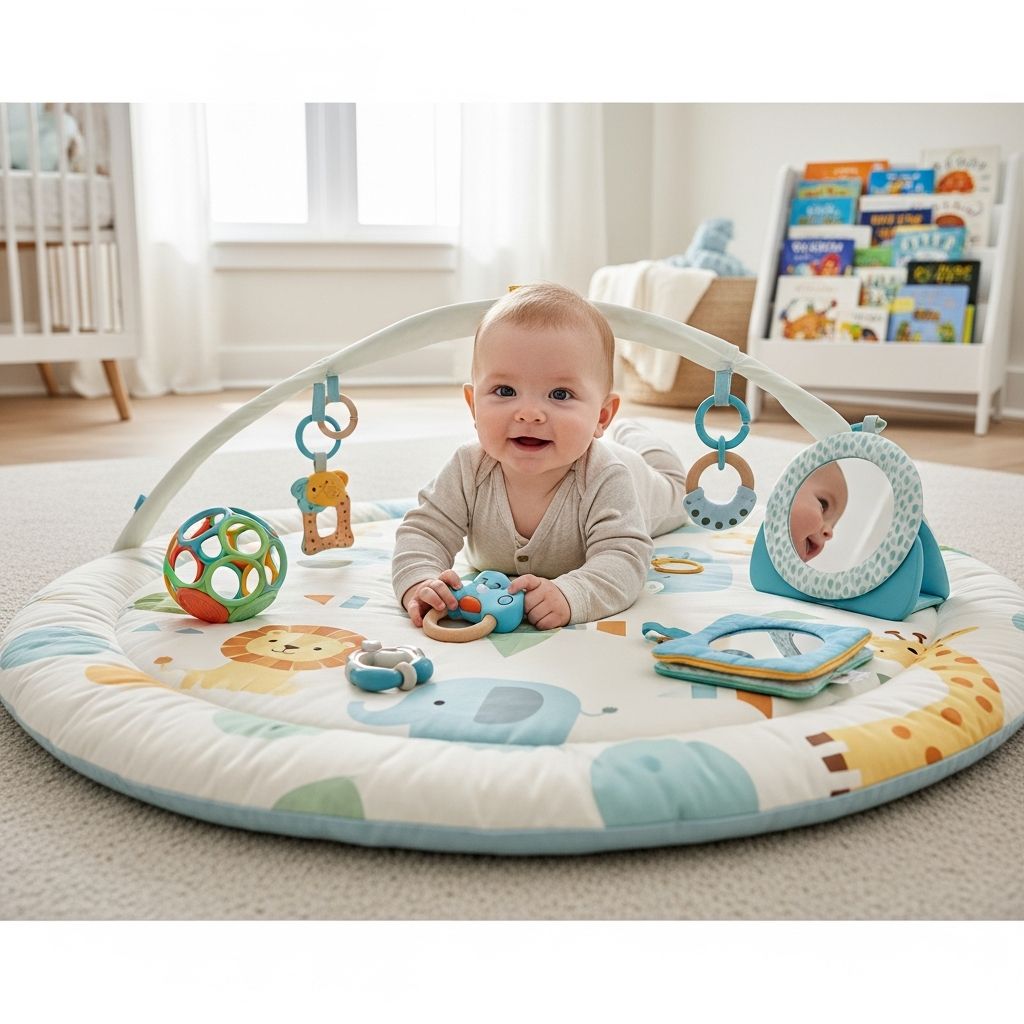
Essential Baby Play Mats for Growth
Quality play mats serve as foundational tools in early childhood, offering cushioned surfaces that protect infants while promoting essential developmental activities. These mats transform ordinary floors into stimulating environments where babies can safely practice movements like rolling and crawling, fostering both physical strength and cognitive awareness.
Core Advantages of Introducing Play Mats Early
From the moment a newborn enters the world, play mats provide immediate benefits by creating dedicated zones for supervised play. They cushion against hard surfaces, reducing injury risks during initial explorations. Beyond safety, these mats feature engaging designs with varied textures and colors that captivate young senses, laying groundwork for perceptual growth.
Physical comfort ranks high among advantages, as the padded layers support prolonged sessions of tummy time without discomfort. This activity strengthens neck and core muscles, crucial for achieving milestones such as head lifting and eventual sitting. Parents often report that babies remain content longer on these surfaces, allowing for extended bonding opportunities.
- Safety padding prevents bumps on unforgiving floors.
- Sensory elements like patterns spark visual tracking.
- Portability enables use in various home areas.
Building Motor Abilities Through Structured Play
Motor skill progression hinges on consistent practice in secure settings. Play mats excel here by encouraging gross motor activities from infancy. Tummy time, recommended by experts for preventing flat head syndrome, becomes enjoyable on soft, grippy surfaces that motivate babies to push up and roll.
As infants advance, mats facilitate transitions to crawling. The slight traction prevents slips, building confidence in unsteady movements. Fine motor refinement occurs as little hands grasp nearby toys or explore textured zones, enhancing hand-eye coordination.
| Skill Type | Mat Contribution | Typical Age |
|---|---|---|
| Gross Motor | Crawling, rolling support | 4-10 months |
| Fine Motor | Grasping textures | 3-9 months |
| Balance | Sitting practice cushioning | 5-8 months |
Sensory and Cognitive Stimulation Unleashed
Vibrant hues and diverse materials on play mats ignite sensory pathways. Newborns begin discerning contrasts, progressing to recognizing shapes and patterns. This visual feast pairs with tactile feedback from bumpy or silky areas, sharpening sensory processing.
Cognitive leaps follow as babies link actions to outcomes, such as batting a dangling toy. Independent exploration on a mat nurtures problem-solving, as children experiment with cause and effect in a bounded, safe realm. Over time, this fosters curiosity and self-reliance.
Age-Specific Guidance for Optimal Use
Newborn Phase: Gentle Introductions (0-3 Months)
Start with brief sessions of 1-3 minutes multiple times daily. Focus on supervised tummy time to build neck strength. Neutral tones and minimal stimulation suit this stage, avoiding overload.
Emerging Mobility: Active Engagement (3-6 Months)
Increase to 15-30 minutes per session. Babies now lift heads steadily and roll, thriving on mats with arches for reaching. Add soft toys to encourage arm extension.
Crawling Explorers: Expanded Freedom (6-9 Months)
Mats become adventure hubs for sitting, scooting, and crawling. Larger sizes accommodate movement bursts, with sensory paths guiding discovery. Ensure non-slip bases for safety.
Toddler Transitions: Skill Refinement (9-12 Months)
Use for standing practice and gentle falls during wobbly steps. Incorporate educational prints like letters to blend play with learning, maintaining engagement as mobility surges.
Selecting the Ideal Play Mat for Your Family
Prioritize thickness of at least 0.5 inches for joint protection, alongside waterproof, easy-clean materials. Non-toxic certifications ensure safety, while foldable designs aid storage. Opt for reversible options to refresh interest.
- Check for
BPA-free
composition. - Verify
machine-washable
features. - Choose
expandable
mats for growth.
Durability withstands enthusiastic use, with reinforced edges preventing tears. Sensory variety—crinkles, mirrors, tags—keeps sessions dynamic across stages.
Practical Care and Longevity Tips
Regular spot-cleaning with mild soap preserves hygiene. Full washes rejuvenate vibrancy. Rotate toys and rearrange layouts to sustain novelty, extending the mat’s lifespan into toddlerhood.
Store rolled in dry areas to avoid mildew. With proper maintenance, a single mat supports years of development, offering value beyond infancy.
Frequently Asked Questions
Are play mats suitable for newborns?
Yes, begin with short, supervised tummy time on a flat, firm mat to support neck strengthening without overwhelming senses.
How long should tummy time last daily?
Aim for 15-30 minutes total by 3 months, split into sessions, gradually building as strength improves.
Do play mats prevent flat head syndrome?
They facilitate tummy time, a proven strategy against plagiocephaly by minimizing prolonged back-lying.
Can one mat last through toddler years?
Versatile designs with educational elements extend usability up to 2-3 years for imaginative play.
What materials ensure safety?
Look for natural foam, organic cotton covers, and certifications like OEKO-TEX for toxin-free assurance.
Emotional and Social Growth Through Play
Beyond physical gains, mats cultivate emotional security as familiar havens for self-expression. Babies soothe themselves amid joyful discoveries, regulating feelings in comforting confines. Parental involvement—singing, reading—strengthens bonds, enhancing social cues like eye contact and response.
Group play on larger mats introduces sharing, expanding interactions. This holistic support shapes well-rounded development, blending fun with foundational skills.
References
- Five Benefits of Using a High-Quality Playmat for Your Baby’s Development — Kolo Kids. 2023-05-15. https://kolokids.ie/blogs/news/five-benefits-of-using-a-high-quality-playmat-for-your-baby-s-development
- How Does A Play Mat Help A Child’s Development — Tiny Land. 2024-02-10. https://www.tinylandus.com/blogs/collections/how-does-a-play-mat-help-a-childs-development
- The ABCs of Baby Play Mats: A Deep Dive into Their Necessity — IBU Family. 2023-11-20. https://www.ibufamily.org/post/abcs-of-baby-play-mats
- Can Newborns Use a Playmat? — Eeveve. 2024-01-08. https://eeveve.com/blogs/news/can-newborns-use-a-playmat
- When to Start Using the Baby Activity Mat? — WildBird. 2023-09-12. https://wildbird.co/blogs/news/when-to-start-using-baby-activity-mat
- Baby Play Mats By Developmental Stage — Infantino UK. 2024-03-05. https://uk.infantino.com/blogs/news/baby-play-mats-by-developmental-stage
- Why a Good Play Mat Matters for Baby Rolling Over — House of Noa. 2023-07-18. https://www.thehouseofnoa.com/blogs/news/why-a-good-play-mat-matters
Similar Articles







Read full bio of Sneha Tete