Every Child Needs Affordable Preschool Access
Unlocking futures: Why quality, affordable preschool is essential for all American children and families.
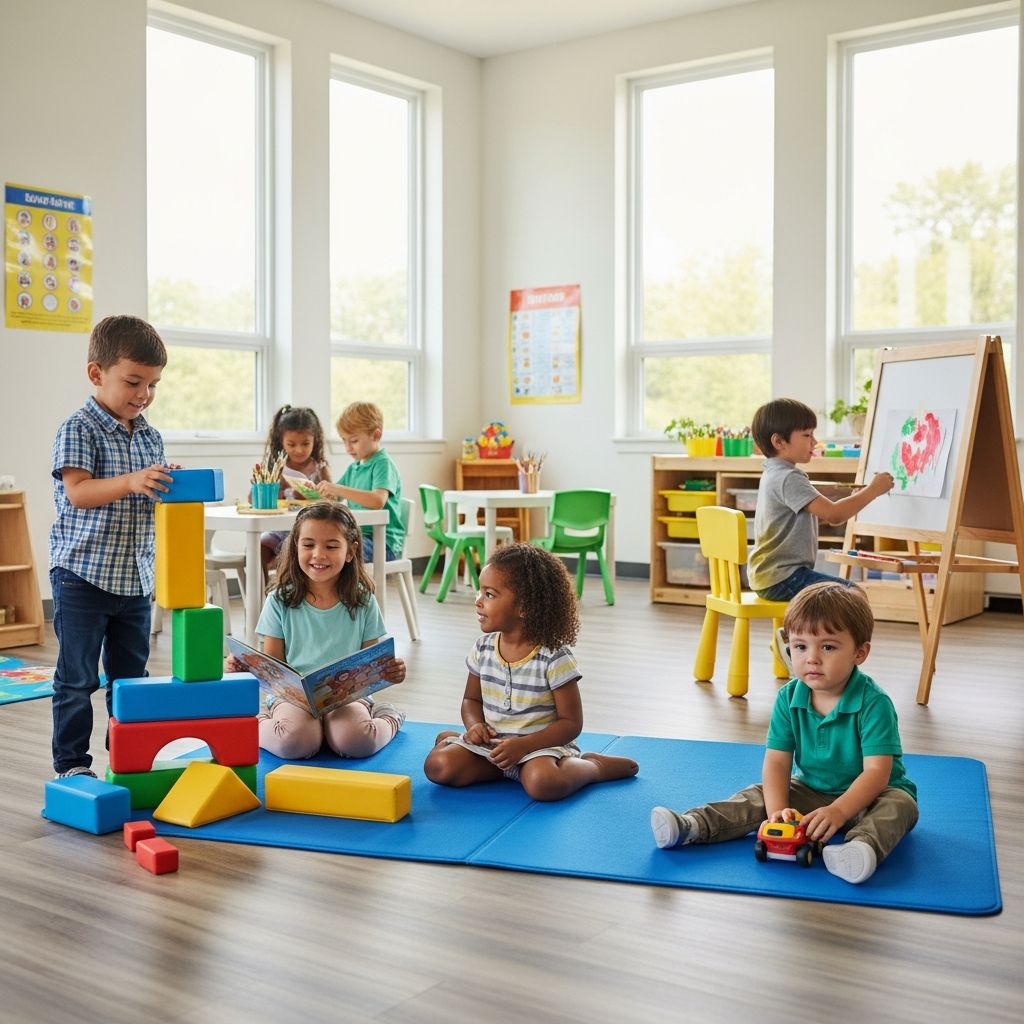
High-quality preschool programs lay the foundation for lifelong success, yet millions of American children lack access due to cost, location, and availability barriers. Expanding affordable options through targeted policies can bridge these gaps, boosting child development and economic growth.
The Transformative Power of Early Education
Early childhood education shapes cognitive, social, and emotional growth, with lasting impacts on academic achievement and future earnings. Children in quality preschool programs show higher high school graduation rates and reduced need for remedial services. For low-income families, these programs are gateways to kindergarten readiness, narrowing achievement gaps from the start.
Research underscores that every dollar invested in high-quality early education yields $8 to $16 in savings on special education, welfare, and justice costs. Programs emphasizing play-based learning, small class sizes, and trained educators foster whole-child development beyond basic academics.
Current Landscape: Gaps in Access and Enrollment
Despite progress, preschool enrollment lags, especially post-pandemic. Over 50% of the U.S. population lives in child care deserts, with rural areas, infants, and low-income communities hit hardest. Low-income children (below 200% federal poverty level) attend preschool at lower rates—about 40%—compared to higher-income peers.
Center-based care, which offers superior quality, reaches only 28% of children from families under the poverty line versus 39% above it. Enrollment in state-funded programs hit 1.63 million in 2019-20, mostly targeting low-income kids, but supply falls short of demand. Families spend up to 50% of income on infant care, forcing workforce exits, particularly for women.
Quality Challenges in Expanding Programs
While enrollment grows, quality often lags. Only 16% of students attend high-quality state-funded preschools, with 44% in low-quality ones per NIEER benchmarks. States like California, Florida, and Texas, major spenders, meet few quality standards. Essential elements include certified teachers, low student-teacher ratios, and comprehensive curricula.
| Quality Benchmark | High-Performing States | Large Spenders (Low Quality) |
|---|---|---|
| Teacher Credentials | AL, HI, MI, MS, RI | CA, FL, TX |
| Class Size Limits | DC, VT, WV | CA, FL, TX |
| Enrollment Reach (70%+ of 4-year-olds) | FL, IA, OK, WI | N/A |
This table highlights disparities: Seven states near universal access for 4-year-olds, while five excel in quality benchmarks.
Economic Imperative for Families and Society
Affordable preschool enables parental employment, especially for mothers, contributing to GDP growth. Child care costs exceed the 7% income affordability threshold set by HHS. Programs like Denver’s, funded by sales tax, supported 4,370 low-income children with $477 monthly tuition aid per child.
Universal systems with sliding scales build public support and equity. Long-term, they reduce inequality and spur growth, outweighing initial costs. Head Start serves 863,000 low-income children, proving targeted investments work.
Proven State Strategies for Expansion
- Target High-Need Groups: Oregon’s Baby Promise pilots contracts, support networks, and salary guidelines for infant care. North Dakota boosted infant/toddler reimbursements by $15 million.
- Mixed-Delivery Universal Pre-K: States like Oklahoma, Florida, and Wisconsin enroll 70%+ of 4-year-olds via public-private partnerships.
- Funding Innovations: Denver’s voter-approved tax sustains quality-rated sites. Progressive reimbursement prioritizes underserved areas.
- Quality Incentives: Ratings systems and professional development ensure standards, as in Alabama and Rhode Island.
Policy Roadmap to Universal Access
Achieving equity requires mixed-delivery models blending public, private, and home-based care. Prioritize low-income and disabled children while aiming for universality to maximize benefits. Key steps include:
- Increase provider reimbursements to cover living wages, stabilizing workforce.
- Expand supply in deserts via grants and zoning reforms.
- Implement quality benchmarks with accountability.
- Fund via sales taxes, lotteries, or federal matches for sustainability.
No federal universal mandate exists, but state leadership fills gaps. Progressive benefits ensure higher aid for neediest families.
Overcoming Barriers for Low-Income Families
Low-income children face travel burdens, waitlists, and quality deficits. Rural and minority communities suffer most, perpetuating cycles. Solutions: Transportation aid, community hubs, and outreach to boost enrollment. High-quality access levels kindergarten playing fields, yielding societal ROI.
Frequently Asked Questions (FAQs)
What percentage of U.S. children attend preschool?
About 70% of 4-year-olds enroll formally, but low-income rates are lower at ~40%, with gaps widening post-pandemic.
How much do families spend on child care?
Up to 50% of income for poverty-level families of three; exceeds 7% HHS affordability benchmark.
Which states lead in preschool access?
DC, Florida, Iowa, Oklahoma, Vermont, West Virginia, Wisconsin reach 70%+ enrollment for 4-year-olds.
Does preschool quality matter long-term?
Yes—high-quality programs boost graduation rates, cut remediation costs, and save $8-16 per dollar invested.
Can universal preschool be cost-effective?
Absolutely; short-term costs yield long-term savings via growth, reduced inequality, and parental workforce participation.
Call for Collective Action
Investing in preschool is investing in America’s future. Policymakers, communities, and families must advocate for equitable, sustainable systems. Success stories prove it’s possible—now scale nationwide for every child.
References
- How To Expand Access to Affordable, High-Quality Child Care and Preschool — Center for American Progress. 2017-12-14. https://www.americanprogress.org/article/how-to-expand-access-to-affordable-high-quality-child-care-and-preschool/
- Quality Preschool for Low-Income Children — All IN Cities. Accessed 2026. https://allincities.org/toolkit/quality-preschool
- Access to Preschool Education in the US: A Comprehensive Guide — The Schoolhouse. Accessed 2026. https://www.theschoolhouse.org/post/access-quality-us-early-childhood-education
- Addressing the Need for Affordable, High-Quality Early Childhood Care and Education — Washington Center for Equitable Growth. Accessed 2026. https://equitablegrowth.org/addressing-the-need-for-affordable-high-quality-early-childhood-care-and-education-for-all-in-the-united-states/
- Pre-K Programs Expand Nationwide, But Quality Falls Behind — Education Week. 2025-04. https://www.edweek.org/teaching-learning/pre-k-programs-expand-nationwide-but-quality-falls-behind/2025/04
- An Economic Perspective on Preschool for All — National Association of State Boards of Education (NASBE). Accessed 2026. https://www.nasbe.org/an-economic-perspective-on-preschool-for-all/
Similar Articles








Read full bio of Sneha Tete