The Evolution of Baby Names Through American History
Discover how American baby naming traditions have shifted from religious roots to celebrity influence.
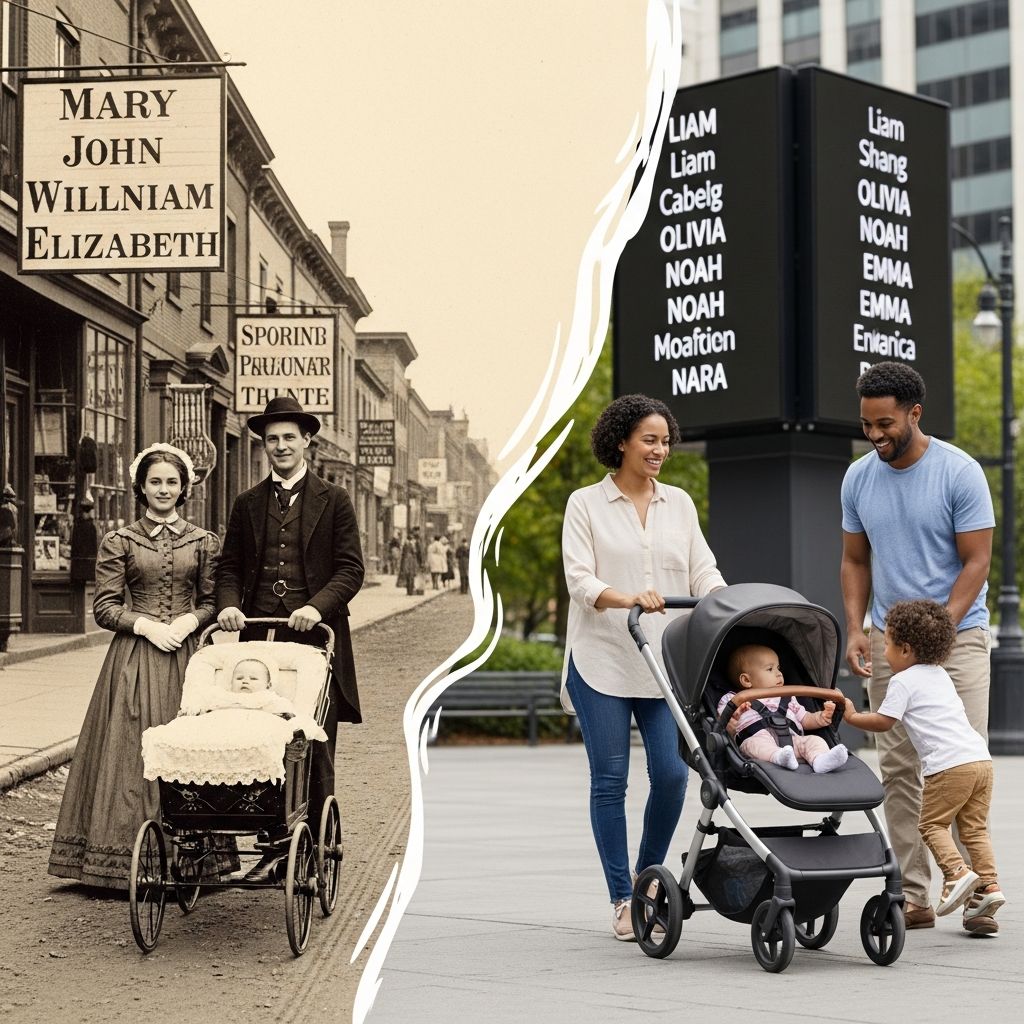
Understanding the Transformation of American Baby Naming Practices
The names parents choose for their children reveal far more than simple preferences—they reflect the values, cultural moments, and social influences of their era. Throughout American history, baby naming conventions have undergone remarkable transformations, moving from strictly traditional practices governed by religion and family obligation to a landscape shaped by entertainment, technology, and global connectivity. Understanding these shifts provides insight into how society itself has changed over generations.
The data surrounding naming trends spans more than a century of records, allowing researchers to track these fascinating patterns with precision. The Social Security Administration maintains comprehensive records of baby names since 1880, creating a unique historical document that shows exactly how parents have chosen to name their children across different decades and generations.
The Traditional Era: Religion and Family Heritage Define Naming Choices
In the early twentieth century, American naming practices were remarkably constrained and predictable. Parents drew heavily from religious traditions and family lineages when selecting names for their children. The most popular names of 1916 tell this story clearly—Mary dominated the girls’ rankings while John and William led the boys’ lists. These selections were not accidents of fashion but deliberate choices rooted in Christian tradition and the desire to honor ancestors and maintain family connections across generations.
The concentration of these traditional names was extraordinary by modern standards. In 1916, the single most popular boy’s name accounted for 5.4% of all boys born that year, while the most popular girl’s name represented 5.7% of female births. This means that in any classroom of twenty children of the same gender from that era, you would expect to find multiple children sharing the same first name. The homogeneity of naming choices reflected a society with stronger social conformity and less emphasis on individual distinctiveness.
Religious influence cannot be overstated in understanding early American naming conventions. Biblical names, saints’ names, and names with Christian significance dominated the cultural landscape. Parents saw naming as an opportunity to instill spiritual values and connect their children to religious heritage. This was not merely a fashion but a fundamental cultural expectation about what responsible parenting entailed.
The Golden Age of Hollywood: Entertainment Reshapes Naming Conventions
The 1920s and 1930s marked a pivotal turning point in American naming history. As motion pictures became increasingly popular and accessible to ordinary families, the influence of celebrity culture began to reshape how parents named their children. Names like Betty, Dorothy, and Richard gained significant traction during this period, directly influenced by the Hollywood stars who bore them and the characters they portrayed on screen.
This shift represented a fundamental change in how parents conceived of naming. Rather than viewing names primarily as connections to religious or family tradition, parents increasingly saw them as opportunities to align their children with contemporary cultural icons. The rise of movie theaters in small towns across America meant that even rural families could access the glamorous world of Hollywood and adopt its naming preferences.
The entertainment industry’s influence extended beyond individual names. The success of films featuring particular characters created naming trends as parents sought to capture some of the appeal or significance associated with beloved fictional figures. This marked the beginning of pop culture’s dominant role in shaping baby names—a role that would only intensify as media became more pervasive throughout the twentieth century.
Post-War Conformity and the Standardization of Mid-Century Names
The 1950s and 1960s brought a new set of popular names that reflected the cultural preoccupations of the post-war era. Names like Linda, Susan, Michael, and James dominated birth announcements during these decades. These names represented a kind of standardized American identity—traditional enough to feel safe and respectable, yet modern enough to feel contemporary.
The post-war period was characterized by a desire for stability and conformity. Parents generally embraced naming conventions that aligned with mainstream American values. The G.I. Generation and early Baby Boomers were more likely to be named after family members or to receive names that had proven popularity and social acceptance. This represented a kind of balance between the strict traditionalism of earlier generations and the radical individualism that would emerge in subsequent decades.
However, even during this apparently conformist period, seeds of change were being sown. The increasing accessibility of names across social classes meant that names previously associated with wealth or status became democratized. What had once been markers of social distinction became simply popular choices that reflected broader cultural values rather than class position.
The Cultural Revolution: Unconventional Choices and Nature-Inspired Names
The 1960s and 1970s fundamentally disrupted traditional naming patterns. As the cultural revolution challenged conventional values across American society, parents began rejecting the standardized names of previous generations in favor of more distinctive and unconventional choices. This period saw the emergence of nature-inspired names like River and Sky, which reflected the counterculture’s emphasis on authenticity, environmental consciousness, and rejection of mainstream materialism.
This era witnessed parents using baby names as a form of cultural expression and rebellion. Choosing an unusual name for a child became a statement about values and worldview. Parents who selected nature-inspired names were signaling their connection to environmental movements, their rejection of commercialism, and their embrace of alternative lifestyles. The name itself became a political and cultural statement.
The explosion of naming diversity during this period also reflected broader demographic and social changes. Immigration patterns were shifting, second-generation immigrants were blending cultural traditions, and the women’s liberation movement was influencing how parents thought about gender and identity. Names that had previously been confined to specific ethnic communities began gaining broader acceptance and popularity.
The Return to Classics: Reimagined Traditional Names for Modern Times
By the late twentieth century, a curious phenomenon emerged. Rather than continuing the push toward ever-greater distinctiveness, parents began returning to classic names—but with a crucial twist. Names like Emma, Olivia, and Ethan became popular once again, yet they were frequently given creative and alternative spellings that transformed their character.
This development reflected a sophisticated negotiation between tradition and individuality. Parents wanted the comfort and familiarity of established names with proven histories, yet they also wanted their children to possess something distinctive. The solution was to maintain recognizable names while altering their presentation through creative spelling variations. A name like Madeleine could become Madelynn, Madelyn, Madalyn, or Maddelyn—each variation marking the child as unique while remaining within the familiar territory of an established name.
This trend also reveals how parent preferences were becoming increasingly fragmented. Where once there were dominant top names that large percentages of children shared, the late twentieth and early twenty-first centuries saw a dramatic diversification. By 2016, the most popular boy’s name accounted for only 0.9% of births, compared to 5.4% in 1916, while girls’ names dropped from 5.7% to 1.0%. This reflects a cultural shift toward valuing individuality and personal distinction.
The Celebrity Effect in Contemporary Naming Culture
In the twenty-first century, celebrity influence on baby naming has become explicit and dominant. Names like Luna, Harper, and Mason experienced dramatic popularity surges following their adoption by famous celebrities. Unlike the more indirect influence of Hollywood in earlier decades, contemporary celebrity baby naming is immediately documented, shared through media outlets, and amplified across social networks.
This phenomenon operates through multiple mechanisms. Entertainment media covers celebrity baby announcements as news events. Social media platforms allow rapid dissemination and discussion of celebrity naming choices. Celebrity culture has become so pervasive that many parents consciously or unconsciously adopt naming choices influenced by the entertainment industry. A name that appears on a popular television show or is chosen by a beloved celebrity becomes immediately more appealing to prospective parents.
The influence extends beyond individual names to encompass naming styles and patterns. When celebrities choose nature-inspired names, mystical names, or names from particular cultural origins, these choices often trigger broader naming trends that ripple through the general population. Celebrity baby names function as cultural signals that receive amplification through media channels.
The Mechanics of Name Popularity: Why Preferences Shift and Spread
Research on naming trends has identified interesting patterns in how names gain and lose popularity. One influential theory, presented in popular media, suggests that names flow downward through social classes. Individuals with higher education and socioeconomic status tend to seek out unusual and distinctive names for their children. Once these names achieve a certain level of adoption, they gradually spread through broader populations as they become more familiar and accepted.
Once an unusual name becomes popular through this social diffusion process, cultural elites—seeking to maintain distinction—move on to discover and adopt the next generation of uncommon names. This creates a continuous cycle of name innovation and adoption, where today’s cutting-edge names become tomorrow’s mainstream choices. The process resembles fashion cycles in other domains, where trends emerge at the top of social hierarchies and gradually spread throughout society.
This dynamic helps explain why certain names experience sudden surges in popularity. When a name is adopted by influential celebrities or prominent cultural figures, it receives a massive acceleration in its adoption cycle. What might have taken decades to spread naturally through social classes can occur within a few years when amplified by celebrity endorsement and media coverage.
Regional and Cultural Variations in Naming Patterns
While national trends provide one perspective on naming practices, significant regional and cultural variations exist across the United States. Different states and communities show markedly different naming preferences, reflecting their unique demographic compositions, cultural values, and regional identities. States with distinct cultural characteristics—such as Utah with its strong religious community and Hawaii with its unique demographic composition—show naming patterns that diverge substantially from national averages.
These regional variations reflect how naming choices are influenced by local culture, community values, and demographic factors. Families in communities with strong religious traditions may maintain naming practices that differ significantly from secular urban centers. Communities with substantial immigrant populations may preserve naming traditions from their countries of origin while also adopting American naming conventions. These local variations add rich texture to the national naming landscape.
The Impact of Spelling Variations on Name Popularity Metrics
One crucial factor that complicates understanding modern naming trends is the explosion of creative spelling variations. When researchers track name popularity using exact spellings, variant spellings appear to dilute the rankings of traditionally popular names. A name like Madeleine may rank lower in official statistics than it would if all its variant spellings—Madeline, Madalyn, Madelyn, Maddelyn, Madelynn—were combined and counted together.
This phenomenon means that the apparent decline in name concentration in recent decades may partly reflect the fragmentation of names into multiple spelling variations rather than a fundamental shift toward greater diversity. If you combine all variants of names like Emily, Madeleine, or other popular options that families spell creatively, the concentration levels might appear less dramatically different from historical patterns.
The preference for creative spellings also reveals something about contemporary parenting values. Parents use spelling variations to create uniqueness while maintaining connection to established names. This strategy allows them to give their children recognizable, familiar names while still expressing individuality through orthographic innovation—a distinctly modern solution to the tension between tradition and distinctiveness.
Linguistic Preferences: How Phonetic Qualities Influence Name Selection
Linguistic research suggests that contemporary naming preferences favor names with specific phonetic characteristics. There appears to be a modern preference for “rounded” names with softer consonants and abundant vowels, contrasting with the harder-edged names that dominated earlier generations. Names like Ava exemplify contemporary preferences compared to earlier names like Margaret.
This shift in phonetic preferences reflects broader changes in how names are perceived and valued. Softer-sounding names may be associated with gentleness, approachability, and modernity, while harder consonants might seem dated or austere by contemporary standards. The selection of names with particular acoustic qualities suggests that parents are consciously or unconsciously considering how names sound and what emotional associations they carry.
Current Trends and Future Directions in Baby Naming
Contemporary naming trends reflect the complexity of modern American culture. The top names of recent years—Liam, Noah, Oliver, and Elijah for boys; Olivia, Emma, Ava, Charlotte, and Sophia for girls—blend traditional elements with modern sensibilities. These names feel contemporary yet are not aggressively unconventional. They are familiar enough to feel safe yet distinctive enough to feel current.
Looking forward, several factors will likely continue shaping naming trends. Increasing global connectivity means families may adopt names from diverse cultural origins more frequently. Continued celebrity influence through social media will amplify naming trends more rapidly than in previous decades. The ongoing tension between tradition and distinctiveness will continue driving the creative spelling phenomenon and the search for names that balance familiarity with individuality.
How Historical Naming Data Informs Our Understanding of Cultural Values
The comprehensive historical record of American baby names serves as a cultural archive, documenting the values, preoccupations, and influences that have shaped society across generations. Names are never arbitrary choices but reflect the cultural moment in which they are selected. By studying naming trends, historians and sociologists can understand what parents valued, what cultural figures influenced them, and how broader social movements manifested themselves in intimate family decisions.
The transformation from concentrated religious names to diverse celebrity-influenced choices reflects fundamental shifts in American society—from religious authority to entertainment influence, from conformity to individuality, from family obligation to personal expression. The naming choices parents make for their children encode narratives about cultural values that historians can decipher and analyze.
Frequently Asked Questions
Q: Why were names more concentrated in the early 1900s than today?
A: Early twentieth-century naming was constrained by stronger religious and family traditions, limited media diversity, and greater social conformity. The single most popular name represented 5.4% of boys born in 1916 compared to just 0.9% by 2016, reflecting a shift toward valuing individuality and drawing from diverse cultural influences.
Q: How much influence do celebrities have on baby naming trends?
A: Celebrity influence is substantial and increasingly direct in modern times. Names like Luna, Harper, and Mason experienced dramatic popularity surges after being chosen by famous personalities, with these choices amplified through media and social networks.
Q: What is the impact of creative spelling on name popularity rankings?
A: Creative spellings significantly fragment official popularity rankings. A name like Madeleine split into multiple variants (Madelynn, Madelyn, Madalyn, etc.) appears less dominant in statistics, though combining all variants would show stronger concentration than raw data suggests.
Q: Why do certain regions have different naming patterns?
A: Regional naming variations reflect local cultural values, religious traditions, demographic composition, and immigration patterns. States like Utah and Hawaii show naming preferences substantially different from national averages due to their unique cultural characteristics.
Q: How do linguistic preferences affect modern name selection?
A: Contemporary parents show preference for names with softer consonants and more vowels—favoring names like Ava over names like Margaret—suggesting that phonetic qualities influence how parents perceive and value names.
References
- Historical Trends in Baby Names — Sociological Images. 2008-07-18. https://thesocietypages.org/socimages/2008/07/18/historical-trends-in-baby-names/
- A Look at Baby Naming Trends Over the Years — Bunnies By The Bay. https://bunniesbythebay.com/blogs/how-to-delight/a-look-at-baby-naming-trends-over-the-years
- Popular Baby Names by Decade — Social Security Administration. https://www.ssa.gov/oact/babynames/decades/
- Top Names Over the Last 100 Years — Social Security Administration. https://www.ssa.gov/oact/babynames/decades/century.html
Similar Articles






Read full bio of medha deb