Explaining Unconventional Tattoos with Confidence
Master the art of discussing quirky ink: Turn awkward tattoo moments into engaging stories that highlight your personality and growth.
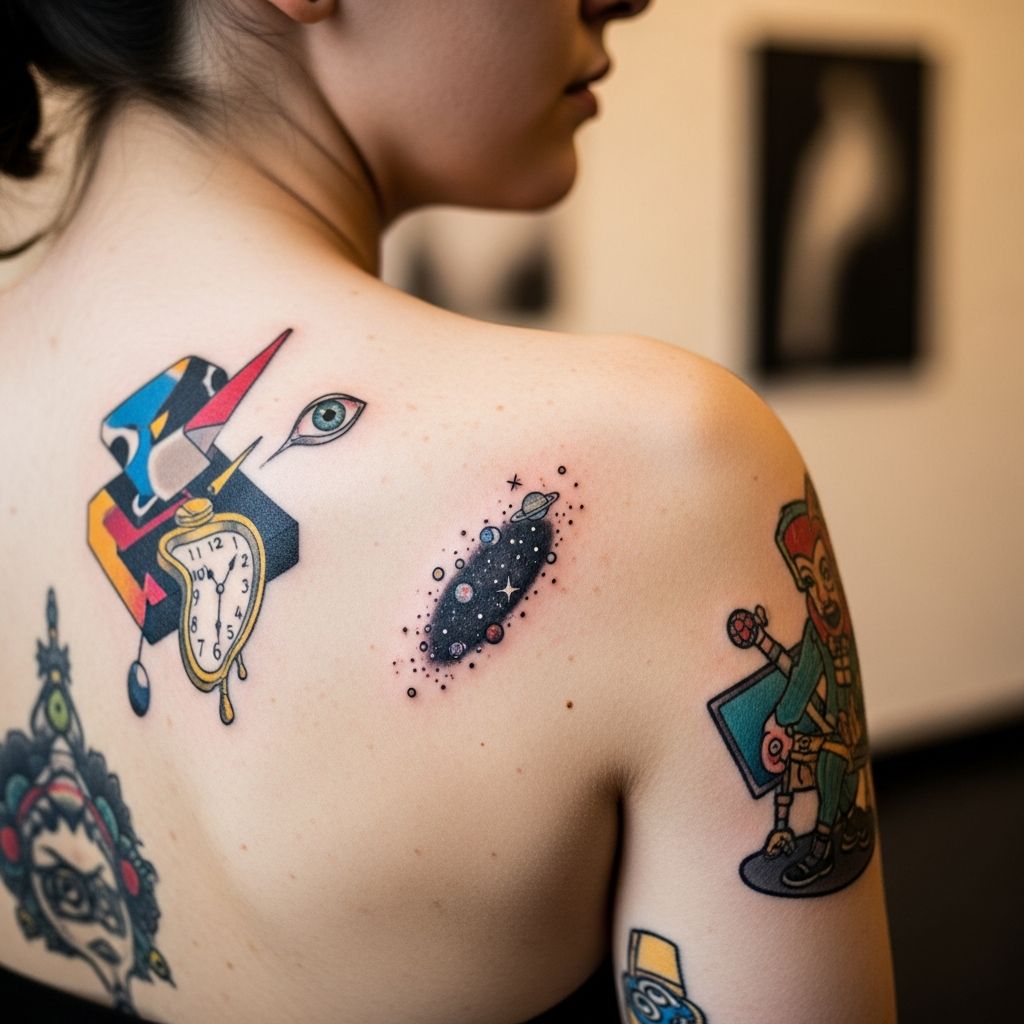
Unconventional tattoos often spark curiosity, amusement, or confusion in conversations. Whether it’s a bizarre image from youth or a spur-of-the-moment decision, knowing how to address them turns potential awkwardness into memorable exchanges. This guide explores strategies, personal narratives, and psychological insights to help you own your body art.
Understanding the Psychology Behind Tattoo Choices
Tattoos serve as permanent markers of identity, rebellion, or milestones. Research from the American Psychological Association indicates that body modifications like tattoos correlate with self-expression and resilience, often inked during transformative life phases. Unconventional designs, such as fantastical figures in unexpected scenarios, frequently stem from humor, pop culture influences, or fleeting passions.
Consider why people choose odd motifs: impulsivity peaks in early adulthood, with studies showing 20-30% of tattoos acquired under alcohol influence or peer pressure. Yet, these choices evolve into cherished stories over time, reflecting personal growth.
- Youthful Rebellion: Designs symbolizing defiance against norms.
- Humor as Coping: Absurd images to lighten life’s seriousness.
- Cultural Nods: References to niche hobbies or media.
Common Types of Awkward Tattoos and Their Origins
Many face ink that doesn’t age well. Categories include:
| Type | Typical Origin | Example |
|---|---|---|
| Sports-Themed Oddities | Passionate fandom or bets | A dominatrix swinging a golf club |
| Ex-Lover Tributes | Romantic highs | Initials or portraits now cringeworthy |
| Pop Culture Fads | Trendy movies or memes | Cartoon characters in bizarre poses |
| Drunken Dares | Night out regrets | Random animals or phrases |
These often arise from life’s spontaneous moments, but explaining them reframes regret into relatability.
Crafting Your Tattoo Narrative
The key to confident explanation lies in storytelling. Structure your response like this:
- Acknowledge the Oddity: ”Yeah, it’s wild, right?” This disarms judgment.
- Share the Context: Tie it to a specific time or event.
- Highlight Growth: Show how it represents your journey.
- End Positively: Link to current values or humor.
For a golfing dominatrix tattoo, you might say: ”Got this during a wild golf trip in my 20s—mix of my love for the sport and some edgy nightlife vibes. Now it reminds me to balance fun with focus.” This transforms peculiarity into personality.
Strategies for Different Social Scenarios
Job Interviews and Professional Settings
Cover-up options like clothing or makeup buy time, but honesty builds trust. A Harvard Business Review analysis notes that authentic personal stories enhance likability in interviews. Prepare a 30-second version: brief, professional, positive.
Dating and Romantic Encounters
Vulnerability fosters connection. Share laughs first, then depth. Surveys from Pew Research show 40% of daters appreciate unique traits like tattoos as icebreakers.
- Use humor: ”It’s my spirit animal—equal parts fierce and fairway-focused.”
- Probe back: ”What’s the story behind your scars or jewelry?”
Family Gatherings
Frame through lessons learned. Older relatives relate to ”mistakes turned wisdom.”
Unexpected Stranger Questions
Keep it light: A quick quip suffices. ”Lost a bet—best $100 mistake ever!”
Real-Life Stories of Tattoo Redemption
Meet Alex, who sports a cartoonish golfer in leather: ”Inked after winning a tournament dare. Now, at 35, it’s my networking opener—leads to golf invites everywhere.”
Sarah’s tribal ex-name cover-up: ”Explaining it as ‘chapter closed, new adventures open’ helped me heal and connect.”
These anecdotes show tattoos as conversation catalysts, not hindrances.
Leveraging Humor to Defuse Awkwardness
Humor is your ally. Psychological studies confirm laughter reduces social tension. Self-deprecation works wonders:
- ”My tattoo artist must’ve misheard ‘golf pro’ as ‘golf dominatrix’!”
- ”It’s what happens when you mix tequila and tattoo parlors.”
Practice in mirrors or with friends to deliver punchlines smoothly.
When to Consider Cover-Ups or Removal
Not all ink needs explaining forever. Laser removal tech has advanced; FDA-approved methods remove 95% of ink in 10 sessions. Weigh costs ($200-500/session) against emotional value.
| Option | Pros | Cons | Cost Estimate |
|---|---|---|---|
| Cover-Up Tattoo | Transforms design | Larger size | $300-1000 |
| Laser Removal | Clean slate | Painful, multiple visits | $2000-5000 |
| Embrace It | No cost, authentic | Ongoing explanations | $0 |
Many opt to keep, turning ”flaws” into features.
Building Long-Term Confidence
Therapy like cognitive behavioral techniques reframes tattoo shame into pride. Join communities (e.g., Reddit’s r/tattoos) for support. Over time, your narrative solidifies, making explanations second nature.
Frequently Asked Questions (FAQs)
What if someone laughs at my tattoo explanation?
Lean in: Shared laughter bonds people. Respond with, ”Glad it cracked you up—mission accomplished!”
Is it okay to lie about a tattoo’s meaning?
Better not—authenticity shines brighter. Fabrications risk unraveling.
How do I explain tattoos to kids?
Keep it age-appropriate: ”It’s a picture from a fun adventure I had.”
Can awkward tattoos affect career growth?
Rarely in creative fields; in conservative ones, concealment helps initially.
What’s the best tattoo aftercare for old ink?
Moisturize, sun-protect; consult dermatologists for fading concerns.
Embracing Your Ink as Part of Your Story
Unconventional tattoos chronicle life’s messiness. By mastering explanations, you not only navigate social waters but celebrate individuality. Next time eyes widen at your skin art, smile—you’ve got a tale worth telling.
References
- Body Art and Self-Expression — American Psychological Association. 2023-05-15. https://www.apa.org/monitor/2023/05/body-art-self-expression
- Tattoo Regret and Decision-Making — Journal of Consumer Research (Oxford University Press). 2022-08-10. https://doi.org/10.1093/jcr/ucac045
- Authenticity in Professional Settings — Harvard Business Review. 2024-03-20. https://hbr.org/2024/03/authenticity-in-interviews
- Dating and Unique Traits — Pew Research Center. 2025-01-12. https://www.pewresearch.org/social-trends/2025/01/12/dating-traits/
- Laser Tattoo Removal Guidelines — U.S. Food and Drug Administration. 2024-11-05. https://www.fda.gov/consumers/consumer-updates/tattoo-removal-what-you-need-know
Similar Articles








Read full bio of Sneha Tete