Fairly Splitting Home Tasks for Family Harmony
Discover proven strategies to equitably divide household responsibilities, reduce resentment, and foster teamwork in every home.
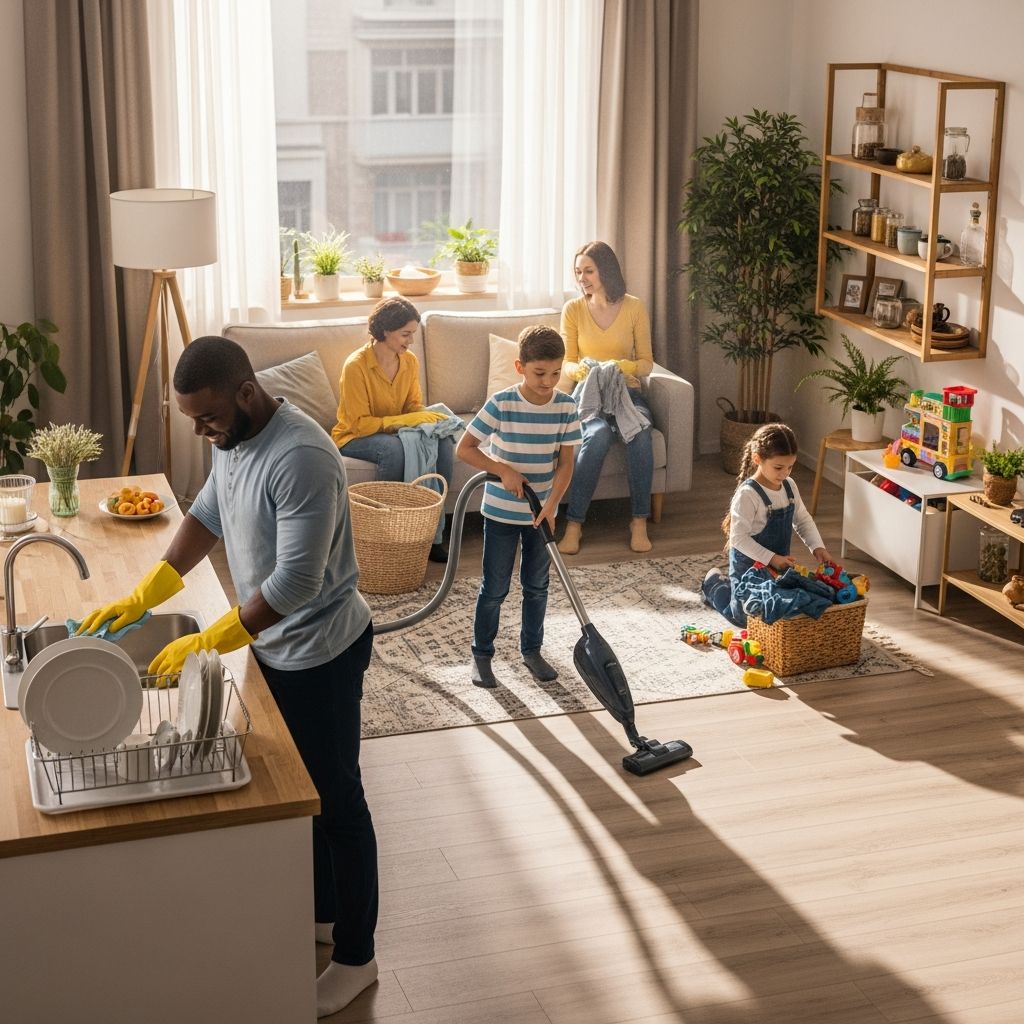
Dividing household responsibilities equitably is essential for maintaining peace and productivity in any home. Uneven workloads often lead to frustration and strained relationships, but a systematic approach can transform chores from a source of conflict into opportunities for collaboration and growth.
Understanding the Hidden Imbalance in Home Duties
Household tasks represent a significant portion of daily life, yet they are frequently undervalued and unevenly distributed. Studies reveal stark disparities: in many households, one partner—typically women—handles the majority of domestic work, averaging over three hours daily compared to less for men. This imbalance persists even in dual-income families, exacerbating stress during events like pandemics when home time surges.
The mental load of remembering, planning, and executing these tasks adds another layer of burden. Invisible labor, such as scheduling appointments or monitoring supplies, often goes unnoticed. Recognizing this disparity is the first step toward fairness, setting the stage for a collaborative redistribution that benefits everyone.
Conducting a Thorough Home Task Assessment
Begin by cataloging every responsibility in your household. Convene family members for a brainstorming session to list all duties comprehensively. Categorize them into daily, weekly, and monthly obligations to gain clarity.
- Daily Essentials: Meal preparation, dishwashing, surface wiping, trash removal.
- Weekly Maintenance: Floor cleaning, laundry cycles, bathroom scrubbing, grocery stocking.
- Monthly Deep Cleans: Window washing, appliance maintenance, organizing storage areas.
This inventory reveals overlooked tasks and prevents anyone from claiming ignorance. Use a shared digital document or whiteboard for transparency, ensuring all voices contribute to the list.
Implementing a Point-Based Valuation System
To account for varying effort levels, assign points to tasks based on time, complexity, and unpleasantness. This quantifies contributions objectively, making distribution feel just.
| Task Category | Example Tasks | Point Value |
|---|---|---|
| Low Effort | Clear table, empty trash | 5 points |
| Moderate Effort | Dishwashing, room tidying | 10 points |
| Medium-High | Vacuuming, laundry loads | 15 points |
| High Effort | Meal cooking, bathroom cleaning | 20 points |
| Intensive | Full kitchen overhaul, deep scrubbing | 30 points |
Adjust points dynamically: elevate them for unpopular chores to incentivize uptake, or lower for coveted ones to encourage sharing. This market-like mechanism balances participation naturally.
Balancing Contributions Across Family Members
Once valued, track points weekly to ensure equity. When one person completes a task, they gain points while others in the ‘pool’ deduct a share proportionally. For a family of four, cooking a 20-point meal nets the cook +15 points (20 minus 5 each from the other three).
Customize involvement: exempt young children from advanced tasks like cooking, but include them in age-suitable ones like table setting. Tools can automate this, remembering preferences for recurring duties and promoting accountability without manual tracking.
Tailoring Responsibilities by Age and Ability
Engage children progressively to build life skills and responsibility. Age-appropriate assignments prevent overwhelm while contributing meaningfully.
- Ages 3-5: Toy pickup, laundry sorting into baskets.
- Ages 6-8: Table setting/clearing, simple folding.
- Ages 9-12: Sweeping, dishwasher management, trash duty.
- Teens: Full meals, personal laundry, surface deep cleans.
This fosters autonomy and self-esteem, as kids visualize their impact via points. Parents model equity, passing on values of teamwork.
Communication Strategies for Lasting Agreements
Fairness requires open dialogue. Value each person’s time equally, recognizing that every minute spent on chores detracts from personal pursuits. Approach discussions vulnerably: express feelings without blame, like “I feel overwhelmed managing schedules alone” instead of accusations.
Compromise on personalities—procrastinators may thrive with deadlines, perfectionists with quality checks. Stay flexible for life’s interruptions, offering support without resentment. Avoid micromanaging; trust partners’ methods to build confidence.
Leveraging Efficiency and Envy-Free Allocations
Economists advocate for ‘envy-freeness,’ where no one prefers another’s full task load over their own. Allocate complete responsibilities—including planning and execution—to eliminate overlap disputes. Embrace efficiency: if one partner excels at a task, let them own it, but balance with equivalent loads elsewhere.
This system, inspired by organizational strategies, names every duty explicitly, reducing mental load. Regular reviews ensure evolving needs are met, maintaining buy-in.
Cultivating Motivation Through Appreciation
Positive reinforcement sustains participation. Offer genuine compliments on efforts, like praising a thorough vacuum job, to boost morale. Recognition affirms value, countering demotivation from perceived underappreciation.
Celebrate milestones, such as a week of balanced points, with family rewards like a game night. This shifts focus from obligation to collective achievement.
Overcoming Common Obstacles
Resistance may arise from habit or gender norms. Counter with data from your audit, highlighting imbalances factually. For stay-at-home dynamics, delineate childcare, cleaning, and admin tasks distinctly to avoid assumptions.
If points skew, recalibrate valuations. Flexibility prevents rigidity; swap tasks quarterly to refresh perspectives.
Key Benefits of Equitable Chore Division
- Reduced Conflicts: Eliminates nagging and score-keeping.
- Shared Cognitive Burden: Distributes planning evenly.
- Skill-Building for Kids: Promotes responsibility and independence.
- More Quality Time: Frees evenings for bonding.
- Modeling Equality: Instills fair values for future generations.
Frequently Asked Questions
What if a family member consistently underperforms?
Address privately with empathy, reviewing point logs. Adjust tasks or offer training, emphasizing team impact. Persistent issues may need professional mediation.
Can this work in single-parent homes?
Yes—adapt by involving older kids more and outsourcing where feasible, using points for internal balance and external services.
How often should we review the system?
Monthly audits keep it relevant; seasonal overhauls account for life changes like school starts.
Is technology necessary for point tracking?
No, but apps simplify logging and reminders, enhancing adherence.
What about chores no one wants?
Boost points significantly or rotate strictly to share the load equitably.
Getting Started: Your Action Plan
Launch with a family meeting: list tasks, assign points, and trial for two weeks. Tweak based on feedback, then institutionalize. Consistency yields harmony, turning chores into a foundation for stronger relationships.
References
- How to fairly distribute household chores in the family — FairChore. 2023. https://www.fairchore.com/en/blog/how-to-divide-household-chores-family
- 9 Ways to Distribute Household Work Fairly — FlexiSpot Spine Care Center. 2023-05-15. https://www.flexispot.com/spine-care-center/9-ways-to-distribute-household-work-fairly
- Want Your Husband To Do More Around the House? — Katie Couric Media. 2023. https://katiecouric.com/lifestyle/household-chores-divison-of-labor/
- How to Divide Household Chores Fairly — TIME Magazine. 2019-11-12. https://time.com/5690007/divide-household-chores-fairly/
- Home | Fair Play Life — Fair Play Life. 2024. https://www.fairplaylife.com
- How to Balance Household Work When One Parent Stays at Home — Parent.com. 2023. https://www.parent.com/blogs/conversations/2023-how-to-balance-household-work-when-one-parent-stays-at-home
Similar Articles








Read full bio of medha deb