Handedness in Toddlers: Early Signs and Long-Term Impact
Discover when toddlers show hand preference, why it matters for cognitive growth, and how to support their motor and language skills effectively.
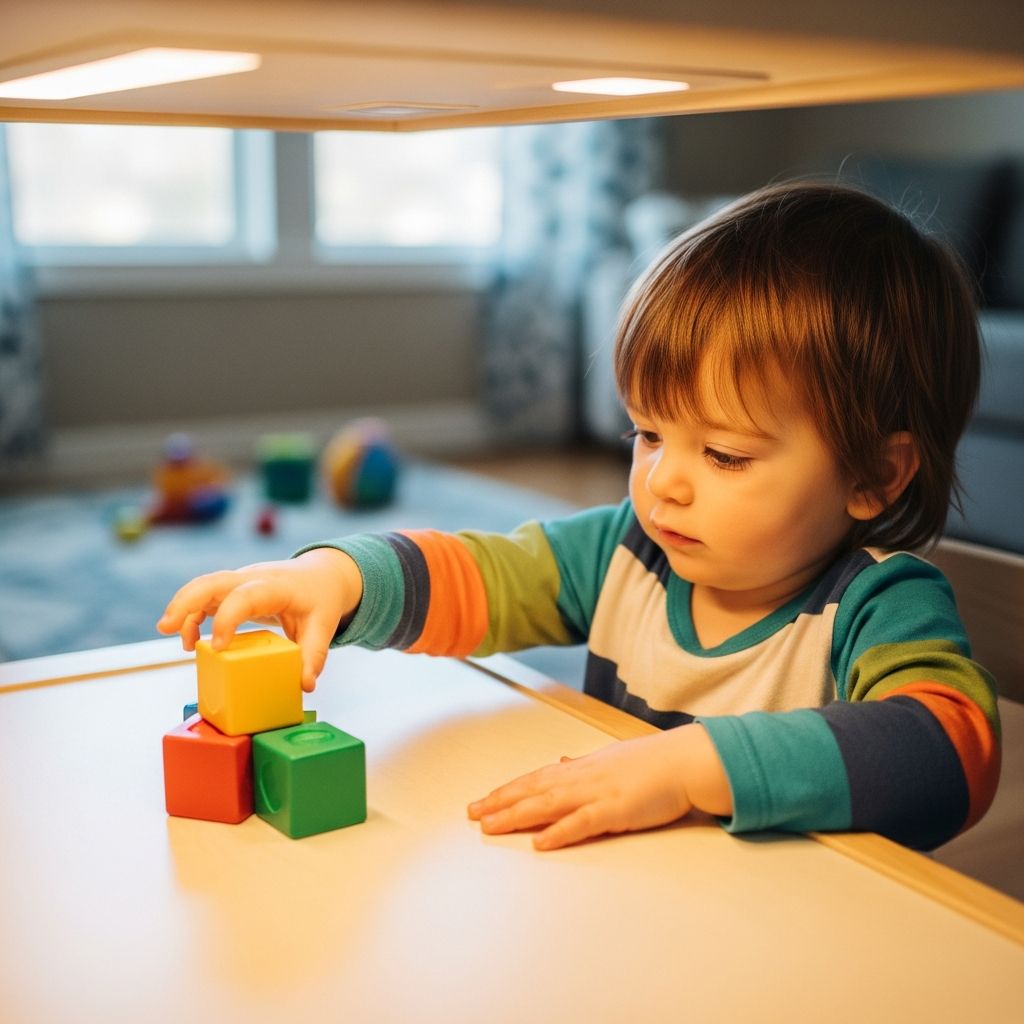
Between 17 and 33 months, many toddlers begin displaying initial preferences for using one hand over the other when reaching for toys, stacking blocks, or manipulating objects. This emerging handedness is not always fixed and can evolve over several years, influencing motor proficiency, language acquisition, and cognitive growth.
Understanding the Roots of Hand Preference
Handedness, or the tendency to favor one hand for skilled tasks, originates from a complex interplay of prenatal and postnatal factors. Research indicates that preferences for object acquisition can appear before 6 months, becoming more defined between 6 and 12 months, though full stabilization often occurs later. In toddlers around 17-33 months, you might notice a child consistently using the right hand to grasp a spoon or the left for pointing, but switches are common as the brain refines hemispheric specialization.
Studies using group-based trajectory modeling on infants from 6 to 14 months reveal distinct patterns: about 32% show consistent right-hand use early on, 12% left, 26% trend toward right later, and others remain ambiguous. By 18 months, preferences for role-differentiated bimanual manipulation—where one hand holds and the other acts—stabilize in 80% of cases, persisting to 24 months. This period aligns with rapid advancements in fine motor control, making 17-33 months a critical window for observation.
Timeline of Handedness Emergence in Early Childhood
Hand preference unfolds in stages, with early signs not guaranteeing lifelong dominance. Here’s a breakdown:
- 0-6 months: Subtle biases in reaching or grasping emerge, linked to fetal positioning and head-turn preferences.
- 6-14 months: Acquisition preferences peak; consistent users advance faster in manipulation skills.
- 13-18 months: Bimanual coordination strengthens, with 80% stabilizing by 18 months.
- 17-33 months: Toddlers experiment more, showing preferences in daily tasks like eating or drawing, though shifts occur until age 4-6.
- 4-6 years: Clear dominance in 90% of children, primarily right-handed.
This progression underscores that while 17-33 months marks noticeable tendencies, full commitment may take years, allowing environmental and neurological factors to shape outcomes.
How Early Hand Preference Boosts Cognitive Development
Consistent handedness early in life correlates with accelerated cognitive milestones. Infants with stable preferences from 6-14 months outperform peers in language at 24 months, explaining 25% of variance in expressive skills. Right-preferring infants, in particular, show advanced Bayley-III language scores.
Object management skills also advance quicker. From 6-12 months, lateralized infants progress from holding none to two objects faster, achieving sophisticated sequences like banging toys together by 9 months. At 10-14 months, consistent hand users stack blocks more effectively than non-preferring peers. These gains stem from efficient hemispheric organization, freeing neural resources for higher functions.
| Hand Preference Pattern | Age of Consistency | Cognitive Advantages |
|---|---|---|
| Consistent Right (Infancy) | 6-14 months | Advanced language, stacking, tool use |
| Consistent Left | After 8 months | Stronger object management |
| Late Right Trend | By 14 months | Moderate gains, similar to consistent |
| No Preference | Ongoing | Slower motor and language progress |
Right vs. Left Handedness: Patterns and Implications
Approximately 90% of people are right-handed, a ratio evident by school age. In infancy, consistent right-handers establish preference earliest, by 6 months, maintaining it strongly. Left-handers solidify later, post-8 months, yet achieve comparable skills in manipulation and construction.
Body-specificity hypothesis suggests hand use shapes brain pathways uniquely: right-handers may excel in certain spatial tasks, left-handers in others, influencing developmental trajectories. For 17-33 month olds, observe if a child favors one hand for pointing (often right) versus holding (variable), as these predict later dominance.
Observing Hand Preference in Daily Toddler Activities
Parents can track emergence through play:
- Reaching for distant toys: Note leading hand.
- Stacking or nesting: Preferred hand for placement.
- Self-feeding: Spoon or finger use consistency.
- Drawing scribbles: Grip and stroke direction.
- Throwing balls: Dominant arm thrust.
At 17-33 months, variability is normal—up to 30% show no clear preference initially. Avoid forcing a hand; switching before 4 years is typical.
Supporting Healthy Hand Preference Development
To nurture emerging handedness:
- Provide bilateral toys: Encourage both hands via blocks, puzzles.
- Model natural use: Use your dominant hand openly.
- Enhance fine motor play: Finger painting, threading beads from 18 months.
- Monitor milestones: By 24 months, consistent use in 2+ tasks signals progress.
- Consult experts if delayed: Persistent ambidexterity past 6 years may warrant occupational therapy.
Enriching environments accelerate cascades from reaching to tool use.
Potential Challenges and When to Seek Help
Most toddlers navigate handedness smoothly, but red flags include:
- No preference by 4-6 years with poor coordination.
- Frequent forced switching causing frustration.
- Asymmetrical skills, e.g., one hand weak in grasping.
Early intervention boosts outcomes; consistent preference markers predict neurobehavioral health.
Frequently Asked Questions (FAQs)
At what age do toddlers typically show hand preference?
Signs emerge around 17-33 months, stabilizing by 18 months for many, though full dominance often sets by 4-6 years.
Is early right-hand preference better for development?
It links to faster language and motor gains, but consistent left preference offers similar advantages; consistency matters most.
Should I encourage my toddler to use their non-dominant hand?
No, forcing can hinder skills; let natural preference develop, intervening only if delays persist past age 6.
Can hand preference change after 33 months?
Yes, shifts are common until school age as brain lateralization matures.
How does handedness affect language skills?
Consistent early preference predicts 25% higher expressive language at 2 years, via enhanced motor-cognitive links.
Long-Term Outcomes of Early Handedness
Beyond toddlerhood, early patterns forecast tool-use proficiency and academic readiness. Longitudinal data show infancy consistency drives variance in 3-year language scores. As children enter preschool, handedness influences writing grip and sports, with 90% right-dominance shaping societal tools. Understanding these foundations empowers parents to optimize growth phases.
Research emphasizes longitudinal tracking: from supine head bias prenatally to bimanual mastery by 24 months. For 17-33 month olds, this is prime observation time, bridging infancy variability to preschool stability.
References
- Infant Hand Preference and the Development of Cognitive … — Frontiers in Psychology. 2016-03-22. https://www.frontiersin.org/journals/psychology/articles/10.3389/fpsyg.2016.00410/full
- Early handedness in infancy predicts language ability … — PMC (PubMed Central). 2014-06-11. https://pmc.ncbi.nlm.nih.gov/articles/PMC4059533/
- Object Skill Advantage in Infants with a Hand Preference — FIU Hands Lab. 2024. https://hands.fiu.edu/2024%20-%20Marcinowski,%20Nelson%20-%20Object%20skill%20advantage%20in%20infants%20with%20a%20hand%20preference.pdf
- Hand Dominance Development in Children — Occupational Therapy Australia. 2023. https://occupationaltherapy.com.au/hand-dominance-development-in-children/
- Understanding Early Hand Preference in Babies — Shire Paediatric Physio. 2023. https://shirepaediatricphysio.com.au/blog/f/understanding-early-hand-preference-in-babies
Similar Articles







Read full bio of Sneha Tete