Head Lice in Children: A Practical Guide for Parents
Understand, spot, and safely treat head lice in children while keeping home, school, and emotions under control.
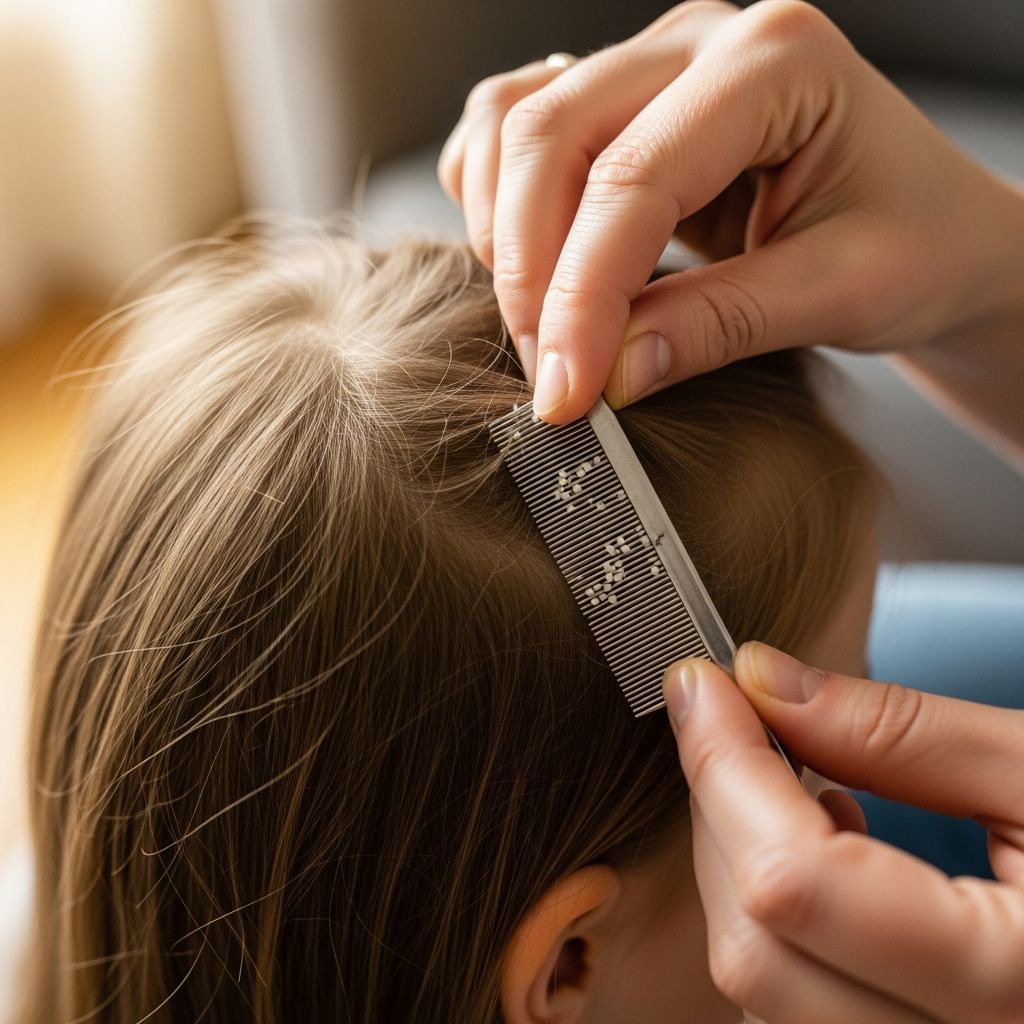
Head Lice in Kids: What Every Parent Needs to Know
Head lice are a very common childhood problem, but they cause much more frustration than danger. Understanding what lice are, how they spread, and how to treat them helps you act quickly and calmly. This guide walks you through the essentials so you can clear an infestation and reduce the chances of it coming back.
What Exactly Are Head Lice?
Head lice are tiny insects that live on the scalp and hair, feeding on small amounts of blood from the skin. They are species-specific parasites, which means human head lice live only on humans and cannot survive on pets.
| Stage | Description | Where Found |
|---|---|---|
| Egg (nit) | Tiny, oval egg glued firmly to the hair shaft; often yellow, tan, or white. | Close to the scalp, especially behind the ears and at the nape of the neck. |
| Nymph | Immature louse that hatches from the egg; smaller and lighter in color. | Moves around the scalp and hair while feeding. |
| Adult louse | Sesame seed–sized insect, grayish or brown; has six legs with claws. | On the scalp and hair; can crawl quickly but cannot jump or fly. |
Adult lice usually survive about 3–4 weeks on the scalp, but away from the head they generally die within 1–2 days.
How Do Children Catch Head Lice?
Head lice spread most often through direct head-to-head contact with someone who has an active infestation. This contact is common during normal childhood activities.
Typical Ways Lice Spread
- Playing closely with friends, especially when heads touch during games or selfies.
- Sleeping near another child with an active infestation (sleepovers, camps).
- Sharing items that touch the hair, such as hats or hair accessories, though this is less common than direct contact.
Lice do not spread because of poor hygiene or a dirty home. They are just as likely to affect clean hair as dirty hair.
Common Signs and Symptoms
Some children have very few symptoms, while others are extremely itchy. Signs can take weeks to appear after the first lice arrive.
Symptoms to Watch For
- Itchy scalp, especially behind the ears and at the back of the neck.
- A tickling or crawling feeling in the hair.
- Scratching that leads to red bumps or sores on the scalp or neck.
- Trouble sleeping, because lice are more active in the dark.
What You May See in the Hair
- Nits attached firmly to hair shafts, often within 6 mm of the scalp.
- Small moving insects when you part the hair and look closely.
- Enlarged lymph nodes or crusting when scratching has caused skin infection (in more severe cases).
Dandruff, hair spray droplets, or lint can be mistaken for nits. Real nits are hard, oval, and do not slide easily off the hair when you run your fingers along the strand.
How to Check Your Child for Lice
Thorough inspection is the first step toward effective treatment. A fine-toothed lice comb makes this easier and more accurate.
Step-by-Step Scalp Check
- Work in bright light or use a flashlight to see the scalp clearly.
- Start with clean, slightly damp hair to slow down any moving lice.
- Part the hair into small sections and pin back the rest.
- Look carefully along the scalp, especially:
- Behind the ears
- At the nape of the neck
- Comb each section from scalp to hair ends with a lice comb, wiping the comb on a white tissue or paper towel to look for lice or nits.
If you find live, crawling lice, your child has an active infestation and needs treatment. Nits alone do not always mean active infestation, especially if they are more than a centimeter from the scalp.
When to Call a Health Professional
In many cases, parents can manage lice at home with guidance from reliable sources. However, contact your child’s doctor or a healthcare provider if:
- You are not sure if what you see is lice or dandruff.
- Over-the-counter treatments have failed, or live lice are still present after proper use.
- Your child is younger than 2 years old (or younger than the age listed on the product label).
- The scalp is very red, swollen, or has yellow crusts that could indicate infection.
- Your child has allergies, asthma, or sensitive skin and you are worried about medication safety.
Evidence-Based Treatment Options
The most effective lice control combines approved medications with systematic combing. Home remedies that have not been well studied are not recommended by major health organizations.
1. Medicated Lice Products (Pediculicides)
Head lice medicines come in over-the-counter (OTC) and prescription forms, often as lotions, creams, or shampoos. The U.S. Centers for Disease Control and Prevention (CDC) lists several approved options, including products that contain permethrin, pyrethrins, ivermectin, spinosad, or malathion.
Safe Use Tips
- Use lice medicines only when you see live lice, not just nits.
- Follow the exact directions on the product label or from your doctor.
- Do not use more than recommended or repeat treatments early unless a healthcare provider advises it.
- Rinse products over a sink rather than in the shower to limit skin exposure.
- Keep medicine out of your child’s eyes and mouth, and never leave a child alone with medication on their hair.
Some medicines kill both lice and many eggs in a single treatment, while others require a second dose about 7–10 days later to kill newly hatched lice.
2. Combing and Manual Removal
Using a specially designed lice comb helps remove lice and nits and is a key part of effective treatment.
How to Comb Effectively
- Apply conditioner or the recommended product to damp hair to make combing easier.
- Divide the hair into small sections.
- Comb from the scalp all the way to the hair ends with each stroke.
- Wipe the comb on a white tissue after each pass to check for lice or nits.
- Repeat combing every 2–3 days for at least 2 weeks after treatment to catch any late hatchers.
Fine-toothed metal combs tend to work better than plastic combs for removing firmly attached nits.
3. Treatments and Methods to Avoid
- Do not use products meant for animals; they can be toxic to humans.
- Avoid unproven home remedies such as gasoline or kerosene, which are dangerous and can cause severe burns or poisoning.
- Essential oils and various “natural” products have limited high-quality evidence and may cause allergies or irritation.
- Do not apply household insect sprays or fumigants to furniture or bedding for lice; these chemicals can be harmful and are unnecessary.
Cleaning Your Home Without Overdoing It
Lice live on the head, not in the environment. Simple cleaning is usually enough. Because lice survive only 1–2 days away from the scalp and nits die if they are not kept warm by the head, intense home disinfection is not needed.
Recommended Cleaning Steps
- Wash pillowcases, recently worn hats, scarves, and clothing used in the past 2 days in hot water (at least 130°F / 54°C) and dry on high heat.
- Vacuum floors, mattresses, and upholstered furniture where the child rests their head.
- Soak combs and brushes in hot water (at least 130°F / 54°C) for 5–10 minutes.
- Seal non-washable items such as stuffed animals in a plastic bag for 2 days before returning them to regular use.
What You Do Not Need to Do
- Do not use foggers, sprays, or household pesticides.
- Do not pay for whole-house fumigation; it is ineffective against head lice and may expose the family to toxic chemicals.
Preventing Spread and Reinfection
No method can guarantee prevention, but simple habits lower the risk and help catch new cases early.
Smart Everyday Habits
- Teach children to avoid head-to-head contact during play or sports whenever possible.
- Encourage them not to share:
- Combs and brushes
- Hats, scarves, and hair accessories
- Headphones and helmets (when practical)
- Keep each child’s coats and hats in separate cubbies or on separate hooks at school when possible.
- Check your child’s hair regularly during known school outbreaks so you can treat early if lice appear.
Regular combing with a louse comb for early detection can be an effective preventive strategy, especially if someone in the household has had lice recently.
School, Activities, and Lice Stigma
Many parents worry their child will be embarrassed or excluded from school because of lice. Current expert guidance emphasizes minimizing disruption to learning and reducing stigma.
School Attendance
- The American Academy of Pediatrics and the National Association of School Nurses advise that children with lice generally do not need to be sent home early from school.
- Children can usually return to class after treatment starts, even if some nits remain, as long as live lice are not seen.
- “No-nit” policies, which require all nits to be removed before a child returns, are discouraged because they lead to unnecessary school absences and do not significantly reduce spread.
Supporting Your Child Emotionally
- Explain that head lice are common and can happen to anyone.
- Avoid blaming, shaming, or punishing your child—they did not cause the infestation.
- Reassure them that lice are treatable and temporary.
- Encourage privacy if your child feels embarrassed, but be honest with close contacts who need to check their own children.
Head Lice Myths and Facts
Misinformation about lice is widespread. Knowing the facts helps you focus on what really works.
| Myth | Fact |
|---|---|
| Only dirty hair gets lice. | Lice affect clean and dirty hair equally; hygiene does not prevent or cause infestation. |
| Lice jump from head to head. | Lice cannot jump or fly; they crawl and spread mainly through direct head contact. |
| Pets can spread head lice. | Human head lice live only on humans. Dogs, cats, and other animals do not carry or spread them. |
| You must disinfect your whole house. | Routine cleaning and washing recently used items are enough; fumigation and insect sprays are not necessary. |
Frequently Asked Questions (FAQs)
Q: How long after treatment are lice no longer contagious?
Most experts agree that once appropriate treatment is applied and live lice are killed, the chance of spreading lice to others drops quickly, especially if you continue careful combing and follow directions for any second dose of medicine.
Q: Do I need to treat everyone in the house?
All household members and close contacts should be checked. Only those with live lice or clear evidence of active infestation usually need treatment, but some clinicians recommend treating close contacts who share beds, even if lice are not yet seen.
Q: How do I know if the treatment worked?
Examine the scalp and hair about 7–10 days after treatment. If you see no live, moving lice and only old nits, treatment is usually considered successful. If live lice are still present, talk to your child’s doctor about repeating the same medicine or switching to another approved product.
Q: Are repeated lice infestations a sign of something serious?
Recurrent lice are usually related to ongoing exposure at school or in social settings, incorrect or incomplete treatment, or resistance to a specific product—not an underlying disease. If infestations keep coming back, consult a healthcare provider for alternative medications and a careful review of how products are being used.
Q: Can I prevent lice with regular use of lice shampoos?
Routine use of medicated lice shampoos as a preventive measure is not recommended. They are designed for active infestations and may cause unnecessary exposure to insecticides. Regular head checks and reducing head-to-head contact are safer and more effective for prevention.
References
- Head Lice Information for Parents — Centers for Disease Control and Prevention (CDC). 2024-01-12. https://www.cdc.gov/lice/head/index.html
- Treatment of Head Lice — Centers for Disease Control and Prevention (CDC). 2023-09-11. https://www.cdc.gov/lice/treatment/index.html
- Head Lice: What Parents Need to Know — American Academy of Pediatrics / HealthyChildren.org. 2022-09-06. https://www.healthychildren.org/English/health-issues/conditions/from-insects-animals/Pages/signs-of-lice.aspx
- Prevention and Treatment of Head Lice in Children — Mumcuoglu KY, Paus R, Gellert R. Pediatric Drugs (PubMed). 2000-08-01. https://pubmed.ncbi.nlm.nih.gov/10937452/
- Head Lice: Common Childhood Condition — Seattle Children’s Hospital. 2023-05-10. https://www.seattlechildrens.org/conditions/head-lice/
- Head Lice — Nationwide Children’s Hospital. 2023-04-03. https://www.nationwidechildrens.org/conditions/head-lice
- Head Lice: Diagnosis & Treatment — Mayo Clinic. 2022-11-15. https://www.mayoclinic.org/diseases-conditions/head-lice/diagnosis-treatment/drc-20356186
Similar Articles






Read full bio of medha deb