Infant Hand Movements: 1-3 Months Milestones
Discover how your baby's hand opening and closing from 1-3 months signals vital motor skill growth and what to watch for.
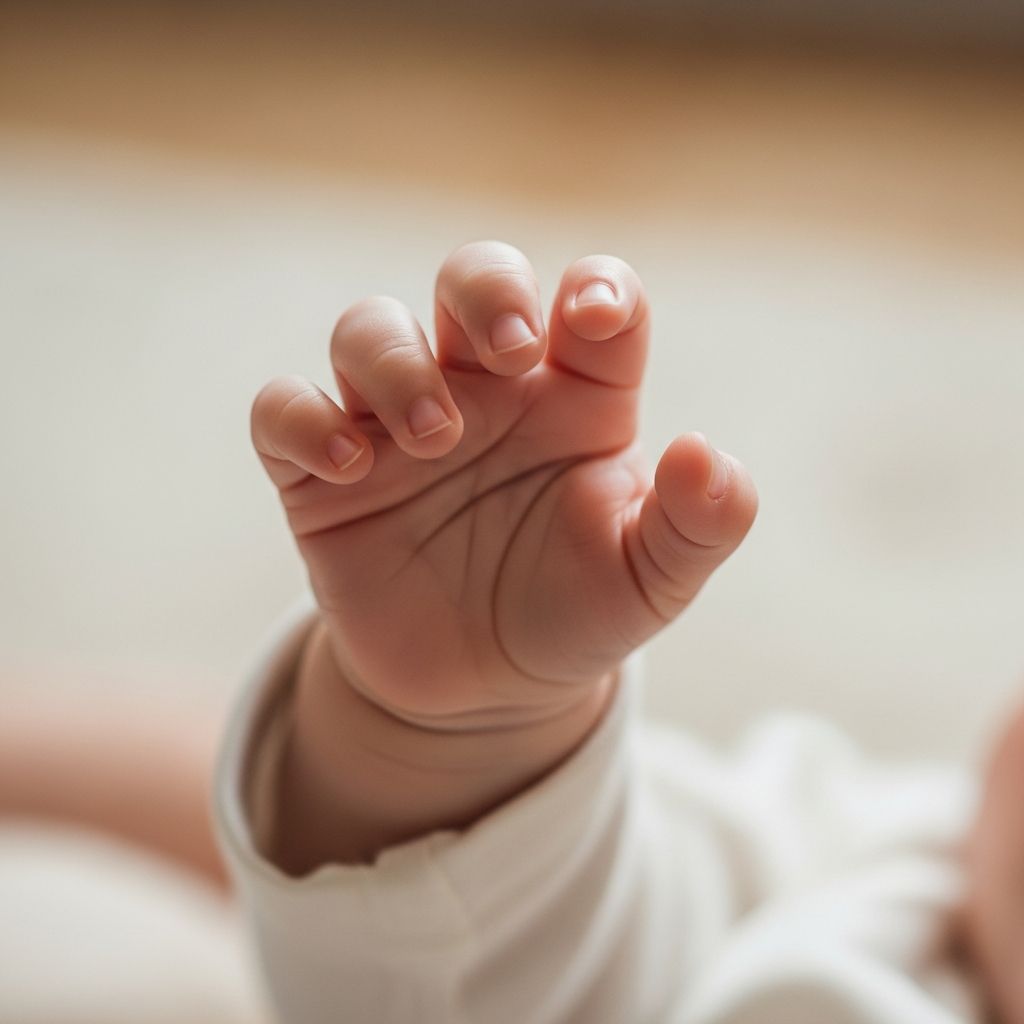
In the earliest weeks of life, your baby’s hands transition from tightly clenched fists to more controlled openings and closings, marking the onset of fine motor development. This period lays the foundation for grasping, exploring, and eventually manipulating objects.
Understanding Early Hand Reflexes in Newborns
During the first month, infants exhibit strong reflexive behaviors dominated by the grasp reflex, where placing a finger in their palm elicits a firm squeeze. Hands remain mostly fisted, a protective posture from prenatal life, but brief openings occur during sleep or calm states. These reflexes ensure survival, like rooting for feeding when the cheek is stroked. By observing these, parents gain insights into neurological health.
At birth, jerky arm movements prevail, but smoother motions emerge as the central nervous system matures. Babies respond to stimuli by flailing, yet purposeful actions are absent. Environmental factors, such as gentle handling, encourage subtle hand relaxations.
Progression of Hand Control at 1 Month
Around four weeks, infants begin sustaining brief hand openings, especially when content or excited. They may swipe at faces or objects near them, hinting at emerging visual-motor coordination. Bringing hands toward the face sporadically occurs, driven by innate mouthing instincts.
- Holds onto objects placed in palm with tight grip
- Turns head toward sounds, indirectly involving hand positioning
- Prefers high-contrast patterns, which draw hand movements
This stage builds neural pathways connecting vision, touch, and movement. Parents can support by offering soft rattles during alert times.
Hand Development Advances by 2 Months
Entering the second month, neck strength improves, allowing brief head lifts during tummy time, which pairs with arm extensions and hand unfisting. Babies track moving objects past midline, coordinating eyes with tentative hand reaches. Hands open more frequently, and infants notice their own fists, inspecting them visually.
Social cues amplify this: smiles emerge around voices, prompting arm waves or leg kicks alongside hand play. Movements become less startle-driven, more fluid. Key achievements include:
- Opens hands briefly while on tummy
- Supports head momentarily, freeing hands for swipes
- Quiets to familiar voices, relaxing fists
Tummy time is crucial here, promoting shoulder stability essential for later fine motor tasks. Limit sessions to 3-5 minutes, several times daily.
Key Milestones at 3 Months: Intentional Grasping Emerges
By three months, hand control blossoms: babies open and close fists voluntarily, bring hands to mouth reliably, and grasp small toys like rattles. They shake items held in hand, demonstrating bilateral coordination, and swipe at dangling mobiles.
| Milestone | Description | Support Activity |
|---|---|---|
| Hand to Mouth | Coordinates vision to guide hands | Offer teething rings |
| Fist Opening/Closing | Voluntary relaxation | Gentle finger play |
| Grasping Toys | Holds and shakes | Provide lightweight rattles |
| Arm Waves | Excited movements | Sing and mimic |
Leg pushing when held upright complements this, strengthening overall motor chains. Babies now recognize hands as part of self, a cognitive leap.
Interconnected Motor Skills: Hands, Neck, and Legs
Hand progress intertwines with gross motor gains. Head control at two months enables chest lifts by three, positioning hands for props. Leg kicks during excitement or distress rhythmically pair with arm flails, building body awareness.
Visual tracking in arcs refines hand-eye synergy, preparing for reaching. Sensory input from textures stimulates mouthing, honing oral-motor skills vital for feeding. Holistic development means addressing one area boosts others.
Daily Activities to Boost Hand Development
Intentional play accelerates milestones. Position babies tummy-down on a firm surface for arm strengthening, gradually increasing duration. Dangle high-contrast toys overhead to elicit swats.
- Place small, safe objects in palms for grasping practice.
- Encourage foot-to-hand contact while supine.
- Sing songs with hand motions, imitating baby gestures.
- Use mirrors for self-hand recognition.
- Alternate holding positions to vary arm use.
Avoid overstimulation; watch for fatigue cues like yawning. Consistency yields results, as repetition reinforces pathways.
Warning Signs: When to Consult a Pediatrician
Most babies hit markers on time, but delays warrant attention. Persistent fisted hands, poor head lift, or no eye contact signal potential issues. Other flags:
- No response to sounds or faces
- Stiff legs, no kicking
- Feeding difficulties, excessive drooling
- Absence of calming to holding
- No social smiling
Early intervention, per CDC guidelines, optimizes outcomes. Track via apps or journals, sharing at checkups.
Frequently Asked Questions (FAQs)
Is it normal for my 1-month-old’s hands to stay clenched most of the time?
Yes, tight fists are typical due to the grasp reflex; openings increase with maturity.
How much tummy time should a 2-month-old get daily?
Aim for 15-30 minutes total, in short sessions to build tolerance.
What if my 3-month-old doesn’t grasp toys yet?
Discuss with your doctor; most do by now, but ranges vary.
Can play really influence motor milestones?
Absolutely, targeted activities strengthen muscles and coordination.
Should I worry about jerky movements at 1 month?
Common initially; smoothness improves rapidly.
Long-Term Importance of Early Hand Skills
These foundations underpin self-feeding, writing, and play. Shoulder girdle strength from propping aids crawling, while pincer grasp precursors emerge. Parental involvement fosters secure attachment alongside skills.
Monitor nutrition—iron-rich foods later support mylinization for precise control. Sleep consolidates learning, so prioritize routines.
By three months, your baby’s hands symbolize growing autonomy, from reflex to reach. Celebrate small victories; each clench released heralds exploration ahead.
References
- Child Developmental Milestones for Infants (Months 1-3) — OCOEE Peds. 2020-01-24. https://ocoeepeds.com/2020/01/24/child-developmental-milestones/
- Infant development: Birth to 3 months — Mayo Clinic. Accessed 2026. https://www.mayoclinic.org/healthy-lifestyle/infant-and-toddler-health/in-depth/infant-development/art-20048012
- Developmental Milestones: 0 to 6 Months — Nationwide Children’s Hospital. Accessed 2026. https://www.nationwidechildrens.org/family-resources-education/health-wellness-and-safety-resources/helping-hands/developmental-milestones-0-to-6-months
- Fine motor skills: birth to 2 years — Children’s Hospital of Richmond at VCU. Accessed 2026. https://www.chrichmond.org/services/therapy-services/developmental-milestones/fine-motor-skills-birth-to-2-years/
- Developmental Milestones: Fine Motor Skills and Visual Motor — CHOC. Accessed 2026. https://choc.org/userfiles/file/Rehab-Developmental%20Milestones%20final.pdf
- Developmental Milestones for Infants (0-6 months) — Coral Care. Accessed 2026. https://www.joincoralcare.com/developmental-guides/milestones-0-6-months-infants
- Milestones by 2 Months — Centers for Disease Control and Prevention (CDC). Accessed 2026. https://www.cdc.gov/act-early/milestones/2-months.html
Similar Articles







Read full bio of medha deb