Instagram’s Toll On Teen Self-Esteem: 4 Ways Parents Can Help
Uncovering how Instagram undermines teenage confidence through curated images, comparisons, and feedback loops.
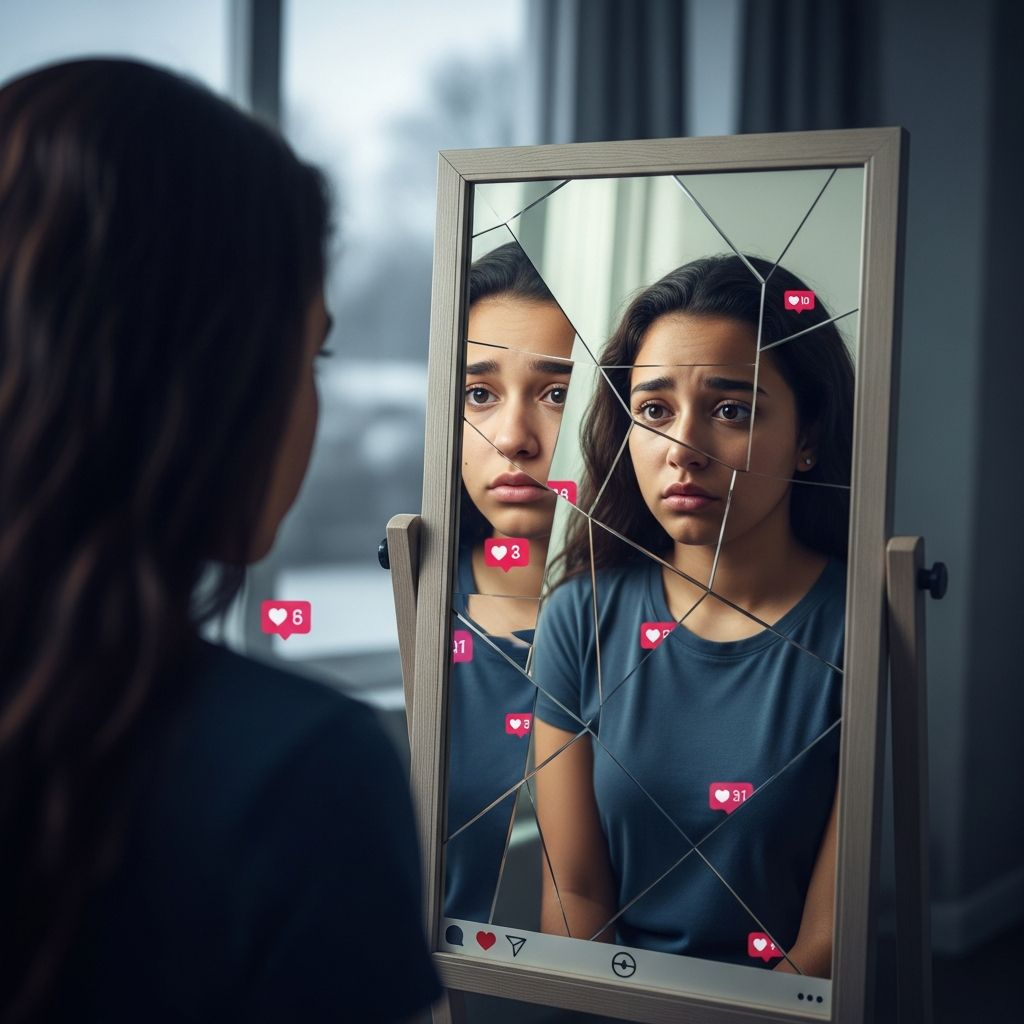
Instagram’s Toll on Teen Self-Esteem
Instagram, a dominant platform for visual sharing, profoundly shapes how teenagers perceive themselves, often eroding their self-esteem through relentless exposure to idealized images and social feedback. Research consistently links frequent use to diminished body satisfaction and heightened vulnerability to mental health challenges among youth.
The Visual Trap: Why Instagram Hits Teens Hardest
Instagram’s core design revolves around photos and videos, platforms that prioritize appearance over substance. For adolescents navigating identity formation, this emphasis turns self-worth into a visual commodity. Associate Professor Rachel Rodgers from Northeastern University explains that highly visual apps like Instagram compel users to judge themselves and others primarily by looks, fostering a precarious link between appearance and value.
Teens, whose brains are still maturing, struggle to discern the heavy editing and curation in posts. Filters, angles, and digital alterations create unattainable standards, yet adolescents often interpret them as authentic, leading to distorted self-perceptions. A Harvard T.H. Chan School of Public Health researcher notes that constant bombardment with such content warps body image, even among those aware of manipulations.
- Visual dominance: 100% photo/video focus amplifies appearance anxiety.
- Developing identity: Teens lack life experiences to counterbalance negative self-views.
- Low media literacy: Many fail to recognize editing in ‘real-time’ content like TikTok videos spilling into Instagram feeds.
Body Image Distortion and Its Cascade Effects
Exposure to Instagram feeds filled with flawless bodies correlates directly with body dissatisfaction. Internal Facebook research revealed that 32% of teen girls felt worse about their bodies after using the app when already insecure. A study in the Psychology of Popular Media found that teens viewing themselves as ‘very fat’ or ‘very skinny’ are twice as likely to contemplate suicide compared to peers with ‘normal’ weight perceptions, exacerbated by social media.
| Metric | Impact on Teens | Source |
|---|---|---|
| Body Dissatisfaction Rate | 40% worry about image from content | Ballard Brief |
| Instagram Worsening Effect | 32% of insecure girls feel worse | Facebook Internal |
| Suicide Risk Multiplier | 2x higher for extreme body views | Multiple Studies |
These distortions fuel disordered eating, with platforms promoting extreme diets. Negative comments or cyberbullying compound the harm, directly assaulting self-esteem and pushing some toward self-harm.
Feedback Loops: Likes, Comments, and Emotional Rollercoasters
Instagram’s interactive nature turns posting into a validation quest. Likes and comments serve as instant metrics of worth, but negativity—witnessed or received—devastates fragile teen egos. Rodgers highlights how this setup blurs personal value with digital approval, especially risky during adolescence when buffers like achievements are scarce.
A study of adolescent girls linked Instagram posting behaviors to self-esteem levels: those with average esteem shared provocative images seeking affirmation, while high-esteem users opted for fun, filtered content. Algorithms worsen this by curating feeds with similar ‘ideal’ content, reinforcing norms that pressure conformity.
Broader Mental Health Ramifications
Beyond body image, Instagram contributes to depression, anxiety, and low self-esteem. Mayo Clinic reports varied effects, but consistent patterns emerge: heavy use ties to poorer mental outcomes. Yale Medicine references the 2023 U.S. Surgeon General advisory flagging social media’s role in youth mental health crises.
Time spent on Instagram specifically predicts lower body satisfaction and self-esteem, per a PMC-published analysis. For girls, risks amplify due to societal beauty pressures, but boys face similar issues around muscular ideals.
Evidence from Experiments: Cutting Back Works
Reducing social media by 50% for weeks yields measurable gains. An APA-cited study with 220 young adults (mostly teens) showed significant improvements in weight and appearance esteem after curbing use from heavy levels. Participants tracked time via apps, proving feasibility without total abstinence.
- Study group: 17-25-year-olds, heavy users (>2hrs/day).
- Outcome: Better body image in just 4 weeks.
- Implication: Simple limits as therapy adjunct.
Parental and Teen Strategies for Mitigation
Parents can guide healthier habits without banning apps. Discuss curation realities, monitor for distress signs like withdrawal or dietary shifts, and model balanced use.
Teens benefit from:
- Curating feeds for body-positive accounts.
- Setting time limits (e.g., 30min/day).
- Focusing posts on hobbies, not selfies.
- Seeking offline validation through sports or arts.
Educating on algorithms helps: Teens can ‘train’ feeds toward prosocial content, though it demands effort.
Frequently Asked Questions
Does Instagram affect boys’ self-esteem too?
Yes, though differently; boys often chase muscular ideals, leading to similar body dissatisfaction and mental health risks.
How much time on Instagram is too much for teens?
Over 2 hours daily heightens risks; aim for under 1 hour with breaks.
Can positive Instagram use boost self-esteem?
Possible with deliberate choices like diverse follows and non-appearance posts, but challenges persist due to platform design.
What if my teen shows signs of body image issues?
Encourage open talks, reduce screen time, and consult professionals; early intervention prevents escalation.
Are there safer social media alternatives for teens?
Platforms emphasizing text or skills (e.g., interest-based forums) pose lower visual risks, but moderation is key everywhere.
Policy and Platform Responsibilities
Calls grow for Instagram to prioritize youth safety: transparent algorithms, editing labels, and reduced harmful content promotion. Until then, collective awareness drives change. Evidence demands action from parents, educators, and tech firms to shield developing minds.
References
- Adolescent Self Esteem and Instagram: An Examination of Posting — Digital Commons, Concordia University St. Paul. 2023. https://digitalcommons.csp.edu/comjournal/vol3/iss1/4/
- The Negative Effects of Instagram on Teenagers’ Mental Health — Northeastern University News. 2021-09-20. https://news.northeastern.edu/2021/09/20/negative-effects-of-instagram/
- Exploring the effect of social media on teen girls’ mental health — Harvard T.H. Chan School of Public Health. 2023-09-14. https://hsph.harvard.edu/news/exploring-the-effect-of-social-media-on-teen-girls-mental-health/
- The Link Between Social Media and Body Image Issues Among Youth — Ballard Brief, BYU. 2023. https://ballardbrief.byu.edu/issue-briefs/the-link-between-social-media-and-body-image-issues-among-youth-in-the-united-states
- Time Spent on Instagram and Body Image, Self-esteem — PMC, National Library of Medicine. 2023. https://pmc.ncbi.nlm.nih.gov/articles/PMC10131713/
- Reducing social media use significantly improves body image — American Psychological Association. 2023-02. https://www.apa.org/news/press/releases/2023/02/social-media-body-image
- Teens and social media use: What’s the impact? — Mayo Clinic. 2023. https://www.mayoclinic.org/healthy-lifestyle/tween-and-teen-health/in-depth/teens-and-social-media-use/art-20474437
Similar Articles







Read full bio of Sneha Tete