Newborn Bathing Guide: Safe Home Practices
Master safe newborn bathing at home with expert tips on timing, techniques, and precautions beyond hospital routines.
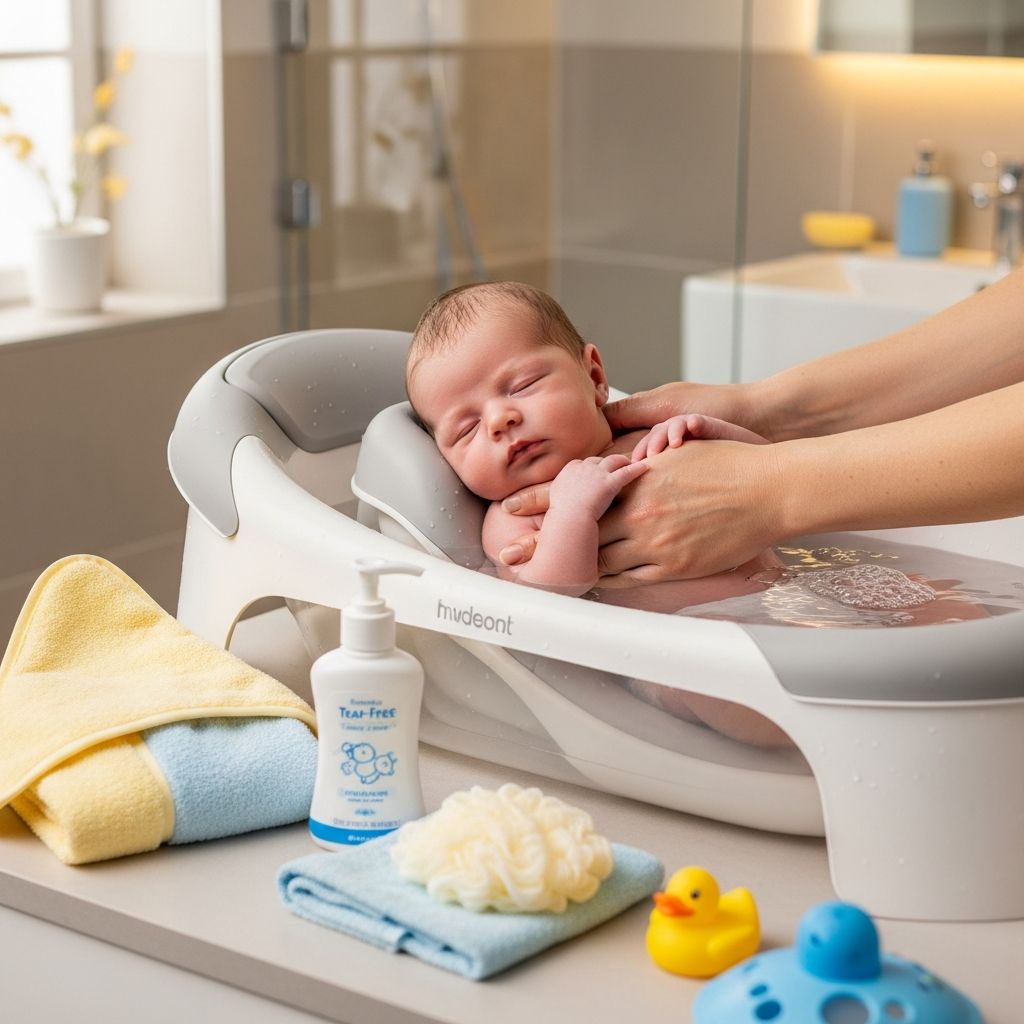
Bringing a newborn home marks an exciting yet daunting phase for parents, especially when it comes to daily care routines like bathing. While hospitals often provide an initial bath shortly after birth, home practices require tailored adjustments to ensure safety, comfort, and skin health. This guide draws from medical recommendations to outline best practices, emphasizing constant supervision, precise water temperatures, and gentle techniques that prioritize your baby’s vulnerability.
Understanding Your Newborn’s Unique Needs
Newborn skin is incredibly delicate, with a thin outer layer that acts as a protective barrier against infections and moisture loss. Vernix, the white cheesy coating present at birth, naturally moisturizes and shields the skin, suggesting a delay in the first bath benefits long-term health. Research supports waiting 6-24 hours post-birth for stability in heart rate, breathing, and body temperature before the initial cleanse.
At home, factors like room temperature (ideally 75-78°F or 24-26°C) and air drafts play crucial roles in preventing chilling. Babies lose heat rapidly due to their large surface area relative to body mass, making thermal neutrality essential during baths.
Timing Your Baby’s First Bath at Home
Unlike hospital settings where baths occur soon after delivery, home guidelines recommend postponing immersion until the umbilical cord stump dries and falls off, typically 1-3 weeks. Until then, opt for sponge baths to keep the area dry and reduce infection risk.
- Day 1-3: Focus on spot cleaning the face, diaper area, and folds with a damp cloth; avoid full submersion.
- After cord falls off: Transition to tub baths 2-3 times weekly, as daily washing strips natural oils.
- Preterm infants: Use plain warm water for the first week to minimize irritation.
This approach aligns with evidence showing reduced hypothermia and stress when delaying baths, allowing cardiorespiratory stability.
Essential Supplies for Safe Bathing
Gather everything beforehand to avoid leaving your baby unattended. A checklist ensures efficiency:
| Item | Purpose | Tips |
|---|---|---|
| Infant tub or sink basin | Holds 2-3 inches of water | Stable, non-slip surface; clean after each use. |
| Thermometer | Checks water temp (37-38°C) | Backup to elbow test for precision. |
| Soft washcloths (2-3) | Gentle cleaning | Cotton for sensitive skin; one for face, one for body. |
| Mild, fragrance-free cleanser | Removes dirt without drying | pH-balanced for newborns; dilute if needed. |
| Hooded towel | Dries and warms quickly | Wrap immediately post-bath. |
| Clean diaper and clothes | Post-bath dressing | Within arm’s reach. |
Avoid bath seats or rings, as they can tip and are not substitutes for hands-on support.
Step-by-Step Bathing Techniques
Follow a structured process to minimize stress and maximize safety. Always bathe in a warm, draft-free room with supplies at hand.
- Prepare the space: Line sink or tub with a towel for traction. Fill with 2 inches (5 cm) of water; test with elbow or wrist—it should feel comfortably warm, not hot (around 100°F/38°C).
- Undress partially: Leave diaper and shirt on initially; wash top-down to keep body warm.
- Face first: Dip cloth in plain water, wipe eyes outward, nose, mouth, ears (no cotton swabs). Gently massage scalp, avoiding fontanelles if concerned—they’re durable.
- Body cleansing: Add cleanser to water or cloth; clean neck creases, arms, belly, legs. Rinse thoroughly, pouring water over body for warmth.
- Feet-first entry: Support head and neck with one arm (football hold), lower feet in first. Never submerge past chest.
- Quick lift-out: Wrap in towel immediately, pat dry gently, especially folds. Re-dress promptly.
For sponge baths pre-cord fall-off: Place baby on a towel-covered flat surface, wipe with wrung-out cloths dipped in basin water.
Critical Safety Rules Every Parent Must Follow
Bath drownings can occur in seconds in shallow water, making vigilance paramount. Key rules include:
- Never leave alone: Not even for a phone or door—take baby with you if needed. Most incidents happen when caregivers step away briefly.
- One hand always on: Support head/neck; use nondominant arm for cradle hold.
- Turn off faucet: Prevents scalding or overflow.
- No bath aids reliance: Seats can detach; hands are best.
- Water level low: 2-3 inches max, below chest when seated.
Consider a CPR class for preparedness, as accidents, though rare, demand quick response.
Caring for Delicate Newborn Skin
Newborns don’t need daily baths; every 2-3 days suffices to preserve the skin microbiome. Use minimal cleanser—often water alone works. Post-bath, apply fragrance-free moisturizer if skin is dry, but vernix remnants provide natural hydration.
Special areas: Keep umbilical site dry with sponge method; clean circumcision gently once healed. Watch for rashes—over-bathing exacerbates dryness.
Common Bathing Mistakes and How to Avoid Them
| Mistake | Risk | Solution |
|---|---|---|
| Water too hot | Burns sensitive skin | Elbow test + thermometer; set heater <120°F. |
| Over-soaping | Dryness, irritation | Dilute or water-only first weeks. |
| High water depth | Drowning hazard | 2 inches max. |
| Leaving toys unchecked | Mold/bacteria | No-hole toys; discard moldy ones. |
| Bath head-first | Chilling | Body first, head last. |
Frequency and Routine Building
Bathe 2-3 times weekly until 1 month, increasing as needed for messes. Evening baths aid sleep via relaxation, but observe your baby’s cues. Consistency builds trust—sing softly or talk to soothe.
Frequently Asked Questions
Can I bathe my newborn every day?
No, limit to 2-3 times weekly to avoid drying skin. Spot clean daily as needed.
What’s the ideal water temperature?
37-38°C (100°F); test with elbow or thermometer.
Is it safe to use baby bath seats?
No, they pose tipping risks; always hold baby manually.
When can I give a full tub bath?
After umbilical cord falls off and site heals.
What if my baby cries during bath?
Common due to new sensations; swaddle partially, support securely, and keep sessions short (5-10 min).
Advanced Tips for Confident Bathing
Incorporate massage post-bath with oils for bonding. For multiples, bathe one at a time. Track reactions to adjust routines. Consult pediatrician for skin issues.
Empowering parents with knowledge transforms bath time from stressful to joyful. Prioritize safety, and enjoy these intimate moments.
References
- Newborn Bathing 101: Safety Guidelines for First-Time Parents — Sleep of Mind. Accessed 2026. https://sleepofmind.com/blogs/news/newborn-bathing-101-safety-guidelines-for-first-time-parents
- How to bathe your newborn — American Academy of Dermatology. Accessed 2026. https://www.aad.org/public/everyday-care/skin-care-basics/care/newborn-bathing
- Bathing an infant — MedlinePlus, U.S. National Library of Medicine. Accessed 2026. https://medlineplus.gov/ency/patientinstructions/000020.htm
- Evidence-based guidelines for infant bathing — Research Review NZ. 2019. https://www.researchreview.co.nz/getmedia/0a9e5190-b8ac-419f-8f44-43b8e5ba8c4b/Educational-Series-Evidence-based-guidelines-for-infant-bathing.pdf.aspx?ext=.pdf
- Bathing and Skin Care for the Newborn — Stanford Children’s Health. Accessed 2026. https://www.stanfordchildrens.org/en/topic/default%3Fid=bathing-and-skin-care-for-the-newborn-90-P02628
Similar Articles








Read full bio of medha deb