Newborn Vision: Clear Focus at 8-15 Inches
Discover how your newborn's eyes develop in the first two months, focusing sharply on faces just 8-15 inches away for vital bonding.
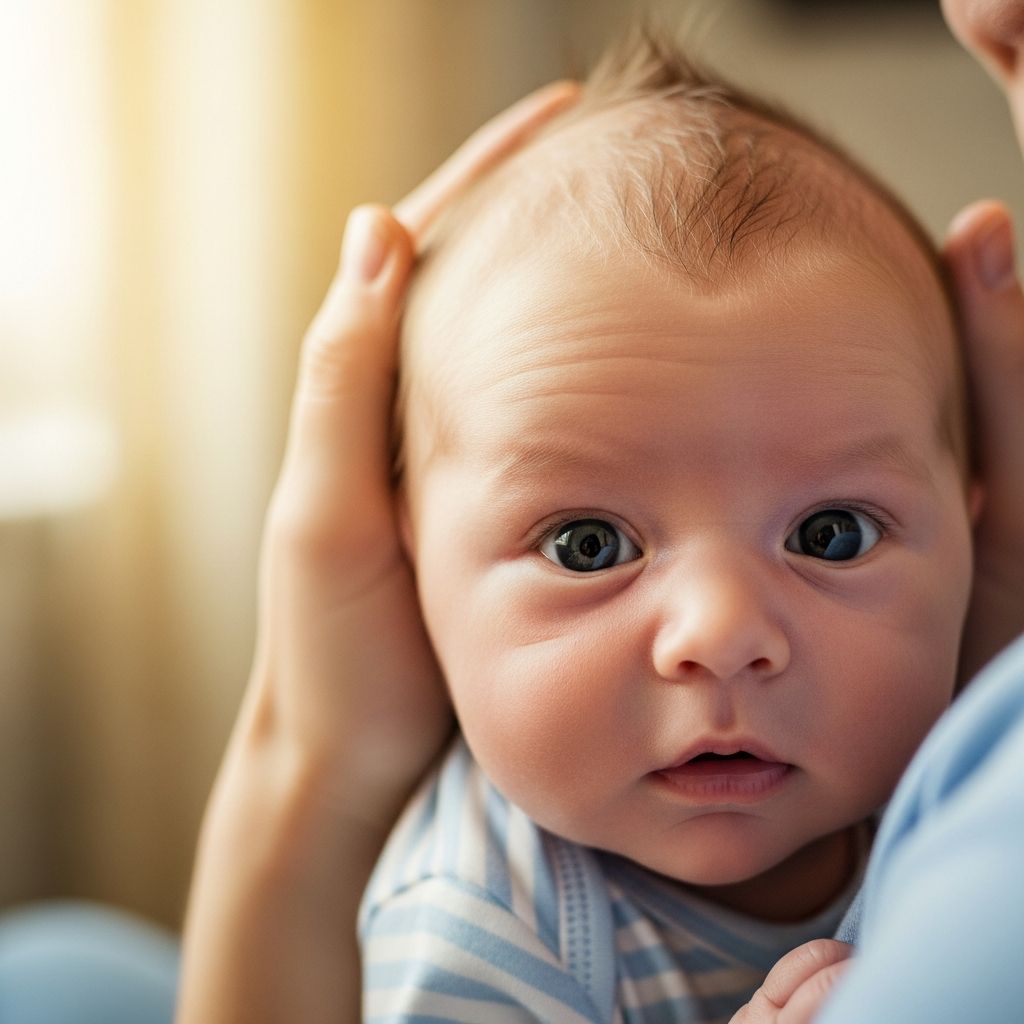
Newborns possess a unique visual system tuned for intimate distances, allowing sharp focus on objects and faces between 8 and 15 inches away, which matches the typical distance during feeding or holding.
Understanding the Foundations of Infant Eyesight
At birth, a baby’s eyes are remarkably adapted to their new world, prioritizing survival-oriented vision. Unlike adults, newborns see the world in grayscale tones with limited clarity beyond close range. This setup evolved to facilitate recognition of caregivers’ faces during essential interactions like nursing. Research from pediatric experts indicates that this focal range supports early bonding by enabling babies to discern facial features clearly when held close.
Visual acuity starts low, around 20/400, meaning infants perceive shapes rather than fine details. However, their eyes detect light changes, motion, and bold patterns effectively. Eyes may appear large relative to the body, comprising about 65% of adult size at birth, setting the stage for rapid growth.
Key Milestones in the First Two Months
- Birth to 1 Week: Babies respond to light by blinking or turning toward it, seeing primarily in black, white, and grays. Vision is clearest at 8-10 inches.
- 1-4 Weeks: Color vision emerges slowly; infants track slow-moving lights or faces briefly. Eyes might wander or cross as muscles strengthen.
- By 2 Months: Improved fixation allows following objects with both eyes intermittently. Babies recognize familiar faces and begin reaching toward stimuli.
These progression points highlight how vision shifts from reflexive responses to purposeful gazing, laying groundwork for coordination.
Why the 8-15 Inch Sweet Spot Matters
This precise distance aligns perfectly with parent-infant proximity during caregiving. When a mother holds her baby to breastfeed, the infant’s eyes lock onto her face, fostering emotional connections through mutual gazing. Pediatric guidelines emphasize this as a critical window for attachment, as babies prioritize high-contrast features like eyes and mouth edges.
High-contrast patterns captivate newborns most, drawing their gaze over uniform colors. Black-and-white mobiles or striped toys elicit stronger attention, stimulating neural pathways in the visual cortex.
| Age Range | Focal Distance | Visual Preferences | Behaviors Observed |
|---|---|---|---|
| Birth | 8-12 inches | High contrast, light/dark | Blinks at bright light, tracks motion vaguely |
| 1 Month | 8-12 inches | Patterns, faces | Follows slow objects, notices hands |
| 2 Months | 8-15 inches | Colors emerging, faces | Tracks across midline, smiles responsively |
The table summarizes developmental shifts, supported by clinical observations from major health organizations.
Signs of Healthy Visual Progress
Parents can monitor development through simple cues. By one month, babies should briefly follow a finger or toy moved slowly 8-12 inches from their face. At two months, expect smoother tracking past the nose centerline and recognition smiles toward parents. Binocular vision strengthens, reducing eye wandering.
Depth perception remains immature, but coordinated eye movements emerge. Babies start swiping at dangling objects, hinting at hand-eye integration.
Potential Concerns and When to Seek Help
While most eye crossing resolves by 2-3 months, persistent misalignment, constant tearing, or lack of tracking warrants a pediatric check. Early intervention prevents amblyopia or strabismus. The American Academy of Pediatrics recommends vision screening at well-baby visits.
- Red flags: No eye contact by 2 months, pupil asymmetry, excessive light sensitivity.
- Normal variations: Eye color changes up to 6 months due to pigment development.
Practical Activities to Boost Visual Growth
Engage your newborn daily with vision-nurturing play:
- Hang black-and-white cards 10 inches above the crib for fixation practice.
- Slowly move a rattle across their field of view to encourage tracking.
- Maintain face-to-face time during feeds, exaggerating expressions for contrast.
- Use soft lighting to avoid overstimulation while introducing subtle colors by month two.
These low-effort interactions not only aid vision but enhance cognitive links, as visual input fuels brain development.
Beyond Two Months: Building on Early Gains
Post-2 months, vision expands rapidly. By 3-4 months, full-field tracking and color discernment solidify, paving for reaching and grasping. Depth perception blooms around 5 months, coinciding with rolling and crawling preparations.
Parental involvement remains key: mobiles, mirrors, and peek-a-boo games refine skills. Outdoor time later supports distance vision.
Science Behind Newborn Visual Adaptation
Neuroscience reveals newborns’ retinas and optic nerves mature swiftly. Cone cells for color activate gradually, while rods handle low light effectively from birth. Myelinization of visual pathways accelerates focus and coordination.
Studies confirm preferential face-looking, with newborns drawn to upright, high-contrast human profiles, underscoring innate social wiring.
Frequently Asked Questions (FAQs)
At what distance can newborns see clearly?
Newborns focus best at 8-15 inches, ideal for parental faces during close contact.
Why do baby eyes cross in the first weeks?
Immature eye muscles cause temporary wandering or crossing, typically resolving by 2-3 months.
When does color vision fully develop?
Basic colors appear by 2 months, maturing to adult-like by 5-6 months.
How can I tell if my baby’s vision is normal?
Look for tracking objects by 2 months and responsive smiling; consult a doctor for delays.
Are vision toys necessary?
High-contrast items help, but faces and daily interactions are most effective.
Long-Term Impact of Early Vision Care
Robust early vision correlates with better motor, cognitive, and social outcomes. Neglected issues can hinder learning; proactive monitoring ensures optimal trajectories.
Empower yourself with knowledge—your attentive presence shapes your baby’s visual world profoundly.
References
- Vision Development Timeline: A Guide for New Mothers — Insight Vision Center Optometry. 2023-05-15. https://www.insightvisionoc.com/vision-therapy/vision-development-timeline-a-guide-for-new-mothers/
- Infant Vision Birth to One Year — Nationwide Children’s Hospital. 2024-01-10. https://www.nationwidechildrens.org/family-resources-education/health-wellness-and-safety-resources/helping-hands/infant-vision-birth-to-one-year
- Infant Vision Development: What Can Babies See? — American Academy of Pediatrics (healthychildren.org). 2023-11-20. https://www.healthychildren.org/English/ages-stages/baby/Pages/Babys-Vision-Development.aspx
- Infant development: Birth to 3 months — Mayo Clinic. 2025-02-01. https://www.mayoclinic.org/healthy-lifestyle/infant-and-toddler-health/in-depth/infant-development/art-20048012
- Your Baby’s Hearing, Vision, and Other Senses: 2 Months — KidsHealth (Nemours). 2024-06-12. https://kidshealth.org/en/parents/senses-2mos.html
- Your Baby’s Vision — ZERO TO THREE. 2023-09-05. https://www.zerotothree.org/resource/your-babys-vision/
Similar Articles







Read full bio of Sneha Tete