Newborn Vision: Clear Focus 8-15 Inches Away
Discover how your newborn's eyes develop sharp focus from 8 to 15 inches, key milestones, activities, and when to seek help for healthy vision.
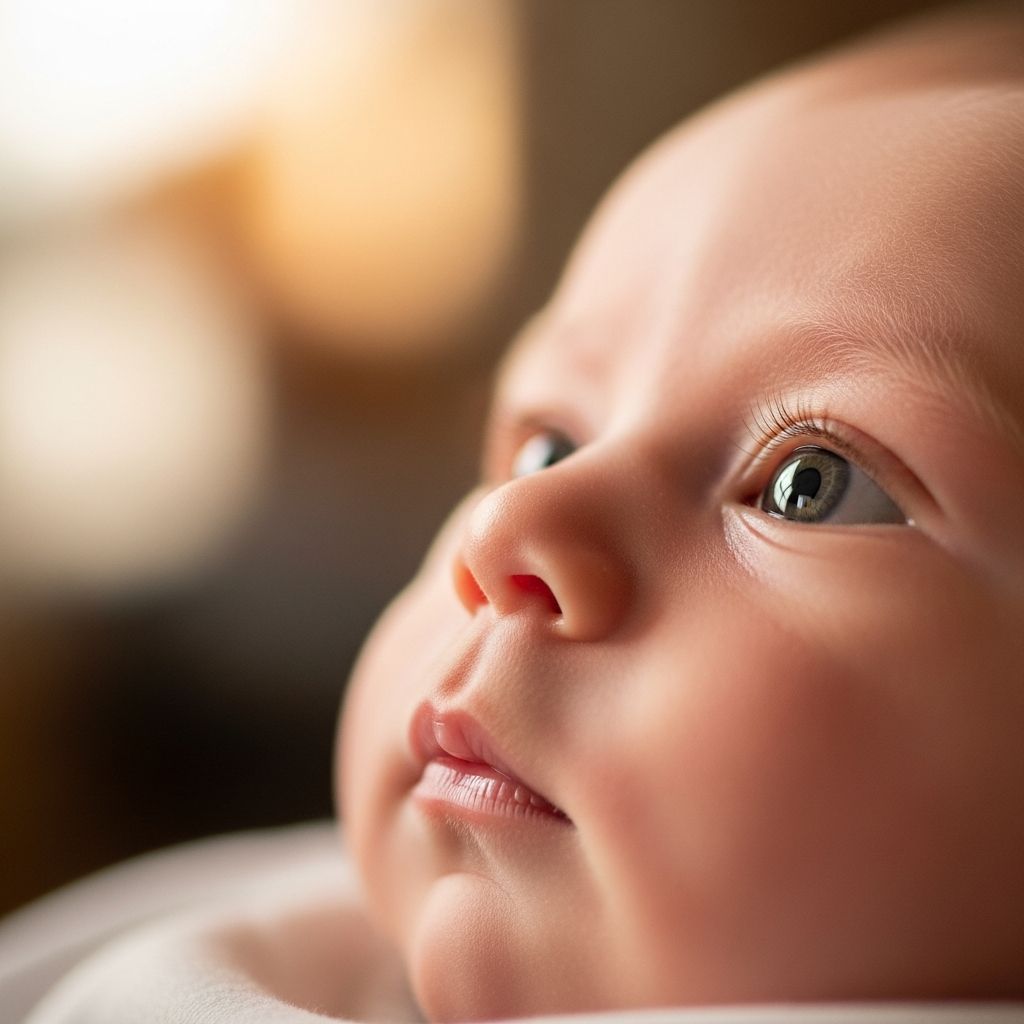
Newborns possess a remarkable yet limited visual system at birth, with the clearest focus occurring on objects positioned 8 to 15 inches from their eyes, aligning perfectly with a caregiver’s face during feeding or holding. This distance enables babies to detect faces, high-contrast patterns, and movement, laying the foundation for rapid visual maturation in the initial weeks.
Understanding the Foundations of Infant Eyesight
At birth, a baby’s eyes are approximately 65% of adult size, yet their visual acuity is rudimentary, perceiving the world in grayscale tones with fuzzy details beyond close range. They respond instinctively to light changes by blinking or turning toward brightness, but fine details emerge gradually as neural pathways strengthen.
During the first month, infants prioritize high-contrast edges and bold patterns over pastel shades, as their retinas and brain processing favor stark differences. This preference stems from immature cone cells responsible for color vision, which begin activating around one week postpartum.
Key Visual Milestones in the First Two Months
- Birth to 1 Week: Detects light, shadows, and movement; best vision at 8-10 inches in black-and-white or high-contrast views.
- 1-4 Weeks: Eyes may wander or cross intermittently as muscles coordinate; starts discerning simple patterns.
- 4-6 Weeks: Focus extends to 12 inches; brief fixation on faces or objects straight ahead.
- 6-8 Weeks: Begins tracking slow-moving items side-to-side; recognizes familiar caregiver faces.
These milestones mark the transition from reflexive responses to purposeful gazing, with both eyes intermittently aligning for brief binocular focus by two months.
Why 8-15 Inches Matters for Bonding
This focal range coincides with the typical distance between a baby’s eyes and a parent’s face during breastfeeding, bottle-feeding, or cuddling, facilitating early emotional connections. Babies instinctively lock onto facial features—high-contrast eyes, mouth, and hairlines—promoting recognition and social smiling precursors.
Research from pediatric vision experts notes that consistent close-range interaction stimulates optic nerve growth, enhancing contrast sensitivity and fixation duration over weeks.
Activities to Boost Early Visual Growth
Parents play a pivotal role in nurturing vision through simple, engaging interactions. Position black-and-white mobiles or cards 8-12 inches above the crib to capture attention and encourage head turning.
- Hang high-contrast toys across the bassinet for peripheral tracking practice.
- Play gentle face-to-face games, slowly moving your head side-to-side within focus range.
- Introduce soft rattles with bold stripes during tummy time to link sound and sight.
Avoid overwhelming with bright lights or complex patterns initially; opt for subtle movements to prevent overstimulation.
From Grayscale to Vibrant Colors: Color Vision Emergence
Initially limited to grayscale, newborns develop partial color discrimination by one month, preferring reds and greens over yellows. Full adult-like color perception solidifies around 3-6 months as cone photoreceptors mature.
By two months, babies show interest in primary colors, swiping at colorful toys, which signals advancing hand-eye coordination.
Tracking and Coordination: Building Binocular Vision
Around 2 months, infants gain the ability to follow objects smoothly across their midline, a critical step toward depth perception. Though eyes may still drift, consistent tracking fosters teamwork between both eyes.
Peek-a-boo emerges as an ideal game here, combining disappearance-reappearance with facial cues to refine pursuit movements.
| Age Range | Tracking Ability | Recommended Activity |
|---|---|---|
| 0-1 Month | Limited to straight-ahead fixation | Stationary high-contrast cards |
| 1-2 Months | Short horizontal follows | Slowly moved toys or faces |
| 2-3 Months | Full 180-degree tracking | Mobiles and patty-cake |
Recognizing Faces: The Social Visual Anchor
Faces captivate newborns due to their inherent contrast and symmetry. By 6-8 weeks, babies distinguish mother’s face from strangers, cooing or quieting in response, which strengthens attachment bonds.
This selectivity arises from specialized brain regions like the fusiform face area activating early, prioritizing human features over objects.
When to Monitor for Potential Concerns
While occasional eye wandering resolves naturally, persistent crossing, constant drifting, or lack of tracking by 2 months warrants professional evaluation. Redness, excessive tearing, or light sensitivity may indicate issues like blocked tear ducts or congenital cataracts.
- No response to light or faces by 1 month.
- One eye consistently turned in/out after 2 months.
- Absence of pupil light reflex during checkups.
Routine well-baby visits include vision screens; early optometry referrals via programs like InfantSEE ensure timely intervention.
Progressing Beyond Two Months: What Comes Next
Post-2 months, vision expands: 3 months brings color differentiation and vertical tracking; 4 months introduces hand-reaching integration; 6 months yields full binocular depth perception.
Crawling around 8 months further hones spatial skills, underscoring the value of floor time over rushed walking.
Nutrition and Health Factors Influencing Vision
Breast milk’s lutein and zeaxanthin support retinal health, while vitamin A from formula or diet prevents deficiencies linked to poor acuity. Avoid smoke exposure, which irritates developing eyes.
Environmental Tips for Optimal Visual Stimulation
Create a vision-friendly space: dim overhead lights, patterned curtains, and rotating toys prevent habituation. Limit screen time entirely in early months, as unsteady focus hinders benefit.
Frequently Asked Questions (FAQs)
Why do newborns’ eyes cross sometimes?
It’s normal for eye muscles to be uncoordinated initially; both eyes align better by 2-3 months as nerves mature. Persistent crossing needs a pediatrician check.
Can I help my baby’s color vision develop faster?
Expose gradually to bold colors via toys and clothing; patience is key as biology dictates the timeline, typically full by 6 months.
What if my baby doesn’t track objects at 2 months?
Consult your doctor for screening; most catch up, but early therapy addresses delays effectively.
Is tummy time good for vision?
Yes, it encourages lifting the head to track overhead stimuli, building neck strength and visual exploration simultaneously.
How often should I do vision activities?
Short sessions (5-10 minutes) multiple times daily during alert periods suffice; overdoing causes fatigue.
Long-Term Outlook: Vision Maturation Timeline
By age 1, babies achieve adult-like acuity, depth judgment, and color vision. Continued outdoor play refines distance focus, preventing myopia risks in later childhood.
Parental vigilance through play and checkups ensures most infants thrive visually, setting stages for learning and mobility.
References
- Infant Vision Birth to One Year — Nationwide Children’s Hospital. 2023-10-15. https://www.nationwidechildrens.org/family-resources-education/health-wellness-and-safety-resources/helping-hands/infant-vision-birth-to-one-year
- Infant development: Birth to 3 months — Mayo Clinic. 2024-05-20. https://www.mayoclinic.org/healthy-lifestyle/infant-and-toddler-health/in-depth/infant-development/art-20048012
- Infant Vision Development: What Can Babies See? — American Academy of Pediatrics. 2024-02-10. https://www.healthychildren.org/English/ages-stages/baby/Pages/Babys-Vision-Development.aspx
- Ways to Help Infant Vision Development — InfantSEE. 2023-08-05. https://www.infantsee.org/parents-center/parents/ways-to-help-infant-vision-development
- Your Baby’s Hearing, Vision, and Other Senses: 2 Months — KidsHealth (Nemours). 2024-01-12. https://kidshealth.org/en/parents/senses-2mos.html
Similar Articles







Read full bio of Sneha Tete