Newborns Mimic Faces: Early Social Skills
Discover how babies from birth imitate facial gestures, building social bonds and emotional understanding in the first weeks of life.
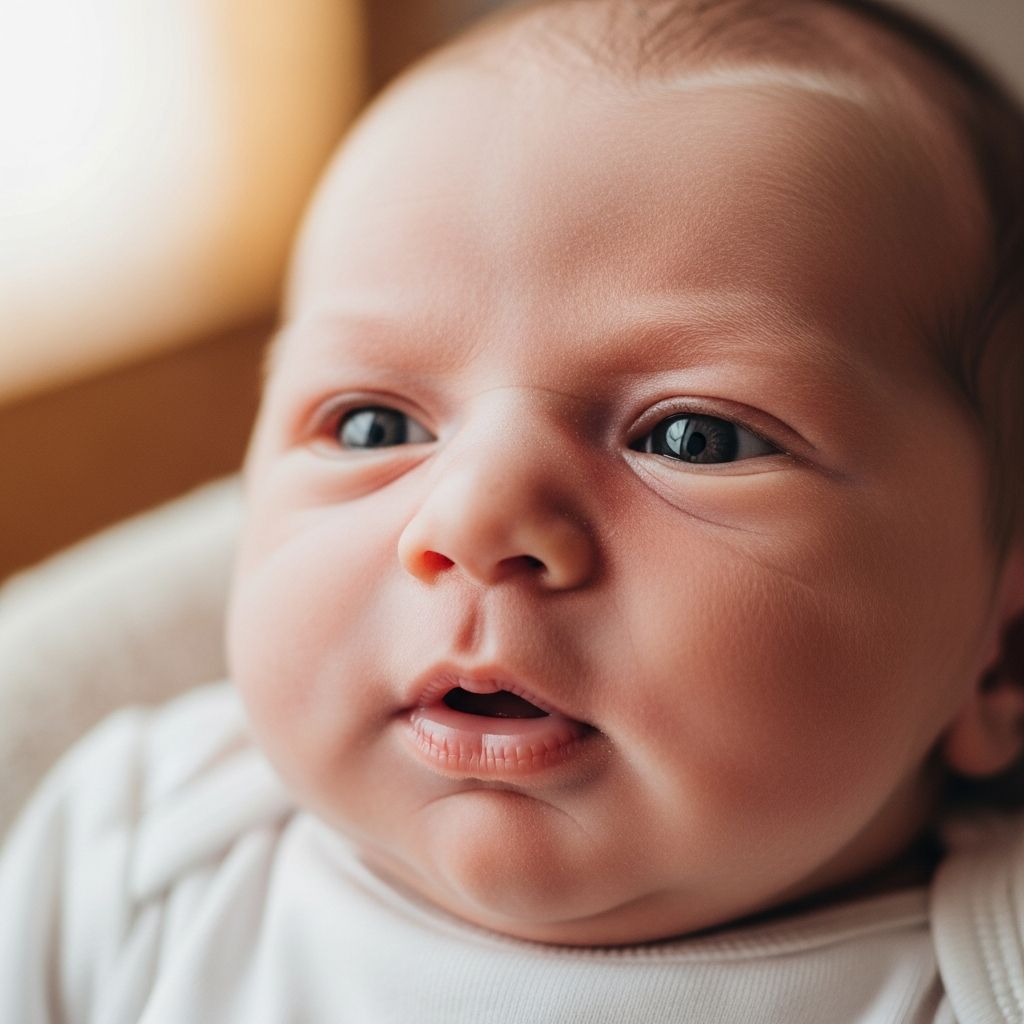
Newborns possess an extraordinary capacity to imitate facial gestures right from birth, marking one of the earliest indicators of social cognition. This ability, observable within the first two months, lays the foundation for communication, empathy, and emotional regulation.
The Dawn of Imitation in Newborns
From the moment they enter the world, babies demonstrate a innate knack for copying facial movements like tongue protrusions, mouth openings, and eye widening. This phenomenon, first systematically documented in the 1970s by psychologists Andrew Meltzoff and Keith Moore, reveals that infants as young as 42 minutes old can replicate an adult’s facial actions. Unlike simple reflexes, this imitation requires perceiving the gesture, internally representing it, and executing a matching motor response, showcasing sophisticated cross-modal processing.
During the 0-2 month window, this skill sharpens as babies increasingly respond to dynamic facial displays. Research indicates that newborns prefer to gaze at faces with emotional content, spending more time fixating on happy or surprised expressions compared to neutral ones. This selective attention underscores an evolutionary adaptation for social bonding between caregiver and child.
Mechanisms Behind Facial Mimicry
What drives this early imitation? Neuroimaging studies on slightly older infants, around 5 months, reveal that brain regions like the right occipital cortex activate strongly when processing faces, irrespective of emotion. However, temporal areas show nascent sensitivity to emotional valence, with happy faces eliciting distinct hemodynamic responses. Extrapolating to newborns, these foundational neural pathways likely support mimicry by linking visual input from others’ faces to the infant’s own motor output.
Key mechanisms include:
- Mirror neuron systems: Emerging evidence suggests proto-mirror neurons in newborns facilitate ‘like me’ recognition, allowing babies to map observed actions onto their own capabilities.
- Multimodal integration: Infants match visual facial cues with kinesthetic feedback from their own movements, bridging sensory modalities.
- Affective attunement: Positive emotions like joy enhance imitation rates, while distress may suppress it, linking mimicry to emotional states.
These processes evolve rapidly; by 5 months, infants not only imitate but match facial expressions to congruent vocalizations from peers, detecting shared affective valence across modalities.
Why Imitation Matters for Development
Facial imitation serves as a cornerstone for lifelong social skills. It promotes reciprocal interactions, where a baby’s mimicry elicits delight from parents, reinforcing attachment. Securely attached infants show stronger imitation abilities, correlating with better emotional understanding later in childhood.
| Age Range | Imitation Milestone | Developmental Impact |
|---|---|---|
| 0-1 Week | Tongue protrusion, mouth opening | Initial social engagement |
| 1-4 Weeks | Eye widening, brow raising | Enhanced parent-infant synchrony |
| 1-2 Months | Full facial gesture matching | Foundation for empathy |
This table highlights progression, with each stage building communicative competence. Longitudinal studies link early imitation to language acquisition, as mimicking mouth shapes prefigures speech sounds.
Parental Strategies to Encourage Mimicry
Parents play a pivotal role in nurturing this skill. Engage in face-to-face play at 12-18 inches, the newborn’s focal distance. Exaggerate expressions slowly, pausing to allow response time. Respond enthusiastically to the baby’s attempts, creating turn-taking dialogues without words.
Effective techniques include:
- Using high-contrast toys or mirrors to supplement live interactions.
- Maintaining eye contact during feeding or diapering routines.
- Recording sessions to track progress and share with pediatricians.
Avoid overstimulation; short, frequent sessions (2-3 minutes) several times daily suffice. Cultural variations exist, with collectivist societies emphasizing group mimicry games from early on.
Research Insights on Emotional Matching
Beyond basic gestures, newborns discriminate emotional faces. Experiments show preferences for happy over fearful expressions, with longer dwell times on positive stimuli. By 5 months, this extends to intermodal matching: infants pair joyful coos with smiling faces and frustrated cries with angry ones, even from different babies.
Statistical evidence from preference-looking tasks confirms this: 5-month-olds allocate 66% of first looks to congruent face-voice pairs (p=0.001), far above chance. Three-and-a-half-month-olds, however, show no such matching, indicating maturation between 3.5-5 months. This timeline aligns with myelination of inter-hemispheric fibers, enhancing affect integration.
Challenges and Variations in Imitation
Not all infants imitate equally. Premature babies may lag by weeks equivalent to gestational age, catching up post-term. Autism spectrum risks correlate with reduced mimicry at 2 months, serving as an early marker for intervention.
Factors influencing performance:
- State regulation: Alert, satiated babies imitate best.
- Familiarity: Maternal faces elicit stronger responses than strangers.
- Gestational health: Complications like hypoxia can delay onset.
Automated tools like Baby FaceReader now quantify micro-expressions, aiding precise assessment in clinical settings.
Long-Term Outcomes of Early Mimicry
Early imitators excel in theory of mind tasks by preschool age, predicting others’ emotions accurately. This skill buffers against behavioral issues, fostering resilience. Educational implications include incorporating mimicry games in curricula to boost peer relations.
Neurodevelopmental trajectories show that robust 0-2 month imitation predicts advanced facial recognition at 7 months, discriminating nuanced emotions like surprise versus sadness.
Frequently Asked Questions
What if my newborn isn’t imitating faces yet?
Variation is normal; monitor for other social cues like smiling by 6 weeks. Consult a pediatrician if no responsiveness by 2 months.
Can imitation help with colic or fussiness?
Yes, mimicry games soothe by synchronizing arousal levels, promoting calm through mutual regulation.
How does screen time affect facial imitation?
Live interactions outperform videos; 2D screens lack contingency, hindering mimicry until 6+ months.
Is facial imitation linked to later speech?
Strongly; oral motor practice via mimicry strengthens articulatory muscles foundational to babbling.
Do all cultures see imitation at birth?
Universal, though expression repertoires vary slightly by cultural display rules.
Practical Activities for Home
Peekaboo Variants: Cover face briefly, then reveal exaggerated surprise; baby mirrors widening eyes.
Mirror Play: Hold baby before a safe mirror, demonstrating smiles; encourages self-other distinction.
Sibling Involvement: Older kids make silly faces; fosters family bonding and models prosody matching.
Track weekly in a journal: date, gesture imitated, duration. Share at well-baby visits for personalized advice.
References
- Young Infants Match Facial and Vocal Emotional Expressions — Vaillant-Molina M, Bahrick LE, Flom R. 2013-10-15. https://pmc.ncbi.nlm.nih.gov/articles/PMC3843965/
- Young Infants Match Facial and Vocal Emotional Expressions of Other Infants — Vaillant-Molina M, Bahrick LE, Flom R. 2013. https://infantlab.fiu.edu/publications/publications-by-date/publications-2010-present/2013_vaillant-molinabahrickflom_infancy_young-infants-match-facial-and-vocal.pdf
- Brain Responses to Faces and Facial Expressions in 5-Month-Olds — Minamisawa S, et al. 2019-05-28. https://www.frontiersin.org/journals/psychology/articles/10.3389/fpsyg.2019.01240/full
- The perception of facial expressions in newborns — Farroni T, et al. 2010. https://pmc.ncbi.nlm.nih.gov/articles/PMC2836746/
- Using Baby FaceReader for automated analysis of infant emotions — Noldus. 2023. https://noldus.com/blog/baby-facereader-automated-facial-expression-analysis
Similar Articles





Read full bio of medha deb