Newborns Recognize Mom’s Voice: 5 Ways To Boost Bonding
Discover how infants from birth to 4 months distinguish and prefer their mother's voice, aiding brain and language growth.
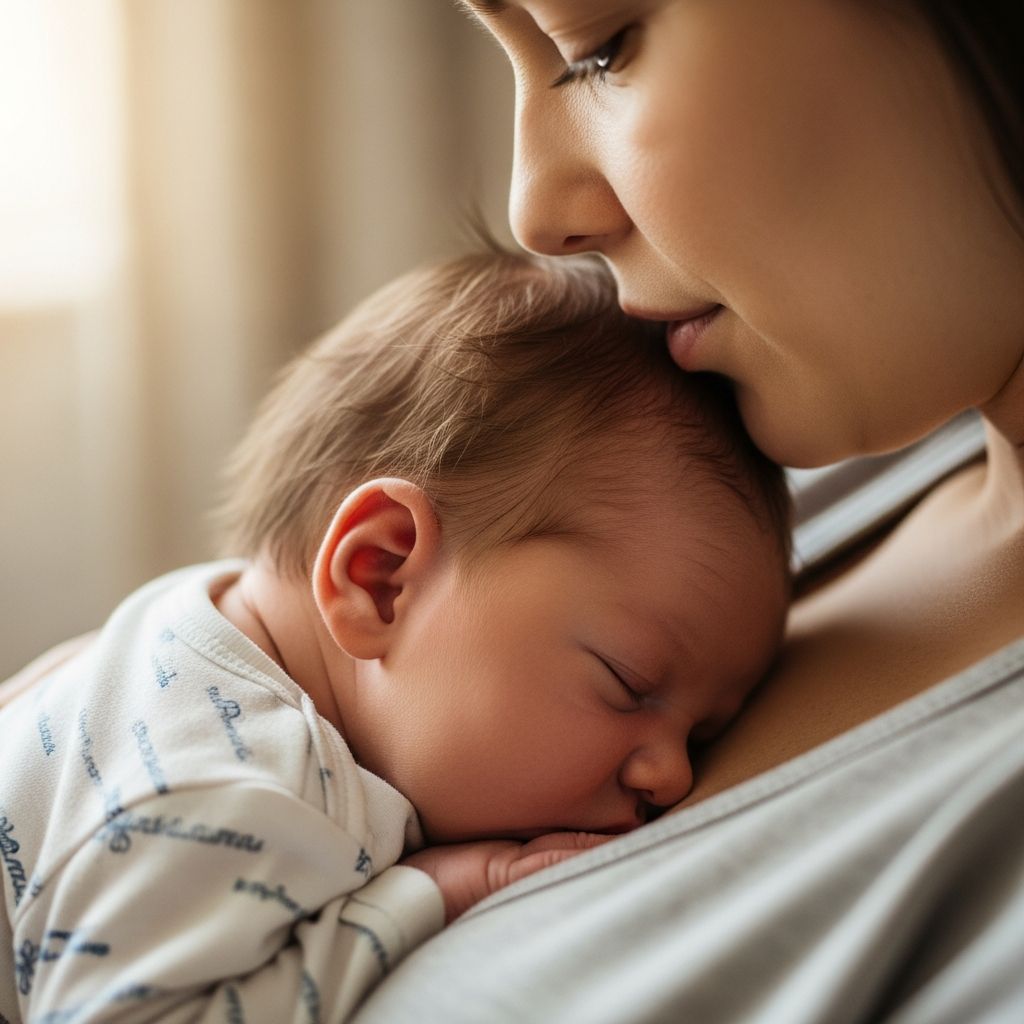
Newborns Recognize Mom’s Voice Early
From the moment of birth, babies exhibit a remarkable ability to distinguish their mother’s voice from other female voices, displaying a clear preference that plays a crucial role in early bonding and neural development. This innate recognition, honed even before birth through muffled sounds in the womb, strengthens rapidly in the first four months, fostering language skills and emotional connections.
The Foundations of Voice Recognition in Utero
During the third trimester of pregnancy, fetuses begin processing auditory stimuli, including their mother’s voice, which penetrates the womb despite fluid muffling. This prenatal exposure lays the groundwork for postnatal recognition, allowing newborns to respond preferentially to familiar vocal patterns. Research indicates that this early familiarity helps infants orient toward their mother’s speech, promoting immediate attachment and sensory adaptation to the outside world.
Ultrasound observations reveal fetuses turning toward their mother’s voice recordings played externally, suggesting an established auditory memory by late gestation. This phenomenon underscores the voice as one of the first sensory bridges between parent and child, influencing comfort and alertness right after delivery.
Brain Responses to Maternal Voices at Two Months
By two months of age, infants demonstrate sophisticated neural discrimination between their mother’s voice and those of strangers. Electroencephalography (EEG) studies using event-related potentials (ERPs) show distinct brain wave patterns, such as a larger P2 component and longer latency when processing the maternal voice compared to unfamiliar ones. The P2, peaking between 150-400 milliseconds post-stimulus, reflects rapid voice differentiation, particularly at midline electrode sites.
These responses indicate deeper cognitive processing for the mother’s voice, possibly due to accumulated postnatal experience. A negative slow wave (NSW) and positive slow wave (PSW) further highlight novelty detection and memory updating, with the PSW more pronounced for stranger voices in the right hemisphere, suggesting active memory consolidation.
| ERP Component | Maternal Voice Response | Stranger Voice Response | Implication |
|---|---|---|---|
| P2 Amplitude | Larger (e.g., 5.04 μV at midline) | Smaller (e.g., 3.67 μV) | Rapid discrimination |
| P2 Latency | Longer (294 ms) | Shorter (279 ms) | Greater processing depth |
| PSW | Less positive | More positive (right hemisphere) | Memory updating for novel stimuli |
This table summarizes key ERP differences, illustrating how infant brains prioritize familiar maternal input for efficient sensory mapping.
Preference Behaviors in the First Four Months
Newborns not only discriminate voices but actively prefer their mother’s, turning heads or showing prolonged attention during playback experiments. This preference peaks around birth and persists through four months, aiding in selective listening amid environmental noise. Studies confirm infants as young as hours old quieten or gaze longer at maternal recordings, signaling emotional recognition and soothing effects.
By 4.5 months, while adept at distinguishing unfamiliar female voices, infants struggle similarly with male voices, likely due to greater exposure to female caregivers in most homes. This highlights environmental influences on auditory learning, urging diverse voice exposure for balanced development.
- Head turning: Newborns orient toward mother’s voice over others.
- Longer fixation: Sustained attention to familiar speech patterns.
- Heart rate changes: Calming responses reduce stress indicators.
- Crying reduction: Maternal voice soothes more effectively than alternatives.
Boosting Development in Premature Infants
Preterm babies, often isolated in neonatal intensive care units (NICUs), benefit immensely from enhanced maternal voice exposure. A clinical trial with 46 infants born at 24-31 weeks showed that daily audio recordings of mothers reading accelerated maturation of the left arcuate fasciculus—a key language-processing pathway—measured via MRI at term-equivalent age.
The treatment group exhibited significantly greater white matter development compared to controls receiving standard care, supporting causal links between voice exposure and brain circuitry refinement. This intervention not only promotes language readiness but may mitigate common delays in preterm children.
Video demonstrations from related research illustrate mothers reading to NICU infants, resulting in measurable nerve pathway stimulation and empowerment for families.
Long-Term Impacts on Language and Bonding
Early voice preference correlates with advanced language milestones, including babbling and vocabulary growth. Associational data link maternal speech exposure to robust auditory cortex development, enhancing phoneme discrimination vital for speech acquisition. Consistent interaction strengthens parent-infant bonds, reducing colic and improving sleep patterns through vocal familiarity.
For preterm infants, routine voice augmentation could standardize care protocols, potentially lowering intervention needs later. Ongoing multi-site trials aim to validate these effects across diverse medical profiles.
Practical Strategies for Parents
Parents can nurture this ability through daily vocal engagement:
- Speak softly while holding your baby skin-to-skin.
- Record lullabies or stories for NICU use or home playback.
- Vary pitch and rhythm to mimic womb experiences.
- Respond promptly to cries with reassuring tones.
- Incorporate fathers’ voices early for broader recognition.
These steps maximize neural benefits, turning everyday interactions into developmental powerhouses.
Frequently Asked Questions (FAQs)
At what age do babies recognize their mother’s voice?
Babies recognize their mother’s voice from birth, having heard it in utero during the third trimester, with preferences strengthening through four months.
Why do preterm babies need extra voice exposure?
Preemies miss late-gestation auditory input; maternal recordings speed language brain pathway maturation, as shown in MRI studies.
Can babies tell male voices apart early?
At 4.5 months, infants distinguish unfamiliar female voices reliably but not male ones, due to primary female caregiver exposure.
How does voice preference aid development?
It enhances bonding, calms infants, and supports language circuits like the arcuate fasciculus, reducing preterm delays.
What if my baby doesn’t seem to respond?
Responses vary; consult pediatricians if concerns persist beyond routine checkups, as individual differences are normal.
Research Gaps and Future Directions
While female voice studies dominate, male voice discrimination remains underexplored, revealing biases in infant research paradigms. Future work must include diverse stimuli and caregivers to reflect real-world variety. Longitudinal tracking from NICU interventions promises insights into lasting language outcomes.
High-density EEG advancements will refine ERP mappings, clarifying hemispheric roles in voice processing. Ultimately, integrating voice therapy into neonatal protocols could transform early intervention strategies.
References
- Auditory recognition memory in 2-month-old infants as assessed by … — PMC/NCBI. 2012-07-24. https://pmc.ncbi.nlm.nih.gov/articles/PMC3399741/
- More Exposure to Mother’s Voice After Birth May Prevent Preemies … — Weill Cornell Medicine Pediatrics. 2023-10-14. https://pediatrics.weill.cornell.edu/news/more-exposure-mothers-voice-after-birth-may-prevent-preemies-language-delays
- Study yields insight into infant ability to identify voices — American Institute of Physics (AIP). 2024-10-01. https://www.aip.org/scilights/study-yields-insight-into-infant-ability-to-identify-voices-and-exposes-research-gaps
- How a mother’s voice can help premature babies | 90 Seconds w/ — Stanford Medicine (YouTube). 2025-10-14. https://www.youtube.com/watch?v=E5hDhWSmeoY
- Does my baby recognize me? — Yale Baby School. Accessed 2026. https://babyschool.yale.edu/does-my-baby-recognize-me/
Similar Articles







Read full bio of medha deb