Object Permanence in Infants: Key Milestone Explained
Discover how babies grasp that hidden objects still exist, a vital cognitive leap between 7-12 months shaping memory and exploration.
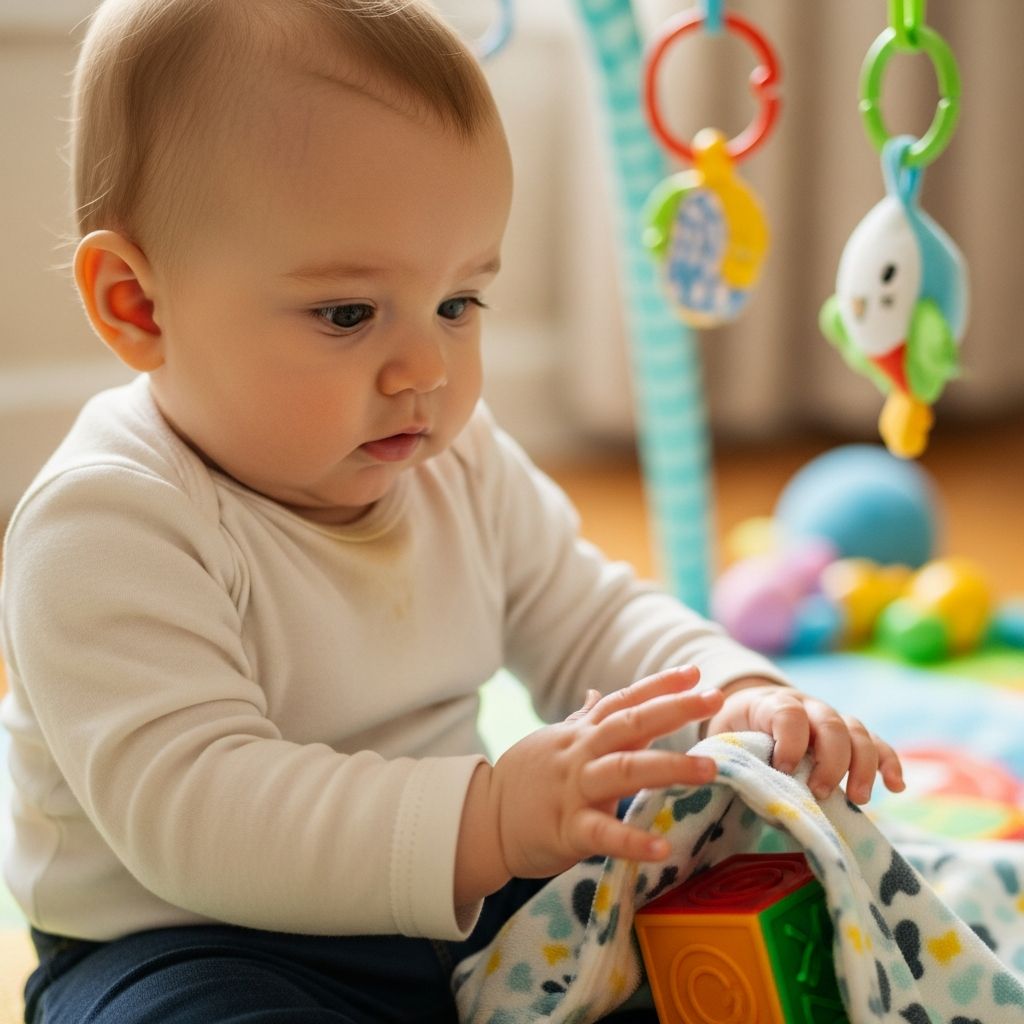
The understanding that objects continue to exist even when out of sight marks a profound cognitive shift in early infancy, typically solidifying between 7 and 12 months. This milestone, central to sensorimotor development, enables babies to explore their world more confidently and forms the foundation for memory, attachment, and problem-solving skills.
Defining Object Permanence and Its Core Importance
Object permanence refers to the cognitive ability to recognize that entities like toys, people, or pets persist despite being hidden from view. Before this develops, infants operate on an ‘out of sight, out of mind’ principle, where disappearance equates to nonexistence.
This concept underpins broader developmental progress. It bolsters working memory, allowing babies to hold mental images of absent items while searching, and fosters symbolic thinking, crucial for language acquisition where words represent unseen realities. Emotionally, it strengthens bonds, as babies realize caregivers return after brief absences, reducing separation anxiety.
Research highlights its ripple effects: children with robust object permanence show advanced problem-solving and reduced frustration during play, setting stages for toddler independence.
Evolutionary Timeline of This Cognitive Skill
Infants’ grasp of object permanence unfolds gradually across the first year, challenging early theories like Jean Piaget’s that pegged it strictly at 8 months. Modern studies reveal earlier hints, with precursors emerging as young as 3.5-5 months via violation-of-expectation tasks, where babies stare longer at impossible events like objects vanishing mid-air.
| Age Range | Developmental Substage | Key Behaviors |
|---|---|---|
| 0-1 months | Reflex Schema | Focus on body movements; minimal object awareness beyond immediate senses |
| 1-4 months | Primary Circular Reactions | Track moving objects briefly; respond to familiar faces/sounds |
| 4-8 months | Secondary Circular Reactions | Reach for partially hidden items; ignore fully concealed ones |
| 8-12 months | Coordination of Secondary Reactions | Search for hidden objects if hiding observed; A-not-B error common |
| 12-24 months | Tertiary & Mental Combinations | Full mastery; solve complex hidings like nested containers |
By 7-12 months, most babies actively retrieve concealed toys, though inconsistencies arise—success varies day-to-day due to attention spans or fatigue. Full reliability often arrives post-12 months.
Piaget’s Foundational Framework and Modern Critiques
Jean Piaget’s sensorimotor stage (birth-2 years) positions object permanence as its pinnacle, observed through manual search tasks. In the 8-12 month substage, babies coordinate senses to find watched hidings but falter on the A-not-B error: after finding an object at spot A, they ignore it when moved to B under their gaze.
Piaget viewed this as incomplete permanence, but contemporaries like Renée Baillargeon argue infants comprehend it earlier. Looking-time paradigms show 4-7 month-olds expect hidden objects to endure, suggesting innate roots refined by experience. A 2014 study posits object identity—recognizing an item post-occlusion—as the precursor, with search behaviors maturing 10-14 months.
These debates underscore development as multifaceted: not a binary switch, but layered from implicit (nonverbal surprise) to explicit (active pursuit).
Observable Signs in 7-12 Month Olds
- Peekaboo Thrills: Babies delight in faces reappearing, giggling at temporary ‘disappearances,’ signaling emerging awareness.
- Toy Hunts: Crawling or patting under blankets for vanished rattles; frustration if unsuccessful.
- People Tracking: Crying less when parents duck behind doors, anticipating return.
- A-not-B Pitfalls: Repeatedly digging same spot despite visible relocation.
- Container Play: Dumping items from boxes, expecting retrieval.
Variations exist: Premature infants or those in enriched environments may advance quicker, while delays warrant monitoring for vision/hearing issues.
Practical Activities to Nurture Development
Parents play pivotal roles via interactive play. Start simple, scaling complexity as cues emerge.
- Classic Peekaboo: Cover face with hands or cloth; vary speeds/locations to build anticipation. Evolves to hiding behind furniture.
- Blanket Hide-and-Seek: Partially cover toys, encouraging pulls; progress to full covers post-8 months.
- Roll and Retrieve: Roll balls under couches; guide initial searches, then observe independence.
- Puppet Shows: Use toys to ‘hide’ in cups, mimicking disappearances/reappearances.
- Mirror Games: Hide-reflect self or objects, linking visuals to persistence.
Incorporate daily routines: Hide spoons during meals or socks in laundry for organic practice. Limit sessions to baby’s attention (5-10 minutes) to avoid overwhelm.
Links to Broader Developmental Domains
Beyond cognition, object permanence interweaves with:
- Emotional Security: Realizing mom returns post-nap fosters secure attachments, curbing prolonged distress.
- Social Skills: Understanding others exist unseen aids imitation, turn-taking in games.
- Motor Milestones: Searching propels crawling/reaching, enhancing coordination.
- Language Foundations: Symbolic permanence parallels words for absent entities (e.g., ‘ball’ under bed).
Longitudinally, early mastery correlates with advanced executive function by preschool, per longitudinal cohorts.
Potential Delays and Support Strategies
While most achieve basics by 12 months, lags appear in 10-15%—often transient but screenable. Red flags: No search by 12 months, persistent A-not-B past 18 months, or disinterest in hide-play.
Contributing factors include visual impairments, autism spectrum traits, or deprived stimulation. Pediatric checks via ASQ tools flag risks; interventions like occupational therapy emphasize sensory integration.
Home strategies: Enrich environments with varied toys, responsive caregiving. Track via journals/apps, consulting pros if stalled.
Frequently Asked Questions
What if my 10-month-old ignores hidden toys?
This is typical; full active search solidifies closer to 12 months. Persist with gentle encouragement—peekaboo bridges the gap.
Does screen time hinder object permanence?
Limited evidence; interactive apps may aid, but hands-on play trumps passive viewing for sensorimotor growth.
How does object permanence differ in preterm babies?
Adjusted age applies; a 9-month corrected may mimic 6-month term behaviors. Monitor milestones accordingly.
Can toys influence this milestone?
High-contrast, textured items engage early; by 7 months, cause-effect toys (pop-ups) accelerate searches.
Is A-not-B error a permanence failure?
No—it’s spatiotemporal tracking immaturity. Mastery by 18-24 months confirms full concept.
Empowering Parents for Milestone Success
Celebrate nuances: Every pat under a blanket signals neural rewiring. Responsive play not only accelerates but enriches joy in discovery. By 12 months, this bedrock empowers toddlers to navigate hidden complexities, from cupboard raids to stranger wariness.
Armed with knowledge, parents transform routines into teachable adventures, weaving permanence into the fabric of growth.
References
- Object Permanence: How Do Babies Learn It? — WebMD. 2023. https://www.webmd.com/baby/what-age-do-babies-have-object-permanence
- Object Permanence — Wikipedia. 2024-02-01. https://en.wikipedia.org/wiki/Object_permanence
- Object Permanence: What It Is and Why It’s Important — Lovevery Blog. 2023. https://blog.lovevery.com/skills-stages/object-permanence/
- New Findings on Object Permanence: A Developmental Difference Between 10- and 14-Month-Old Infants — PMC (NCBI). 2014-10-01. https://pmc.ncbi.nlm.nih.gov/articles/PMC4215949/
- Object Permanence — EBSCO Research Starters. 2023. https://www.ebsco.com/research-starters/psychology/object-permanence
- 3 Activities to Help Develop Object Permanence Skills — NAPA Center. 2024. https://napacenter.org/object-permanence/
Similar Articles







Read full bio of Sneha Tete