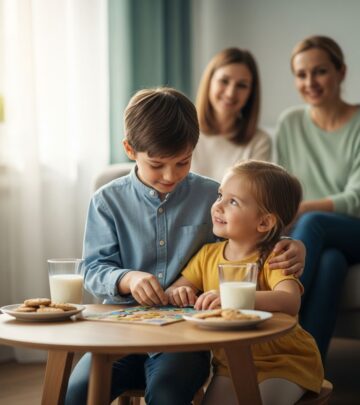
Older Brothers: Shaping Family Dynamics and Sibling Traits
Discover how having older brothers influences personality, behavior, and life outcomes for younger siblings in unique family configurations.

Having an
older brother
fundamentally alters the family environment, influencing younger siblings’ personalities, behaviors, and even cognitive growth. Research on birth order reveals that firstborn males often set a tone of leadership and protection, creating distinct niches for those who follow. This article delves into how older brothers impact younger siblings, drawing from psychological studies and family observations.The Unique Role of Firstborn Males in Sibling Hierarchies
Firstborn sons typically experience undivided parental attention initially, fostering traits like responsibility and achievement orientation. A comprehensive analysis of large-scale data from U.S. panels showed firstborns scoring higher on intellect measures, with a decline noted in later-borns. This intellectual edge stems from intensive early parental investment, which older brothers leverage to model diligence for siblings.
Within families, older brothers occupy a dominant position due to age and physical advantages, prompting younger siblings to adapt by developing complementary strengths. Studies confirm firstborns are perceived as more conscientious and achieving, while later-borns emerge as more agreeable and rebellious. For boys with older brothers, this dynamic encourages risk-taking and sociability as they navigate the family pecking order.
Personality Development Under the Influence of Older Brothers
Alfred Adler’s foundational theory posited that birth position shapes core traits, with firstborns bearing leadership burdens and later-borns seeking alternative paths to distinction. Modern evidence tempers this, finding no broad personality effects beyond intellect, yet consistent within-family differences persist.
- Conscientiousness Boost: Younger siblings of older brothers often develop heightened agreeableness to foster harmony, contrasting the firstborn’s rule-following nature.
- Extraversion and Sociability: Later-borns, especially with male elders, hone social skills to compete for attention, leading to outgoing personalities.
- Rebellious Streaks: Freed from eldest responsibilities, these siblings experiment more, embracing liberal views.
Gender interplay adds nuance: Older brothers may instill resilience in sisters, enhancing creativity, while brothers push male siblings toward independence.
Cognitive and Academic Impacts from Brotherly Mentorship
Older brothers serve as informal tutors, bridging gaps in parental time allocation. Firstborns outperform on intelligence tests by about a tenth of a standard deviation, an effect holding across analytical designs. Younger siblings benefit indirectly, gaining practical knowledge from elder guidance.
| Birth Position | Intellect Score (Relative) | Key Influences from Older Brother |
|---|---|---|
| Firstborn (Older Brother) | Highest | Full parental focus, leadership modeling |
| Middle (with Older Brother) | Moderate | Competition drives adaptation, social learning |
| Youngest | Lowest but resilient | Freedom fosters creativity over rote achievement |
This table summarizes trends from national panel data, highlighting how older brothers elevate family intellectual standards.
Social Skills and Emotional Growth in Brother-Led Families
Boys with older brothers learn negotiation early, enhancing emotional intelligence. Research indicates later-borns score higher on prosocial behaviors and resilience, countering some mental health risks. Yet, conflicting findings show higher birth orders linked to psychiatric issues, suggesting family-specific factors.
Older brothers model emotional stability—or instability—shaping sibling responses. Firstborn males, often more anxious due to parental expectations, teach perseverance, while their protective roles buffer younger ones from stressors.
Long-Term Life Outcomes: Careers, Relationships, and Health
The sibling configuration with older brothers predicts distinct trajectories. Firstborn sons pursue high-achievement paths, with siblings following in leadership or creative roles. A study of over 1,000 families found firstborns nominated as top achievers, later-borns as innovators.
In relationships, those with older brothers exhibit balanced agreeableness, aiding partnerships. Health-wise, youngest siblings show lower emotional problems but higher impulsivity risks, influenced by lenient parenting post-firstborn.
Gender Combinations: Boys, Girls, and Mixed Sibling Sets
Older Brother-Younger Brother Dynamics
Two boys foster competition, with the elder enforcing rules and the younger rebelling. This builds toughness and camaraderie, traits linked to later success in team environments.
Older Brother-Younger Sister Effects
Sisters gain confidence from brotherly protection, often outperforming in creativity and empathy. Parental leniency amplifies this, diverging from stricter firstborn treatment.
Multiple Older Brothers’ Cumulative Impact
With several older brothers, younger siblings develop exceptional adaptability, thriving in chaotic, male-dominated homes by excelling in niche roles.
Debunking Myths: What Science Really Says About Birth Order
Popular lore exaggerates effects, but rigorous within-family analyses reveal limited broad personality shifts. Intellect differences endure, but traits like extraversion remain stable across positions. Parental age, family size, and socioeconomic factors mediate more than order alone.
Practical Advice for Parents of Multi-Sibling Families
To optimize dynamics:
- Balance attention to prevent resentment.
- Encourage unique strengths in each child.
- Foster positive brother-sibling bonds through shared activities.
- Monitor mental health, especially in middles and youngests.
Frequently Asked Questions (FAQs)
What is the biggest impact of an older brother on personality?
Older brothers promote agreeableness and sociability in younger siblings through competition and modeling, per family studies.
Do older brothers affect intelligence?
Indirectly yes; firstborns set high standards, but later-borns show slight declines in intellect measures.
How does having older brothers influence girls?
Girls develop resilience and creativity, benefiting from protective yet freeing dynamics.
Are birth order effects permanent?
Largely no for broad traits, but early niches influence lifelong adaptations.
Can parents change birth order impacts?
Yes, through equitable parenting and encouraging individual growth.
Navigating Modern Families with Older Brothers
In blended or larger families, older brothers’ roles amplify. Parents should leverage their leadership while nurturing others’ potentials. Emerging research underscores resilience in these setups, with youngest siblings often happiest despite challenges.
Understanding these dynamics empowers families to thrive. By appreciating how older brothers shape the household, parents can guide children toward balanced development.
References
- Damian, R. I., & Roberts, B. W. (2015). The associations of birth order with personality and intelligence in a representative sample of U.S. high school students. — Proceedings of the National Academy of Sciences (PNAS). 2015-10-27. https://www.pnas.org/doi/10.1073/pnas.1506451112
- Birth order and personality. — EBSCO Research Starters. Accessed 2026. https://www.ebsco.com/research-starters/health-and-medicine/birth-order-and-personality
- Does Birth Order Impact Personality? — Psych Central. 2023-05-15. https://psychcentral.com/blog/birth-order-and-personality
- How Birth Order Impacts Your Personality. — Johnson & Wales University Online. 2023-08-10. https://online.jwu.edu/blog/how-birth-order-impacts-your-personality/
- Birth order effects on personality and achievement within families. — University of British Columbia (Salfi, S., & Paulhus, D. L.). 1999-01-01. https://www2.psych.ubc.ca/~dpaulhus/research/BIRTH_ORDER/PS.99.pdf
Similar Articles







Read full bio of Sneha Tete