Mastering Overhand Throws: 3.5-4 Year Milestones
Unlock the key milestones and activities for children aged 42-49 months to master overhand throwing and build essential motor skills.
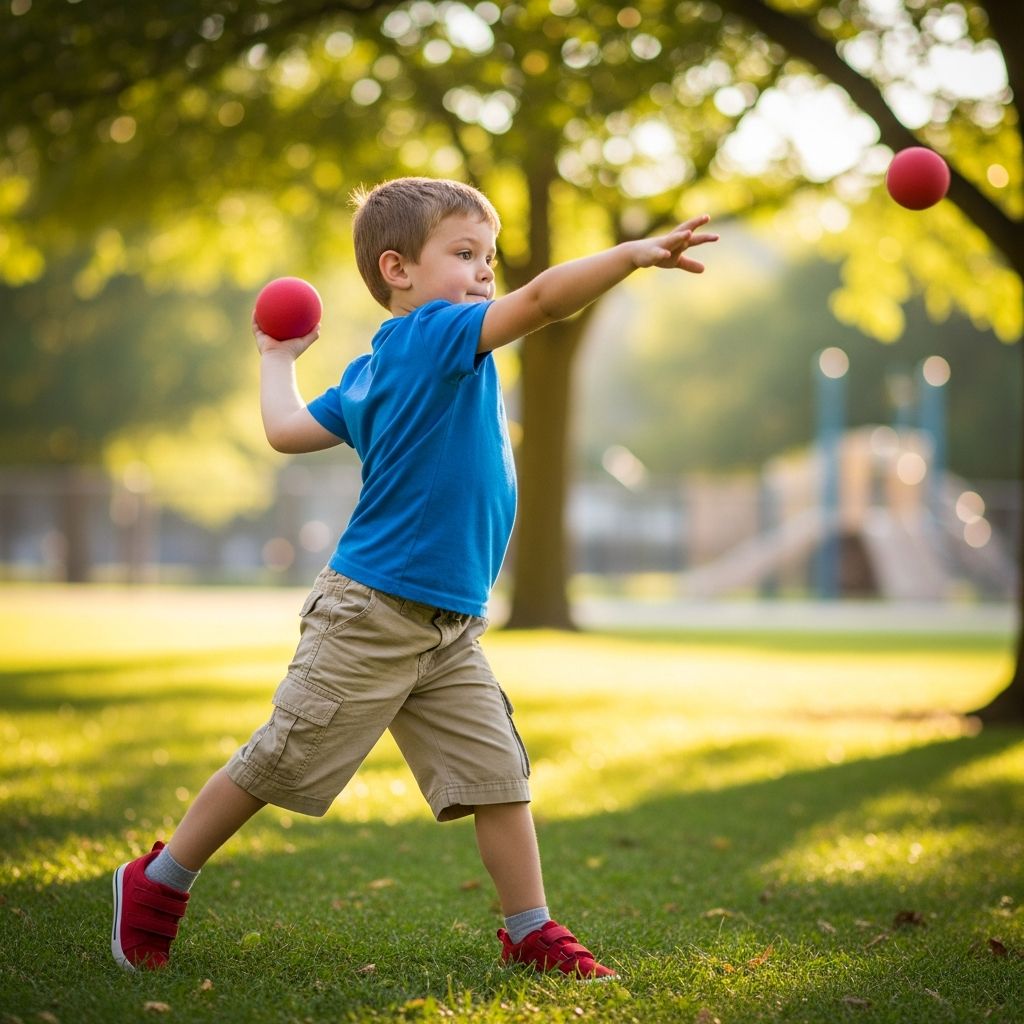
Mastering Overhand Throws: Essential Milestones for 3.5-4 Year Olds
Between 42 and 49 months, children typically achieve a reliable overhand throw, marking a pivotal step in gross motor development. This skill involves coordinating the arm, trunk, and legs to propel a ball forward with control and some accuracy.
Understanding the Overhand Throw in Early Childhood
The overhand throw emerges as toddlers transition from simple arm flings to more structured motions. At this age, a child grabs a ball, steps slightly, rotates the upper body, and releases it overhead-style, often reaching 5-10 feet with decent aim. Unlike earlier pushes or underhand tosses, this action demands integration of multiple muscle groups for power and precision.
Developmentally, this milestone reflects maturation in the nervous system, allowing smoother sequencing of movements. Research shows that by 3.5 years, most children can throw a tennis ball overhand about 7 feet, improving form by age 4 with added steps and rotation.
Key Developmental Stages Leading to Proficiency
Overhand throwing builds progressively from infancy. Here’s a breakdown:
- 12-14 Months: Initial experiments, like dropping food or flinging objects from a high chair, honing voluntary release.
- 15-24 Months: Standing throws emerge; basic overhand within a few feet, often with balance challenges.
- 2-3 Years: Forward throws gain distance (3+ feet), dominant hand preference appears.
- 3.5-4 Years (42-49 Months): Refined form with trunk twist, opposite foot step, and targeted release.
By 42 months, expect consistent overhand execution without falling, evolving into mature patterns by 4-5 years with full weight transfer.
Why Overhand Throwing Matters for Growth
This skill fosters far more than playground fun. It strengthens core stability as legs brace and torso rotates during the throw. Hand-eye coordination sharpens through aiming, while bilateral integration improves from using both sides of the body.
Physically, it engages large muscle groups: shoulders for wind-up, elbows for extension, and hips for power generation. Cognitively, it builds spatial awareness and impulse control, as children learn to gauge distance and force. Long-term, proficient throwers excel in sports, enhancing confidence and peer interactions.
| Age Range | Throwing Ability | Muscles Involved | Benefits |
|---|---|---|---|
| 42-45 Months | Basic overhand, 5-7 ft | Arms, core | Balance, coordination |
| 46-49 Months | With step, better aim | Trunk rotation, legs | Power, accuracy |
| 4+ Years | Mature pattern | Full body | Sports readiness |
Signs of Healthy Progress at 42-49 Months
Look for these indicators of on-track development:
- Throws a small ball (e.g., tennis size) overhand from a standing position without losing balance.
- Incorporates a forward step with the opposite foot, adding distance.
- Aims roughly at a target within 5-10 feet, hitting occasionally.
- Demonstrates handedness, favoring one arm consistently.
Variations exist based on practice exposure; some children refine faster with encouragement.
Fun Activities to Boost Throwing Skills
Engage your 3.5-4 year old with these play-based exercises:
- Target Practice: Set up buckets or hoops at varying distances. Use soft balls; cheer accurate throws to build motivation.
- Two-Ball Challenge: Provide two differently colored balls. Toss one then the other, comparing distances to spark observation.
- Step-and-Throw Drill: Mark spots with tape; practice stepping forward with the opposite foot before releasing.
- Laundry Basket Toss: Elevate a basket; throw socks or beanbags inside for overhead practice.
- Partner Play: Roll or toss back-and-forth, gradually increasing overhand elements for catch integration.
Incorporate cues like “ear to ball, then push forward” to guide form without frustration. Sessions of 10-15 minutes daily yield best results.
Addressing Throwing as Emotional Expression
Toddlers throw not just for skill-building but to process feelings. Frustration or excitement often manifests physically due to immature emotional regulation. Respond by validating emotions while redirecting: “I see you’re mad—let’s throw this ball safely instead.” This teaches boundaries and co-regulation.
Common Challenges and Solutions
Some hurdles include:
- Poor Balance: Strengthen core with standing games; ensure stable footing.
- No Rotation: Model trunk twists during play; use larger balls initially.
- Sidearm Throws: Cue overhead motion: “Ball by your ear first”.
Practice variety—different sizes, weights, distances—accelerates adaptation.
When to Consult a Professional
By 42 months, inability to throw overhand a few feet, frequent falls during attempts, or lack of progress despite practice warrants a pediatrician check. Early intervention for motor delays ensures timely support, as throwing ties to broader milestones like running.
Integrating Throwing into Daily Routines
Weave skill-building into everyday moments: throw rolled socks into hampers during laundry, aim beanbags at furniture during cleanup, or propel balls outdoors post-meals. Consistency turns play into habit, fostering lifelong activity love.
Parental modeling amplifies learning—demonstrate proper form enthusiastically. Group playdates introduce social dynamics, like turn-taking throws, enhancing emotional and motor gains.
Long-Term Impact on Physical Literacy
Mastering overhand throws at this stage lays groundwork for advanced sports: baseball, soccer throws, basketball. Children with strong fundamentals show better agility, strength, and resilience by school age. Invest now for a foundation that supports health across life stages.
Frequently Asked Questions
What if my 42-month-old can’t throw overhand yet?
Provide extra play opportunities; consult a doctor if no progress by 48 months or other delays present.
How often should we practice throwing?
10-20 minutes daily through fun games prevents burnout while building muscle memory.
Is underhand throwing important too?
Yes, it emerges around 24 months and complements overhand for varied sports skills.
Can indoor activities help develop this skill?
Absolutely—use soft toys, baskets, or pillows for safe, weather-proof practice.
Does handedness matter at this age?
Dominance often solidifies by 3-5 years; encourage both initially for bilateral strength.
References
- When do babies learn how to throw and why they do it — Lovevery Blog. 2023. https://blog.lovevery.com/skills-stages/throwing/
- National Play Catch Week – Throwing Milestones — Melanie Massey Physical Therapy. 2024. https://mmptinc.com/lets-play-catch/
- Development of Throwing Skills — Inspiring Talkers. 2023. https://inspiringtalkers.com/development-of-throwing-skills/
- Characteristics of early overarm throwing — Human Kinetics. 2022. https://us.humankinetics.com/blogs/excerpt/characteristics-of-early-overarm-throwing
- Overarm Throwing Developmental Phases — VCH Paediatrics Team. 2023. https://paediatrics.vchlearn.ca/resources/gross-motor/7-%20Physical%20Literacy%20-%20Skill%20Development/Ball%20Skills-Overarm%20Throwing.pdf
- Developing Ball Skills – Throwing — Childrens Autism. 2018. https://childrensautism.ca/wp-content/uploads/2018/04/Developing-Ball-Skills-Throwing-.pdf
Similar Articles







Read full bio of Sneha Tete