Professional Travel and Relationship Fidelity: Understanding the Science
Discover why work-related travel increases infidelity risks and how couples can strengthen their bonds.
Understanding the Connection Between Professional Travel and Marital Infidelity
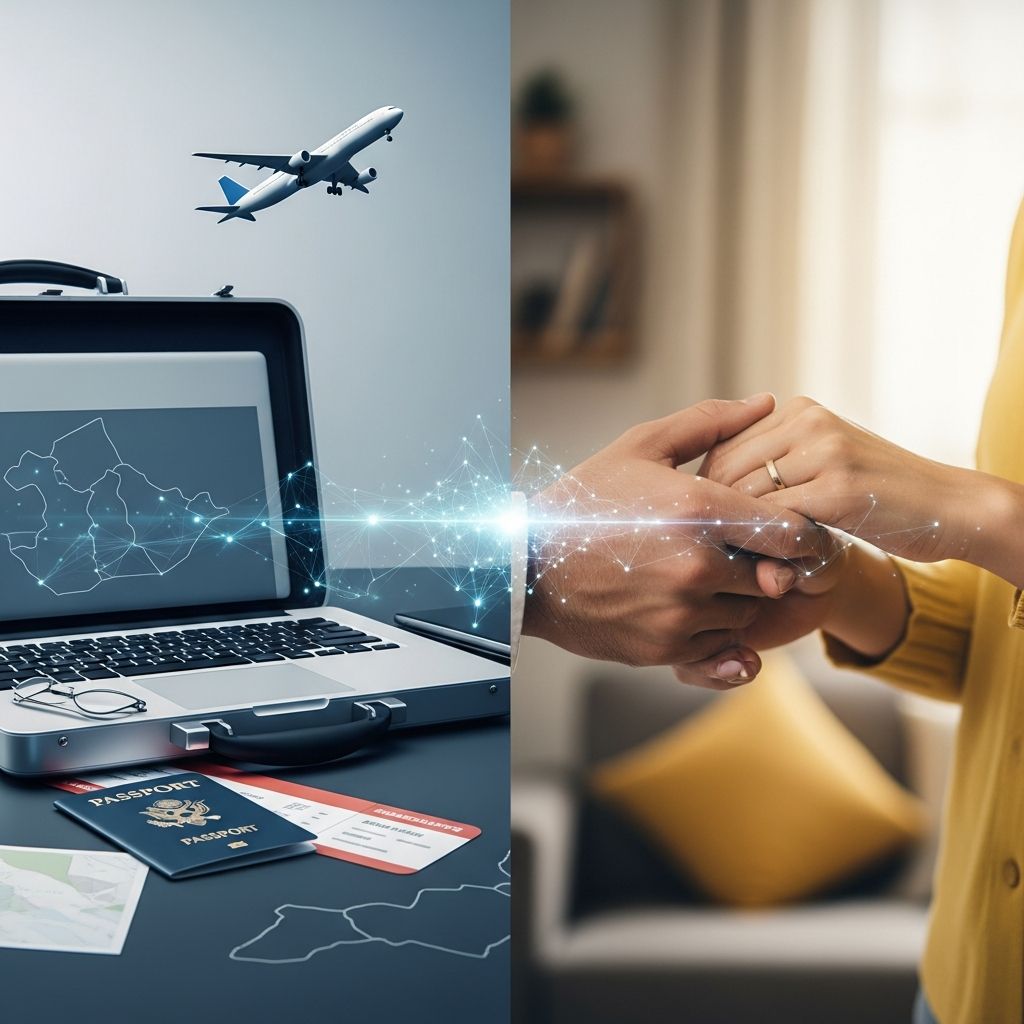
The relationship between business travel and infidelity has become increasingly documented in contemporary research, revealing patterns that extend far beyond anecdotal observations. When professionals embark on work-related journeys, they enter an environment where conventional relationship boundaries become susceptible to compromise. This phenomenon has captured the attention of behavioral scientists, relationship experts, and researchers who seek to understand the underlying mechanisms that elevate the risk of infidelity during these periods away from home.
The prevalence of this issue is significant enough to warrant serious examination. Data indicates that individuals traveling for professional purposes face substantially elevated temptation compared to their non-traveling counterparts. Understanding these dynamics requires exploring multiple dimensions: the psychological motivations, environmental factors, and situational circumstances that converge when people find themselves in unfamiliar professional settings away from their established support systems and accountability structures.
The Striking Statistics on Professional Travel and Unfaithfulness
Research examining nearly 100,000 individuals reveals a stark disparity in reported infidelity rates when comparing those who travel for work versus those who remain in their home environments. The data demonstrates that up to 36% of men acknowledge engaging in infidelity during business trips, contrasted with 20% who admit to cheating in general contexts. For women, the statistics show 13% report infidelity during business travel compared to 13% in standard circumstances, suggesting that work-related travel may represent a more significant vulnerability factor for male professionals.
The escalation becomes even more pronounced in specific professional contexts. Conferences and industry conventions present particularly challenging environments for relationship fidelity. Research examining over 2,000 employees found that 66% reported either witnessing or personally experiencing infidelity at these gatherings. This substantial increase reflects the unique combination of factors these events create: concentrated populations of traveling professionals, decreased supervision, evening social activities centered around alcohol consumption, and the psychological freedom that comes from being surrounded by others in similar circumstances.
Additionally, survey data from Gleeden reveals somewhat different patterns, with 58% of women and 42% of men admitting to infidelity during work travel, though these figures may reflect differing methodologies and participant demographics. Regardless of the exact percentages, the consistent trend across multiple research sources indicates that professional travel represents a significant risk factor for relationship infidelity.
The Psychological Appeal of Temporary Identity Transformation
At the core of understanding business travel infidelity lies a fundamental psychological mechanism: the appeal of temporary reinvention. When individuals leave their home environments, they simultaneously abandon many of the social identities and roles that define their daily existence. The exhausted parent managing household responsibilities, the stressed employee navigating office politics, and the spouse juggling domestic obligations all fade into the background. In their place emerges an alternative version of self—one unencumbered by the mundane realities of daily life.
Mental health professionals describe this phenomenon as escapism, distinctly different from pursuing emotional or physical intimacy within the marriage. Rather than seeking connection with someone new based on genuine emotional attachment, traveling professionals often seek to experience a fantasy version of life—one divorced from quarrels about household cleanliness, childcare coordination, or workplace frustrations. The hotel environment becomes a stage where this alternate persona can perform without the constraints of established relationships and social obligations.
This psychological transformation gains power through novelty and anonymity. New cities, unfamiliar social settings, and the absence of established community connections create conditions where individuals can temporarily shed their authentic identities. The stranger at the hotel bar operates under different social rules than the person who sits in a familiar cubicle. This distinction becomes psychologically powerful, particularly for individuals experiencing dissatisfaction with their current life circumstances or relationship dynamics.
Environmental and Circumstantial Facilitators of Infidelity Risk
Professional travel creates multiple environmental conditions that simultaneously reduce barriers to infidelity while increasing opportunity. The research clearly establishes that behavioral deterioration during business trips extends far beyond infidelity. Survey data indicates that over 70% of employees reported excessive alcohol consumption at industry conventions and trade shows, while 42% acknowledged insufficient sleep during these events.
These factors operate synergistically to impair judgment and reduce self-control. Sleep deprivation fundamentally compromises decision-making capacity, reducing the cognitive resources individuals need to maintain adherence to their values and relationship commitments. Simultaneously, alcohol consumption directly impairs inhibitory control while increasing risk-taking behaviors. Combined with the social atmosphere of professional gatherings—where evening events, networking activities, and entertainment are structured into the agenda—the environment actively facilitates the circumstances where infidelity becomes more probable.
The inherent trust that partners extend toward business travel creates another critical dimension. Traveling professionals benefit from an assumption of necessity and legitimacy that vacations or purely social travel might not receive. Partners grant broader latitude to traveling spouses precisely because they trust the professional purpose and assume appropriate supervision and constraints. This trust, while healthy in principle, can be exploited by individuals seeking to conceal infidelity, as the legitimate business rationale provides convenient cover for additional activities.
The Power Dynamics Underlying Workplace Infidelity Behavior
Beyond environmental factors and psychological escapism, emerging research points toward a more fundamental driver of business travel infidelity: the relationship between professional power and infidelity behavior. A comprehensive study involving over 1,500 working professionals identified a direct correlation between elevated workplace power and both actual infidelity and urges to engage in infidelity.
This finding holds significant implications for understanding the phenomenon. Rather than treating infidelity during business travel as a circumstantial inevitability, this research suggests that individuals who achieve prominence in their professional hierarchies may demonstrate greater propensity toward violating relationship commitments. The correlation appears equally strong across gender lines, with women showing increased infidelity rates as they advance into positions of greater professional authority.
One interpretation of this pattern involves financial resources and travel frequency. Professionals with elevated power typically travel more frequently and possess greater financial means to pursue discretionary activities. Additionally, higher-status professionals often interact with broader networks of potential partners and encounter fewer practical constraints on their activities. However, researchers propose that the connection between power and infidelity may reflect something more fundamental about personality and behavioral patterns: individuals willing to violate monogamy agreements may simultaneously violate other social agreements, suggesting that ruthlessness in pursuing professional advancement correlates with reduced commitment to relationship fidelity.
Distinguishing Between Correlation and Causation
While the data consistently demonstrates elevated infidelity rates during business travel, it remains critical to recognize that travel itself does not cause infidelity. Rather, travel creates conditions and opportunities that enable infidelity among individuals already predisposed toward this behavior. The distinction holds important implications for how couples understand and address this risk factor.
The underlying vulnerabilities in relationships—unmet emotional needs, communication deficits, declining physical intimacy, or fundamental incompatibilities—establish the foundation for infidelity. Business travel does not create these vulnerabilities; instead, it provides an environment where latent vulnerabilities can manifest into actual infidelity. For couples with strong relationship foundations, frequent travel need not translate into increased infidelity risk. The critical variable lies not in the travel itself but in the relationship dynamics that precede and underlie the travel.
This understanding reframes the challenge for couples: rather than viewing business travel as an inherent threat, couples can recognize it as a context where existing relationship strengths face testing. This perspective shift enables more productive conversations about the actual sources of vulnerability in the relationship and how to address them proactively.
Strengthening Relationship Resilience During Professional Separations
For couples committed to maintaining fidelity through periods of professional travel, several evidence-based approaches can strengthen relationship resilience:
- Transparent Communication: Explicit conversations before travel about expectations, boundaries, and concerns create mutual understanding and accountability. Partners who discuss potential vulnerability factors and reaffirm commitment demonstrate greater capacity to navigate separation successfully.
- Scheduled Connection Points: Maintaining regular contact through calls, video meetings, or messaging during travel preserves the sense of relational continuity and prevents the psychological disengagement that can increase vulnerability to infidelity.
- Boundary Establishment: Couples benefit from explicit discussion about what activities fall within acceptable bounds during professional travel. Clear boundaries, developed collaboratively and agreed upon mutually, provide guideposts for decision-making in ambiguous social situations.
- Addressing Underlying Issues: Using periods between travels to address relationship challenges, explore emotional needs, and strengthen intimacy directly reduces the motivation to seek connection outside the marriage.
- Recognizing Power Dynamics: Couples where one partner has experienced significant professional advancement may need to explicitly address how power imbalances affect relationship dynamics and decision-making patterns.
The Role of Professional Context and Industry Culture
Different professional environments create varying levels of infidelity risk. Industries characterized by heavy travel schedules, frequent conventions, male-dominated demographics, or cultures emphasizing networking and social entertainment typically present elevated vulnerability. Conversely, professions with less frequent travel, stronger workplace monitoring, or cultures emphasizing work-life boundaries may present lower infidelity risk during professional journeys.
Understanding one’s specific professional context enables couples to develop tailored strategies. A consultant traveling 50% of the time faces different challenges than a professional who travels quarterly. Similarly, the culture at industry conferences in certain sectors differs significantly from the professional contexts in other fields. Acknowledging these contextual differences allows couples to address the specific vulnerabilities relevant to their particular circumstances rather than applying generic relationship advice to their situation.
Addressing the Aftermath and Prevention Moving Forward
For couples who have experienced infidelity during business travel, recovery requires addressing both the immediate breach of trust and the underlying vulnerabilities that enabled it. Professional counseling from therapists specializing in post-infidelity recovery can help couples process the violation, understand contributing factors, and rebuild trust. This work necessarily involves examining whether travel will continue in the same manner or whether modifications in frequency, duration, or structure might support relationship healing.
Prevention moving forward requires honest assessment of what factors—whether psychological escape needs, unmet relationship needs, power imbalances, or simple opportunity—contributed to the infidelity. Addressing only the travel aspect without examining underlying relationship issues creates vulnerability to future incidents. Conversely, addressing relationship dynamics while maintaining the same travel patterns may prove ineffective if the environmental conditions remain fundamentally conducive to infidelity.
Frequently Asked Questions About Professional Travel and Relationship Fidelity
Q: Does business travel inevitably lead to infidelity?
A: No. While data shows elevated infidelity rates during business travel, the majority of traveling professionals remain faithful. Travel creates opportunity and reduces accountability, but infidelity requires both predisposing factors and personal choice. Strong relationships with solid foundations can weather professional travel without infidelity.
Q: Why do conventions and trade shows show higher infidelity rates than regular business travel?
A: Conventions concentrate large numbers of traveling professionals in single locations, often with structured evening entertainment, alcohol availability, and reduced supervision. The combination of escapism motivation, environmental enablers, and reduced accountability creates particularly high-risk conditions.
Q: How does professional power relate to infidelity during business travel?
A: Research shows that individuals with elevated professional status demonstrate stronger correlation with infidelity behavior. This may reflect greater travel frequency, broader social networks, increased financial resources, and reduced accountability that accompany higher-status positions.
Q: What communication strategies help couples navigate frequent business travel?
A: Transparent pre-travel conversations about expectations and concerns, scheduled connection points during separation, explicit boundary-setting, and regular relationship maintenance all strengthen resilience. Addressing underlying relationship vulnerabilities proves more important than travel management alone.
Q: Can couples prevent business travel infidelity through increased monitoring or control?
A: Surveillance and control strategies typically damage trust rather than strengthen it. Prevention depends more on relationship strength, clear boundaries established through mutual agreement, and addressing underlying vulnerabilities that create infidelity motivation.
References
- Infidelity Uncovered: Business Trips and Vacations — Atlantis Investigations. 2024. https://atlantisinvestigations.com/articles/infidelity-uncovered-business-trips-and-vacations
- Cheating Spouses On Business Trips, Explained By Science — Fatherly. 2024. https://www.fatherly.com/health/cheating-spouses-business-trips-explained-science
- Why So Many People Cheat During Business Trips, According To Research — YourTango. 2024. https://www.yourtango.com/heartbreak/why-so-many-people-cheat-during-business-trips-according-research
- Are Work Trips the New Dating Hotspots for the Married? — Media Info Line. 2024. https://www.mediainfoline.com/article/are-work-trips-the-new-dating-hotspots-for-the-married
- Infidelity Statistics 2026: Cheating Rates, Affairs & Research Data — South Denver Therapy. 2026. https://www.southdenvertherapy.com/blog/infidelity-statistics-2026
- How people react to their Partners’ infidelity: An explorative study — Personal Relationships Journal via Wiley Online Library. 2024. https://onlinelibrary.wiley.com/doi/10.1111/pere.12457
Similar Articles







Read full bio of Sneha Tete