Safely Removing Slime from Carpet and Rugs
Learn proven, kid-safe methods to get sticky slime out of carpet fibers without harsh chemicals or permanent damage.
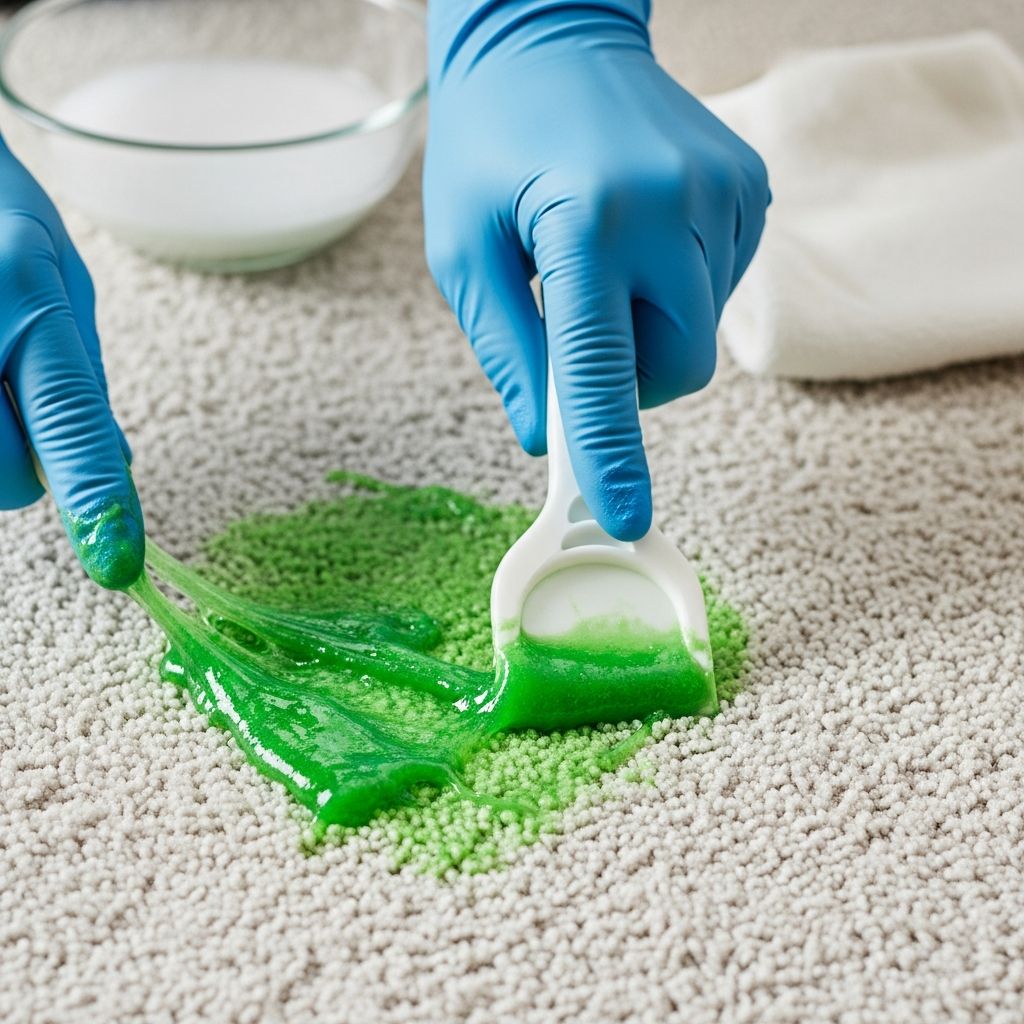
How to Get Slime Out of Carpet Without Ruining It
Slime is a favorite kids’ activity and a frequent source of panic for anyone with carpet or area rugs. The good news: most slime messes can be removed completely with patience, gentle techniques, and products you already have at home.
This guide explains how to tackle both fresh and dried slime, what solutions are safe for different carpet types, and how to prevent future disasters.
Understanding What Slime Is Made Of
Most homemade and store-bought slime is created by mixing a polyvinyl acetate (PVA) glue base with a borate activator (like borax solution, saline with boric acid, or liquid starch), plus colorants or glitter. The glue gives slime its sticky, binding quality, and that same stickiness is what clings to carpet fibers.
Because PVA glues are water-based and designed to be washable, they can usually be softened and removed with moisture, mild surfactants, or weak acids such as household vinegar.
Before You Start: Safety and Carpet Check
Take a few quick precautions before attacking the stain so you do not damage your carpet.
- Identify your carpet type: Synthetic carpets (like nylon or polyester) are usually more tolerant of water and mild cleaning solutions than natural fibers such as wool.
- Patch test every solution: Always test a small hidden area first for color bleeding, fading, or texture change.
- Ventilate the room: Open a window or run a fan if you are using vinegar, alcohol, or other strong-smelling products.
- Avoid hot water on some stains: Heat can sometimes set dyes from colored slime into carpet fibers, making them harder to remove.
Tools and Products You May Need
You do not need specialty products to remove slime. In many cases, basic household supplies are enough.
| Item | Why It Helps |
|---|---|
| Blunt spoon or dull knife | Scrapes up excess slime without cutting carpet fibers. |
| White absorbent cloths or paper towels | Blots moisture and lifted slime; white prevents color transfer. |
| White distilled vinegar | Weak acid that helps break down glue-based slime residues. |
| Mild dishwashing liquid | Surfactant that loosens sticky, oily residues from fibers. |
| Spray bottle of clean water | Rinses carpet to remove leftover cleaning solution. |
| Soft brush (optional) | Helps re-fluff carpet pile after cleaning. |
Step-by-Step: Removing Fresh, Wet Slime
When slime is still soft and wet, you have the best chance of removing it completely in a single session.
1. Gently Lift Off the Excess
- Use a spoon or dull knife to scoop up as much slime as possible.
- Work from the outer edge toward the center to avoid spreading the slime outward.
- Do not rub or smear; pushing down forces slime deeper into the pile.
2. Blot, Don’t Scrub
- Place a white cloth over the area and press firmly to absorb loose moisture.
- Lift, switch to a clean part of the cloth, and repeat until little or no slime is transferring.
3. Apply a Vinegar and Water Mix
Vinegar is often recommended for glue-based spills because its acidity helps break down the adhesive component without introducing harsh solvents.
- Mix equal parts white distilled vinegar and cool water in a spray bottle.
- Lightly mist the slime spot until the fibers are damp but not soaked through to the backing.
- Allow it to sit for 5–10 minutes so the solution can penetrate the slime.
4. Blot and Lift the Softened Slime
- After the dwell time, use a clean cloth to dab and lift the vinegar solution and loosened slime.
- Rotate to clean sections of the cloth as you see slime transferring.
- If needed, gently scrape with the spoon again to lift softened bits.
5. Rinse and Dry the Carpet
- Lightly mist the area with plain water to remove leftover vinegar and slime residue.
- Blot with dry towels until the area feels only slightly damp.
- Allow the carpet to air-dry completely; then fluff the fibers with your fingers or a soft brush.
Step-by-Step: Removing Old, Dried Slime
Dried slime tends to bond more strongly to the fibers and often requires more time, but the basic principles are the same: soften, loosen, and lift.
1. Break Up the Crust Carefully
- Use a spoon or dull knife to chip away any brittle chunks of slime.
- Work slowly, aiming to remove only slime, not carpet fibers.
- Vacuum the area to pick up loose particles before adding moisture.
2. Soften with a Vinegar Compress
- Saturate a clean white cloth with undiluted white vinegar (for sturdy synthetic carpets) or a 50:50 vinegar-water mix (for more delicate materials).
- Lay the cloth directly over the dried slime spot.
- Press gently and let it sit for 20–30 minutes so the slime rehydrates and loosens.
3. Scrape and Blot in Layers
- Lift the cloth and use the spoon to scrape softened slime toward the center of the stain.
- Transfer loosened slime to a trash container or dish.
- Blot the area with a clean, dry cloth to absorb residual moisture and slime.
- Repeat the compress and scraping cycle as needed until most of the slime is gone.
4. Follow Up with Mild Dish Soap
Dishwashing liquids are designed to remove sticky residues and oils from surfaces without excessive damage, as long as they are rinsed thoroughly.
- Mix a solution of 1 teaspoon mild dishwashing liquid in 1 cup of cool water.
- Apply sparingly to the spot with a cloth or spray bottle.
- Gently dab to work the solution into the fibers; avoid vigorous scrubbing.
- Rinse with plain water and blot dry.
Dealing with Colored or Glitter Slime Stains
Even after the slime itself is gone, dyes, pigments, or glitter may leave evidence behind.
- Rinse generously after using any cleaner to remove residues that might attract dirt later.
- Inspect in natural light to spot any lingering color.
- For remaining color stains on synthetic carpets, a small amount of 3% hydrogen peroxide dabbed on a cloth and applied to the stain can sometimes help, but always patch test first and avoid wool or silk.
- Glitter may require repeated vacuuming and light brushing to fully remove.
Special Considerations for Wool and Delicate Carpets
Wool and other natural fibers require gentler care because strong alkalies, acids, and oxidizing agents can damage or discolor them.
- Use a more diluted vinegar solution (for example, 1 part vinegar to 3 parts water) and minimize contact time.
- Avoid prolonged soaking; wool is sensitive to both excess moisture and aggressive chemicals.
- Blot rather than scrub to prevent felting or fuzzing of the fibers.
- If the carpet is expensive or labeled “dry clean only,” consider contacting a professional cleaner.
Common Mistakes to Avoid
Rushing into cleanup can sometimes turn a small slime spot into a bigger, permanent problem. Keep these pitfalls in mind.
- Do not use colored cloths that might bleed dye onto damp carpet.
- Avoid harsh solvents (like acetone or strong paint thinners) that can dissolve backing or fade color.
- Skip abrasive tools such as stiff brushes or metal scrapers that can fray carpet fibers.
- Do not oversaturate the area; soaked padding can lead to odors or mildew if it stays damp.
- Do not ignore residue; leftover cleaner can attract soil, making the spot reappear as a dark patch.
When to Call a Professional Cleaner
Some situations are better handled by trained technicians who have specialized equipment and cleaning agents.
- The slime stain covers a large area or has been present for a long time.
- The carpet is high-value (hand-knotted wool, antique rugs, or silk blends).
- Previous attempts with home methods have left a stiff or discolored patch.
- There are additional complicating factors, such as pet urine or heavy soiling in the same area.
Preventing Future Slime Disasters
Prevention strategies can dramatically reduce the number and seriousness of slime spills in your home.
- Set a “slime zone”: Limit slime play to hard floors, trays, or washable table covers.
- Establish clear rules: No walking away from slime while it is in hand or on clothes.
- Use protective barriers: Place a plastic tablecloth, baking tray, or silicone mat under slime projects.
- Store slime securely: Use airtight containers and keep them off the floor and away from soft furnishings.
- Supervise young children: Regular check-ins reduce the chance of unnoticed spills that dry in place.
Quick Reference: Slime Removal Methods Compared
| Method | Best For | Pros | Cons |
|---|---|---|---|
| Vinegar & water | Most glue-based slime on synthetic carpets | Inexpensive, widely available, effective on fresh and dried slime | Strong smell; must test on delicate fibers |
| Dish soap solution | Residual stickiness and light staining | Gentle, good for final clean-up and rinsing | Needs thorough rinsing to avoid re-soiling |
| Professional cleaning | Large areas, high-value or delicate carpets | Expert stain removal, deep extraction equipment | Higher cost; requires scheduling |
Frequently Asked Questions (FAQs)
Q: Is vinegar safe on all carpets?
A: Vinegar is generally safe for many synthetic carpets when diluted, but it can be risky on natural fibers like wool or silk. Always patch test first and use weaker solutions and shorter contact times on delicate or specialty fibers.
Q: Can I use a carpet steam cleaner on slime?
A: It is better to remove as much slime as possible first using manual methods. High heat or steam may set dyes from colored slime into carpet fibers and can drive residues deeper, making them harder to extract.
Q: What if the area feels stiff after cleaning?
A: Stiffness usually means some cleaning solution or dried slime remains on the fibers. Lightly mist with clean water, blot thoroughly, and repeat until the texture feels more natural. After drying, gently brush the pile to restore softness.
Q: Is rubbing alcohol useful for removing slime?
A: Small amounts of isopropyl alcohol can sometimes help with stubborn residues on certain synthetic fibers, but it may affect dyes or backing materials. Use it only after testing in an inconspicuous area and apply sparingly with a cloth, not directly from the bottle.
Q: How long should I let the carpet dry after cleaning?
A: Surface fibers may feel dry within a few hours, but deeper layers can stay damp longer. Aim for several hours of drying time with good airflow before placing furniture back or allowing heavy foot traffic to reduce the risk of odors or re-soiling.
References
- Carpet and Upholstery Cleaning — Institute of Inspection, Cleaning and Restoration Certification (IICRC). 2022-03-01. https://iicrc.org/carpet-cleaning
- Cleaning and Disinfecting in the Home — U.S. Environmental Protection Agency (EPA). 2023-05-09. https://www.epa.gov/coronavirus/cleaning-and-disinfecting-best-practices
- Household Cleaning Products — American Cleaning Institute. 2022-08-15. https://www.cleaninginstitute.org/cleaning-tips
- Polyvinyl Acetate Adhesive — Ullmann’s Encyclopedia of Industrial Chemistry, Wiley-VCH. 2018-10-01. https://doi.org/10.1002/14356007.a01_555.pub2
- Household Use of Disinfectants and Cleaners — Centers for Disease Control and Prevention (CDC). 2022-05-17. https://www.cdc.gov/disasters/cleaning.html
- Carpet Cleaning Tips — Extension, Kansas State University. 2021-09-10. https://bookstore.ksre.ksu.edu/pubs/MF3298.pdf
Similar Articles








Read full bio of Sneha Tete