Grasping Sameness and Difference in 3-4 Year Olds
Unlock cognitive growth: How 39-48 month olds master same and different, with activities for parents and educators.
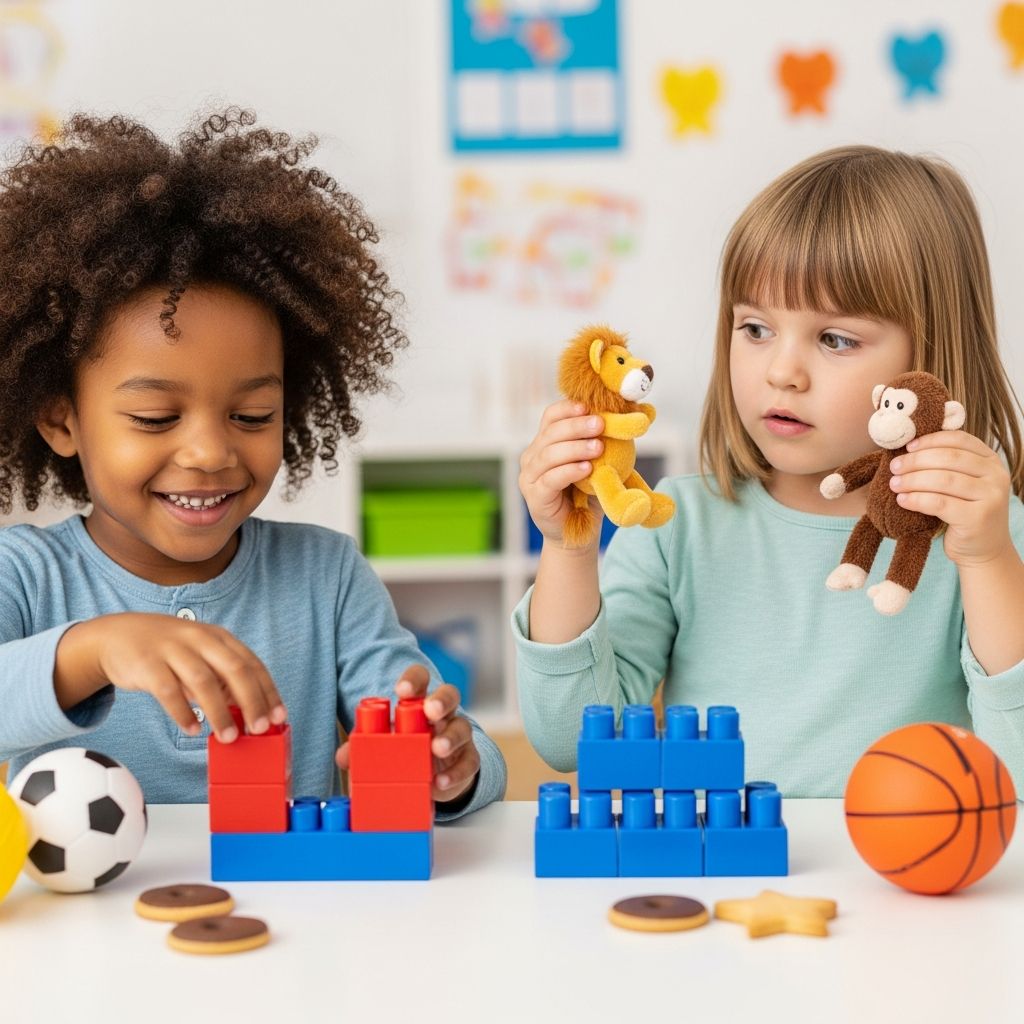
Between 39 and 48 months, children sharpen their ability to spot similarities and differences, a cornerstone of analytical thinking that paves the way for classification and problem-solving skills.
Why This Milestone Matters for Young Minds
Recognizing what makes objects alike or distinct builds foundational cognitive frameworks. It enhances categorization, comparison, and comprehension of attributes like size, shape, color, and quantity. This skill underpins broader development areas, from language expansion to social awareness.
- Cognitive Boost: Children learn to organize information, fostering reasoning and pattern recognition essential for math and science basics.
- Language Growth: Describing likenesses and variances enriches vocabulary and expressive abilities.
- Problem-Solving Edge: Spotting differences aids in analyzing situations and devising solutions.
- Perceptual Sharpening: Improves attention to visual and auditory details, crucial for reading and writing prep.
- Social Benefits: Promotes empathy by appreciating diversity and shared traits in peers.
- Academic Prep: Lays groundwork for sorting, sequencing, and early literacy/math concepts.
For children with language delays, explicit teaching of these concepts is vital to bridge gaps in processing and expression.
Developmental Timeline: From Toddler to Preschooler
Concept acquisition unfolds gradually. By 2-3 years, most kids select matching items from small sets or identify the odd one out. At 3-4 years, pointing to differences emerges, solidifying by 4-5 years with comprehension of size and function variances.
| Age Range | Milestone | Source |
|---|---|---|
| 2-3 Years | Select 3 same from 4; pick different from 4 identical | |
| 3-4 Years | Point to differences | |
| 4-5 Years | Understand same/different by size/function; respond to ‘how same/different?’ | |
| 5-6 Years | Explain similarities/differences; grasp position concepts |
This progression aligns with broader thinking skills, like symbolic play where toddlers repurpose objects, signaling emerging categorization.
Signs Your Child is Ready and Mastering It
Watch for spontaneous grouping, like separating block types, or verbalizing ‘This is like that!’ By 39-48 months, expect consistent matching and basic explanations, per pediatric guidelines.
- Groups similar toys without prompts.
- Names the ‘not like others’ item.
- Compares attributes: ‘Bigger/smaller.’
- Uses in play: Matching outfits on dolls.
Delays may appear as struggles with sorting or ignoring differences; early intervention supports catch-up.
Practical Activities to Build These Skills at Home
Embed learning in daily routines with hands-on fun. Repetition strengthens neural pathways.
Everyday Matching Games
- Sock Sort Challenge: Pile mixed socks; match pairs by color/pattern. Builds sorting confidence.
- Color Hunt: Gather items; group by hue. Extend to ‘Find different color.’
- Shape Safari: Use household objects—match circles, squares. Discuss traits.
Sensory and Play-Based Explorations
- Smell & Match: Pair scented items like soaps or fruits. Engages smell alongside visuals.
- Texture Treasure: Sort fabrics/soft toys by feel: smooth vs. rough.
- Sound Pairs: Clap rhythms or shake noisemakers; find matching sounds.
Storytime Integration
Choose repetitive books; pause to spot same/different characters or objects. Boosts memory and focus.
Outdoor Adventures
- Leaf collection: Sort by size/shape.
- Rock roundup: Group by color/size.
Progress to verbal prompts: ‘Show me the same as this.’ Praise efforts to motivate.
Role of Parents, Caregivers, and Educators
Adults model and narrate: ‘These apples are the same—red and round!’ Consistent exposure accelerates mastery. For therapy contexts, use visuals and repetition for kids with challenges.
In preschool, incorporate into circle time or centers. Track progress via simple assessments like ‘Point to different.’
Overcoming Challenges and Red Flags
Some kids grasp visually before verbally. If persistent confusion by 48 months, consult specialists—may link to language disorders. Tailor activities to interests for engagement.
Frequently Asked Questions (FAQs)
What age do kids typically understand ‘same and different’?
Basic grasp by 3-4 years, full by 4-5, with explanations by 5-6.
Why is repetition key in teaching these concepts?
It reinforces brain connections and masters skills through practice.
How does this skill aid school readiness?
Supports sorting, patterns, and comparisons in math/literacy.
What if my child struggles?
Explicit, multi-sensory teaching helps; seek SLP if delays persist.
Can activities be done daily?
Yes, integrate into routines like meals or play for natural reinforcement.
Long-Term Impacts on Learning and Life
Mastery here predicts success in advanced reasoning, social navigation, and academics. It evolves into comparative language, vital for essays and debates later. Nurture it to foster curious, analytical thinkers.
References
- Same and Different: Why Speech Therapists and Educators Should Target This Basic Concept — Scanlon Speech. 2023-11-10. https://www.scanlonspeech.com/2023/11/10/same-and-different-why-speech-therapists-and-educators-should-target-this-basic-concept/
- Developing Thinking Skills from 12-24 Months — ZERO TO THREE. Accessed 2026. https://www.zerotothree.org/resource/developing-thinking-skills-from-12-24-months/
- Understands the Concept of “Same” and “Different” (39-48 Months) — Parenting Counts. Accessed 2026. https://www.parentingcounts.org/understands-the-concept-of-same-and-different-39-48-months/
- Concept Development: What to Expect and When — Coventry Children’sSLT. 2022-03. https://www.coventrychildrensslt.co.uk/wp-content/uploads/2022/03/Concept-development-what-to-expect-and-when-Nov-21.pdf
- Teach Kids About The Concept of “Same & Different” — FirstCry Intelli Articles. Accessed 2026. https://www.firstcry.com/intelli/articles/teaching-kids-about-same-and-different-concept/
Similar Articles





Read full bio of medha deb