Sprains and Strains in Kids: A Parent’s Complete Guide
Learn how to recognize, treat, and prevent sprains and strains in children at home and when to call the doctor.
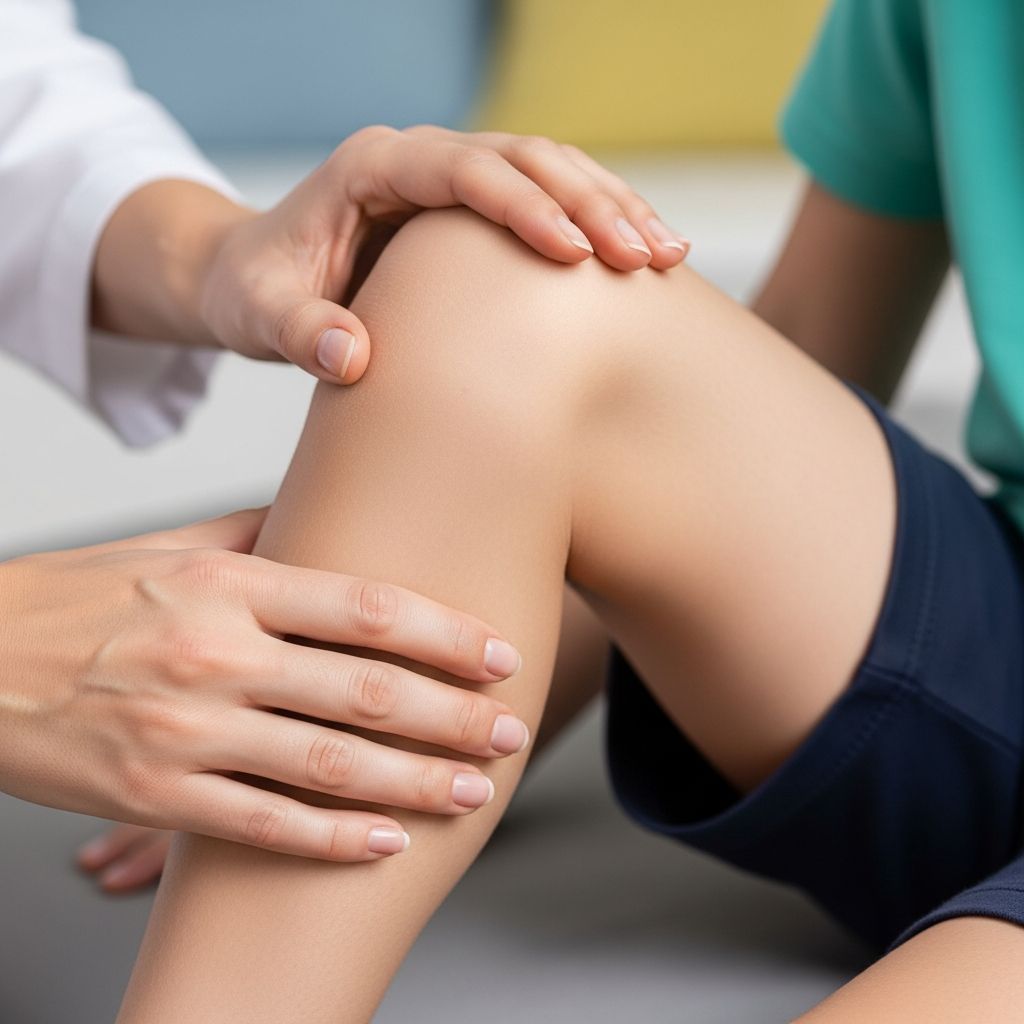
Sprains and Strains in Children: A Parent’s Complete Guide
Active kids run, jump, climb, and play hard — which means bumps and falls are a normal part of growing up. Two of the most common play and sports injuries are sprains and strains. Knowing how to tell them apart, when home care is enough, and when to seek medical help can keep your child safe and speed healing.
What Are Sprains and Strains?
Sprains and strains are both soft tissue injuries, but they affect different body structures.
| Type of injury | What is injured? | Common locations in kids |
|---|---|---|
| Sprain | Ligament (the tough band that connects one bone to another at a joint) | Ankle, knee, wrist, thumb |
| Strain | Muscle or tendon (the cord that attaches muscle to bone) | Back, hamstring, calf, neck, foot |
In both cases, the tissue is stretched beyond its normal limit and may develop tiny tears, partial tears, or (in severe cases) a complete tear.
How Do These Injuries Happen?
Children can sprain or strain soft tissues during sports, playground time, or even everyday activities. These injuries often involve either a sudden event or ongoing overuse.
Typical causes of sprains
- Twisting a joint after landing awkwardly from a jump (for example, a rolled ankle)
- Falling on an outstretched hand and injuring the wrist or thumb
- Sudden change of direction while running or playing sports (knee and ankle)
- Collisions with other players or hard surfaces in contact sports
Typical causes of strains
- Lifting something that is too heavy or lifting with poor technique (back strain)
- Sprinting or jumping without proper warm-up (hamstring or calf strain)
- Repeating the same motion many times, such as kicking, throwing, or swimming (overuse)
- Sudden effort to stop a fall, such as grabbing a railing or catching themselves with an arm (shoulder or back strain)
Sprain vs. Strain: Key Differences for Parents
The symptoms of sprains and strains can overlap, but knowing what each affects helps you understand what your child is feeling.
- Sprain = injury to a ligament, usually around a joint, often with swelling and sometimes bruising.
- Strain = injury to a muscle or tendon, often felt as a tight, pulled, or cramping muscle.
Both injuries can range from mild to severe and are often grouped into three grades.
- Grade 1 (mild): small stretch or microscopic tears in the tissue; mild pain, little or no loss of strength or stability.
- Grade 2 (moderate): partial tear; more pain, swelling, and difficulty using the joint or muscle normally.
- Grade 3 (severe): complete tear or rupture; marked loss of function, major pain at first, and often significant instability or weakness.
Common Signs and Symptoms in Kids
It is not always possible for parents to tell exactly which tissue is injured, but certain symptoms suggest a sprain or strain.
Shared symptoms of sprains and strains
- Pain around a joint or in a muscle, especially when it is moved or used
- Swelling or puffiness in the injured area
- Limited range of motion — your child may not be able to bend, straighten, or twist normally
- Tenderness when you gently press the area
- Difficulty putting weight on the injury (ankle, knee, foot) or using the arm (wrist, thumb, shoulder)
Symptoms that may differ
- Sprain clues
- Bruising around the joint
- Feeling of looseness or instability in the joint in more severe injuries
- Sometimes a popping or tearing sensation at the time of injury
- Strain clues
- Muscle spasms or cramping in the injured muscle
- Pain when the muscle is stretched or when it works against resistance (for example, trying to straighten a bent knee)
When to Call the Doctor or Visit Urgent Care
Many mild sprains and strains can be treated safely at home, but some symptoms should prompt a medical evaluation.
Contact a health professional promptly if your child has:
- Severe pain that does not improve soon after rest and cold packs
- Inability to walk more than a few steps or to use the arm or hand
- Visible deformity, such as a bone looking out of place or a very crooked joint
- Large or rapidly increasing swelling, or swelling that extends far from the injury
- Very limited movement or a feeling that the joint is giving way
- Numbness, tingling, or pale, cool skin beyond the injured area
- Injury that involves the knee, ankle, or wrist and your child cannot put any weight or pressure on it at all
- Pain that is still significant after several days of home care
Go to the emergency department or call emergency services if you suspect a fracture, see an open wound over a joint, your child is very distressed and cannot be comforted, or you are simply unsure and worried about the severity of the injury.
How Doctors Diagnose Sprains and Strains
A health professional will usually begin with a careful history and physical exam.
- They will ask how the injury happened and what your child felt at the time.
- They will look for swelling, bruising, tenderness, and range of motion around the joint or muscle.
- Strength and stability tests may be used to see if a ligament or muscle is badly damaged.
Imaging is sometimes needed:
- X-rays can rule out broken bones when pain and swelling are significant.
- Ultrasound or MRI may be used in selected cases to look more closely at ligaments, tendons, and muscles, especially in severe or persistent injuries.
First Aid at Home: The RICE / PEACE Approach
For most mild sprains and strains, early home care supports healing and reduces pain and swelling. A commonly recommended strategy is based on rest, ice, compression, and elevation in the first couple of days, followed by gradual return to normal activity.
Immediate steps after the injury
- Stop the activity right away to avoid further damage.
- Rest the injured area. Help your child avoid putting weight on a painful leg or using a painful arm.
- Apply a cold pack wrapped in a thin cloth for 10–15 minutes at a time, especially during the first 24–48 hours, several times per day. Do not apply ice directly to the skin.
- Use compression with an elastic bandage to limit swelling, making sure it is snug but not tight enough to cause numbness, tingling, or color changes in fingers or toes.
- Elevate the injured limb above the level of the heart when possible, for example by propping the leg on pillows while your child rests.
Over-the-counter pain relievers may be recommended by your child’s doctor to ease discomfort. Always check dosing guidelines carefully for age and weight, and ask a health professional if you are not sure.
After the first few days
Once pain and swelling begin to improve, most children benefit from gentle movement to prevent stiffness and promote healing.
- Encourage light range-of-motion exercises as recommended by your doctor or physical therapist.
- Slowly increase daily activities as long as this does not cause a sharp return of pain or swelling.
- For more serious injuries, a structured rehabilitation plan may be advised to restore strength and coordination.
Recovery Time: What Parents Can Expect
Healing time depends on the location and severity of the injury, as well as your child’s age and activity level.
- Mild sprains and strains: often improve significantly within 1–2 weeks, with continued gains over several more weeks.
- Moderate injuries: may require several weeks before full sports participation is safe.
- Severe injuries (including complete tears): can take months to heal and sometimes require surgery and formal physical therapy.
A child is usually ready to return to sports or heavy play when:
- They can move the joint or muscle through its full range of motion without pain.
- Strength in the injured limb is almost equal to the uninjured side.
- They can walk, run, jump, or perform sport-specific movements without limping, guarding, or complaining of pain.
Returning too soon can increase the risk of another injury to the same area, so it is wise to follow your child’s clinician’s advice about timing.
Supporting Your Child During Healing
In addition to the physical steps above, emotional support helps children cope with being sidelined from favorite activities.
- Validate their feelings of frustration or disappointment about missing sports or play.
- Offer alternative activities that match their current abilities (board games, reading, crafts, upper-body play if a leg is injured, etc.).
- Keep follow-up appointments and involve your child in decisions about gradually returning to activity.
Preventing Sprains and Strains in Children
Not every injury can be prevented, but certain habits lower the risk of sprains and strains in active kids.
- Encourage regular warm-up: light jogging, dynamic stretches, or sport-specific drills before practices and games help prepare muscles and joints.
- Promote strength and flexibility: age-appropriate exercises for the core, hips, and legs support good balance and joint control.
- Teach proper technique: correct jumping, landing, throwing, and lifting form reduces stress on ligaments and tendons.
- Support rest and recovery: plan rest days and avoid sudden large jumps in training volume or intensity.
- Ensure well-fitting shoes: footwear appropriate to the sport or activity provides grip and support, especially for running and court sports.
- Use safe playing environments: check for holes, uneven surfaces, or slippery floors and make sure protective equipment is in good condition.
- Encourage kids to speak up: children should know it is okay to report pain or discomfort early instead of playing through it.
Frequently Asked Questions (FAQs)
How can I tell if my child’s injury is serious or just a minor twist?
Any injury that causes severe pain, obvious deformity, inability to bear weight, large swelling, or numbness should be evaluated by a medical professional. If your child can move the joint, the pain is mild, and they start to improve within a day or so with rest and cold packs, the injury is more likely to be mild. When in doubt, especially with injuries near growth plates in children, it is safer to seek medical advice.
Do sprains and strains affect children differently than adults?
Because children’s bones are still growing, certain forces that might sprain a ligament in an adult can sometimes cause a small fracture or growth-plate injury in a child instead. That is one reason experts recommend medical evaluation when pain and swelling are significant after a fall or twist.
Will my child need an X-ray for a sprain or strain?
Not always. Clinicians use the story of the injury, where the pain is, and how your child moves to decide whether an X-ray is needed to rule out a fracture. Moderate to severe pain, the inability to walk more than a few steps, or tenderness directly over a bone often prompt imaging.
Can my child go back to sports with a brace or wrap?
Braces, wraps, and taping can provide extra support for healing tissues, but they do not replace proper recovery. Children should return to sports only when pain is minimal, motion and strength are nearly normal, and their clinician or physical therapist agrees that it is safe.
Do sprains and strains cause long-term problems?
Most children recover fully from mild and moderate sprains and strains when they receive timely care and avoid rushing back to intense activity. Severe injuries involving complete tears, major joint instability, or repeated sprains of the same joint may increase the risk of long-term issues like chronic pain or instability, which is why follow-up and rehabilitation are important.
References
- Sprains and Strains — MedlinePlus (U.S. National Library of Medicine). 2021-04-08. https://medlineplus.gov/sprainsandstrains.html
- Sprains and Strains — NHS. 2023-05-18. https://www.nhs.uk/conditions/sprains-and-strains/
- Is It a Sprain or a Strain? How to Tell the Difference — Yale Medicine. 2023-08-10. https://www.yalemedicine.org/news/difference-between-sprain-and-strain
- Sprains vs. Strains: What’s the Difference? — Mass General Brigham. 2022-06-15. https://www.massgeneralbrigham.org/en/about/newsroom/articles/sprains-and-strains
- Muscle Strains – Symptoms and Causes — Mayo Clinic. 2023-04-13. https://www.mayoclinic.org/diseases-conditions/muscle-strains/symptoms-causes/syc-20450507
- Sprains and Strains — Lehigh Valley Health Network. 2022-09-01. https://www.lvhn.org/conditions/sprains-and-strains
- What’s the Difference Between Sprains and Strains? — University of Utah Health. 2025-04-02. https://healthcare.utah.edu/healthfeed/2025/04/whats-difference-between-sprains-and-strains
Similar Articles






Read full bio of medha deb