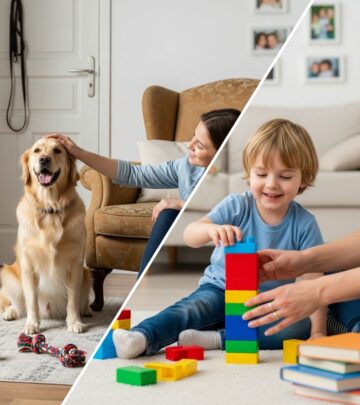
Symbolic Play Mastery: 24-36 Months Guide
Unlock the power of symbolic pretend play in toddlers aged 24-36 months to boost creativity, social skills, and cognitive growth.

Between 24 and 36 months, toddlers enter a vibrant phase of symbolic play, where they transform everyday objects into tools for imagination. This period marks a shift from simple imitation to elaborate scenarios, laying foundational skills for creativity, empathy, and problem-solving.
Foundations of Imaginative Play in Early Toddlerhood
Imaginative play evolves rapidly as children grasp that one object can represent another, a core aspect of symbolic thinking. At this stage, play moves beyond functional use—pushing a car as intended—to inventive substitutions, like a block becoming a phone. Research shows this progression supports executive function and social understanding.
Prior to 24 months, play is often solitary or parallel, with basic actions like feeding a doll. By 24 months, toddlers weave in personal experiences, reflecting family routines or outings. This builds narrative skills, essential for later storytelling and communication.
Key Milestones in Symbolic Object Use
Toddlers aged 24-36 months demonstrate distinct advances in pretend play. Here’s a breakdown of typical achievements:
- Object Substitution: Using a shoe as a boat or a spoon as a guitar, showing flexibility in representation.
- Sequential Actions: Performing logical steps, such as stirring pretend tea, pouring, then sipping.
- Role Assumption: Acting as a parent or doctor, with fluid character shifts.
- Social Integration: Inviting peers or adults into play, negotiating roles associatively.
| Age Range | Play Characteristics | Examples |
|---|---|---|
| 24-29 Months | 2-3 logical actions; object dual-use | Box as bed then car; doll ‘sleeps’ then ‘eats’ |
| 30-36 Months | Multi-step scenarios; role fluidity | Shopping trip with cart, payment, return home |
Cognitive Benefits of Pretend Play
Symbolic play enhances brain development by promoting perspective-taking and emotional regulation. Studies indicate children engaging in complex pretense show better executive functioning, like planning and impulse control. It also bolsters language, as toddlers narrate actions, expanding vocabulary.
For instance, pretending to be a chef involves sequencing (chop, cook, serve), mirroring real-world problem-solving. This play form predicts stronger peer interactions and narrative abilities by preschool.
Social and Emotional Growth Through Play
Play transitions from parallel to associative, where children play similar themes nearby, with emerging negotiation. Toddlers attribute feelings to toys, fostering empathy—e.g., comforting a ‘sad’ teddy.
Joint play with parents models social cues, reducing isolation risks. Research links early pretense to improved emotion regulation, vital for school readiness.
Practical Activities to Encourage Symbolic Play
Parents can nurture this skill with simple setups. Provide loose parts like scarves, blocks, and dolls for open-ended exploration.
- Kitchen Adventures: Use pots for drums, spoons for microphones; enact meals.
- Doctor Clinic: Bandages on stuffed animals; check ‘patients’.
- Shopkeeper Role: Empty boxes as groceries; ‘scan’ with toy phone.
- Outdoor Quests: Sticks as magic wands; leaves as money.
Follow the child’s lead, expanding without directing. Limit screens to prioritize active imagination.
Recognizing Developmental Variations
Most toddlers hit these milestones, but variations occur. High-risk groups, like those with ASD family history, may show slower pretense growth, though many catch up. If a child skips object substitution by 30 months or avoids social play, consult professionals.
Track progress: Does your toddler sustain 10-minute scenarios? Imitate roles fluidly? Early intervention maximizes outcomes.
Role of Caregivers in Fostering Imagination
Adults scaffold play by providing props and narrating. Phrases like ‘The doll is sleepy—shall we tuck her in?’ prompt extension. Co-play builds confidence, turning solitary acts into shared stories.
Diverse experiences enrich scripts: park visits inspire ‘picnics,’ library trips spark ‘reading circles.’ Balance structure with freedom for optimal growth.
Long-Term Impacts on Child Development
Pretend play at 24-36 months correlates with academic success. It cultivates theory of mind—understanding others’ thoughts—key for friendships. Enhanced language from play dialogues aids literacy.
Physically, it integrates gross motor: chasing ‘monsters’ or climbing as ‘firefighters.’ Holistically, it equips children for complex preschool dynamics.
Frequently Asked Questions (FAQs)
What if my 30-month-old doesn’t use objects symbolically?
Monitor closely; most begin by 24 months. If absent, observe for other delays and seek pediatric advice. Play-based assessments help.
How much daily play is ideal for this age?
Aim for 60+ minutes of unstructured play, including 20-30 in pretense. Quality trumps quantity.
Can too much structured play hinder imagination?
Yes; excessive toys/apps limit creativity. Opt for open-ended items.
Does gender affect pretend play styles?
No significant differences; interests vary individually.
How to transition to group play?
Start with parallel setups, model sharing roles gradually.
Essential Props for Symbolic Play
Stock a play area with versatile items:
- Fabric scraps for capes/blankets
- Empty containers for shops
- Stuffed animals for patients/friends
- Wooden blocks for multifunction builds
Rotate to spark novelty, encouraging adaptation.
References
- A Parent’s Guide to Pretend Play Developmental Milestones — Occupational Therapy. Accessed 2026. https://occupationaltherapy.com.au/pretend-play-developmental-milestones/
- Foundation: Symbolic Play – Child Development — California Department of Education. Accessed 2026. https://www.cde.ca.gov/sp/cd/re/itf09cogdevfdsym.asp
- Pretend play: What it is and why it’s important — Lovevery Blog. Accessed 2026. https://blog.lovevery.com/skills-stages/pretend-play/
- Developmental Changes in Pretend Play from 22- to 34-months — PMC (PubMed Central). 2018-01-15. https://pmc.ncbi.nlm.nih.gov/articles/PMC5756697/
- 30 Creative Pretend Play Ideas for Toddlers and Kids — Pathways.org. Accessed 2026. https://pathways.org/30-creative-pretend-play-ideas-for-toddlers-and-kids
Similar Articles







Read full bio of medha deb