Toddler Language Milestones: 29-38 Months
Discover essential speech and self-awareness milestones for toddlers aged 29-38 months to support their growth effectively.
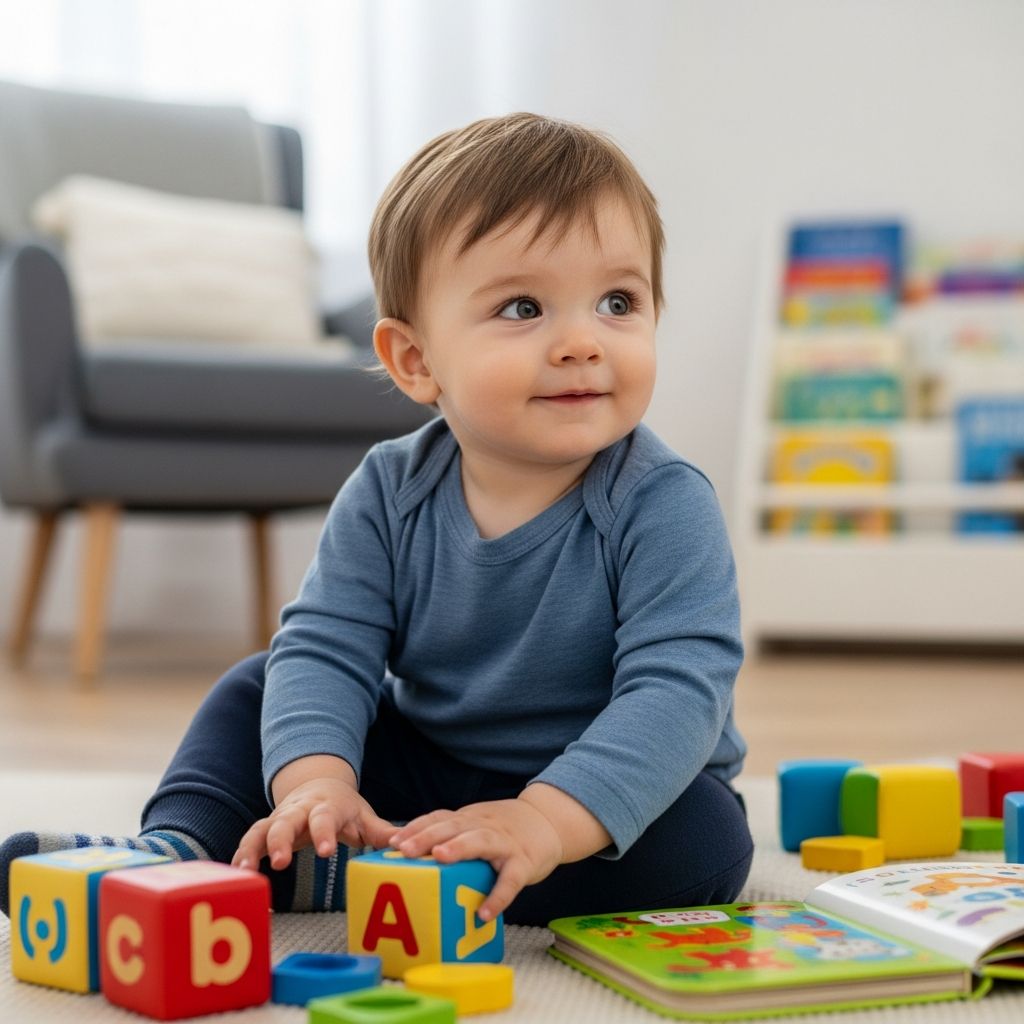
Between 29 and 38 months, toddlers experience a remarkable surge in language abilities, marking a pivotal phase in cognitive and social growth. This period sees children transitioning from basic phrases to more complex expressions, including the ability to identify personal details like name, age, and gender, fostering self-awareness and communication confidence.
Understanding the Language Explosion in Early Toddlers
The age range of 29 to 38 months, roughly 2.5 to 3 years old, is often called the ‘language explosion’ stage. During this time, a child’s vocabulary can expand dramatically, from hundreds to nearly a thousand words, enabling them to form sentences and engage in simple conversations.Key indicators include using 3- to 5-word sentences and achieving 75-80% speech intelligibility to unfamiliar listeners.
This growth builds on earlier milestones, such as 2-word combinations around 24 months, evolving into descriptive language with adjectives, prepositions, and plurals. Toddlers begin verbalizing needs, like toilet requests, and asking frequent questions such as ‘What’s that?’ to explore their world.
Socially, language supports emotional expression, showing sympathy or modesty, and participating in songs or rhymes, which enhances impulse control and peer interactions.
Core Milestones: Naming Self, Age, and Gender
A standout achievement in this phase is a toddler’s ability to confidently state their full name, age, and gender when prompted. By 31-36 months, most children can give their full name and recognize themselves in photos, pointing or naming accordingly.
This self-identification reflects growing self-concept and memory. For instance, a 30-month-old might say ‘I two years’ or ‘Me girl,’ progressing to ‘I’m Emma, three years old, a boy’ by 36-38 months. Pronoun use like ‘I,’ ‘me,’ and ‘we’ also solidifies, aiding personal narrative building.
| Milestone | Age Range | Example |
|---|---|---|
| States full name | 31-36 months | “My name is Alex.” |
| Identifies age | 29-34 months | “I two!” or “Three years.” |
| Recognizes gender | 32-38 months | “I’m a girl/boy.” |
| Points to self in photo | 30-36 months | Points and says “Me!” |
These skills correlate with intellectual advances, like a 900-1000 word vocabulary by age 3 and using verbal commands.
Progression of Speech Clarity and Sentence Structure
Speech intelligibility reaches 75-80% by 31-36 months, though stumbling over words may occur without indicating stuttering. Toddlers use 2-3 word phrases consistently at 24-30 months, advancing to 3-4 words by 2-3 years, with question inflections like ‘My ball?’
Pronunciation improves, but ending sounds may drop, making some speech unclear to strangers. Repetition in correct grammar, e.g., expanding ‘Me jump big!’ to ‘You jumped so high!’, nurtures development without correction.
- Follows two-step directions: ‘Get shoes and come here.’
- Uses plurals and past tense: ‘shoes,’ ‘jumped.’
- Describes: ‘soft,’ ‘hot,’ ‘big ball.’
By 36 months, sentences grow more complex, incorporating spatial concepts like ‘in’ or ‘on’.
Supporting Language Growth at Home
Parents play a crucial role in fostering these milestones through daily interactions. Reading rhythmic, repetitive books for 5-10 minutes daily boosts vocabulary and story comprehension.
Sing nursery rhymes, play hide-and-seek, or engage in domestic play like house pretend, encouraging verbal participation. Respond to ‘What’s that?’ with simple answers to model questioning.
Expand utterances: If a child says ‘Dog run,’ reply ‘Yes, the dog is running fast!’ This technique, called expansion, builds grammar naturally. Limit screen time; prioritize face-to-face talk during meals or walks.
Social and Emotional Ties to Language Skills
Language intertwines with social-emotional development. Toddlers name themselves in photos, join songs for praise, and show emotions like shame or sympathy verbally.
Associative play emerges, where children play alongside peers, using words to negotiate or describe actions. Saying ‘no’ assertively or ‘mine’ reflects growing independence, often paired with 70% understandable speech.
Praise efforts: ‘Great job saying your name!’ reinforces confidence. Supervised playdates enhance turn-taking language.
Feeding and Daily Living Milestones Linked to Speech
Verbalizing toilet needs marks independence, aligning with fine motor gains like fork use in a fist grip and rotary chewing. These correlate with language, as describing sensations (‘hot soup’) or locations (‘cup on table’) practices new words.
Red Flags: When to Consult a Professional
While variation is normal, certain signs warrant evaluation. If a 29-month-old uses no sentences or fewer than 50 words, or speech is unintelligible beyond 30 months, see a pediatrician.
- No 2-word phrases by 24 months.
- Limited eye contact or no pointing to body parts.
- No response to simple questions or directions by 30 months.
Early intervention, like speech therapy, yields best outcomes. Track milestones using tools from reliable sources.
10 Engaging Activities to Boost Speech
- Picture Books: Point to images, ask ‘What’s this?’ Let child narrate.
- Song Time: Sing with actions; repeat choruses.
- Puppet Play: Use puppets for dialogues modeling pronouns.
- Body Part Game: Touch and name: ‘Where’s your nose?’
- Snack Talk: Describe foods: ‘Crunchy apple, red color.’
- Photo Album: Identify family: ‘That’s Mommy!’
- Obstacle Course: Give directions: ‘Jump over pillow.’
- Dress-Up: Role-play: ‘I’m the doctor; what’s your name?’
- Water Play: Name actions: ‘Pour wet water.’
- Question Jar: Pull cards like ‘How old are you?’
Nutrition’s Role in Brain and Speech Development
Adequate nutrition fuels language growth. Omega-3s from fish, iron from meats, and proteins support neural connections. Spill-proof spoons aid self-feeding, freeing parents for talk.
Frequently Asked Questions (FAQs)
At what age should my toddler say their full name?
Most can do so by 31-36 months, though some earlier at 29-30 months with prompting.
Is stumbling over words normal?
Yes, occasional repetition isn’t stuttering; monitor if persistent beyond 36 months.
How can I help if speech is unclear?
Model clear speech, read daily, and avoid over-correcting. Consult if under 50 words at 30 months.
What’s the average vocabulary at 36 months?
Around 900-1000 words, with 3-5 word sentences.
Does gender affect language milestones?
No significant differences; individual pace varies.
Long-Term Benefits of Early Language Mastery
Strong 29-38 month language predicts school readiness, literacy, and social success. Children who name themselves early show better self-regulation and peer relations later.
Consistent parental engagement yields lasting gains, turning everyday moments into learning opportunities.
References
- Developmental Milestones – 31 through 36 Months — Nebraska Department of Education. Accessed 2026. https://edn.ne.gov/cms/developmental-milestones-31-through-36-months
- 29-Month-Old Development Milestones — The Bump. Accessed 2026. https://www.thebump.com/toddler-month-by-month/29-month-old
- Speech and Language Development: 24 to 30 Months — Children’s Minnesota. Accessed 2026. https://www.childrensmn.org/images/pdf/speech24to30.pdf
- Age-Appropriate Speech and Language Milestones — Children’s Hospital of Philadelphia. Accessed 2026. https://www.chop.edu/health-resources/age-appropriate-speech-and-language-milestones
- Your Child’s Development: 2.5 Years (30 Months) — KidsHealth. Accessed 2026. https://kidshealth.org/en/parents/development-30mos.html
- Milestones by 30 Months — Centers for Disease Control and Prevention (CDC). Accessed 2026. https://www.cdc.gov/act-early/milestones/30-months.html
Similar Articles







Read full bio of medha deb