Toddler Mimicry: Copying Adults at 18-27 Months
Discover how 18-27 month olds master imitation of adults and peers, boosting language, play, and social growth.
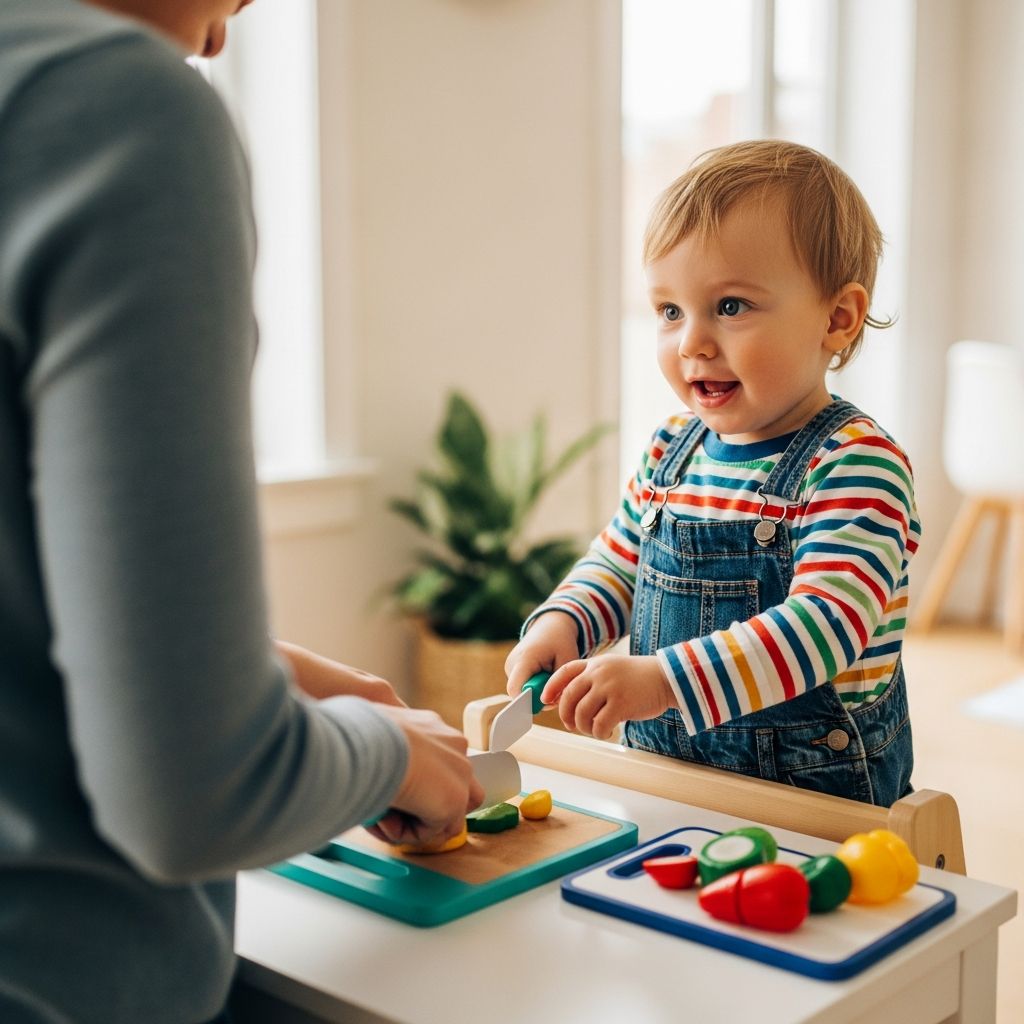
Between 18 and 27 months, toddlers enter a fascinating phase where they actively copy the behaviors of adults and older children. This mimicry forms the foundation for learning language, social norms, and practical skills, driving rapid cognitive and emotional growth.
Understanding the Core of Toddler Imitation
Imitation in young children is more than playful repetition; it is a primary mechanism for social learning. At this age, toddlers observe and replicate actions, gestures, and sounds, which helps them acquire new knowledge without direct instruction. Research shows that the ability to mirror others emerges prominently in the second year, evolving from simple gestures to complex sequences.
During the 18-27 month window, children shift from basic copying to deferred imitation—repeating observed behaviors later. This skill predicts later language proficiency, as imitating actions at 18 months strongly correlates with vocabulary at 36 months.
Key Developmental Milestones in Mimicry
Toddlers progress through distinct stages of imitation, each building on the last. Here’s a breakdown:
- Object Manipulation Copying: Children replicate actions with toys, like stacking blocks or stirring a spoon, laying groundwork for fine motor and conceptual learning.
- Body Movement Replication: Mimicking claps, waves, or jumps shows growing gross motor control and attention to others.
- Oral and Vocal Imitation: Copying coughs, animal sounds, or simple syllables bridges to speech development.
- Multi-Step Sequences: By 24 months, toddlers reenact routines like brushing teeth or dressing dolls, demonstrating memory and planning.
| Age Range | Typical Imitation Skills | Source Insight |
|---|---|---|
| 18 Months | Simple actions with objects; basic gestures like waving | Strong predictor of 36-month language |
| 24 Months | Multi-step actions; deferred imitation | Reenacts observed routines |
| 27 Months | Complex play sequences; vocal play | Expands to social and pretend play |
Why Imitation Drives Toddler Progress
Copying behaviors accelerates multiple domains. Socially, it fosters empathy and turn-taking by mirroring emotions and interactions. Cognitively, it enhances problem-solving, as toddlers experiment with copied strategies. Linguistically, gesture imitation precedes words, with studies linking early motor mimicry to robust vocabularies.
For instance, a child imitating a parent’s phone call learns sequencing and pretend play, crucial for executive function. Delays here can signal challenges, but most neurotypical toddlers thrive with encouragement.
Everyday Ways to Spark Imitation
Parents and caregivers play a pivotal role. Integrate mimicry into routines without pressure:
- Model during meals: Pretend to sip from a cup or feed a doll, inviting replication.
- Song and rhyme games: Use actions in “Wheels on the Bus” to copy movements.
- Household chores: Demonstrate sweeping or sorting laundry, narrating steps.
- Playdates: Expose to older siblings for natural peer modeling.
- Mirror exercises: Face your child, copy their actions first to build reciprocity.
Consistency matters—short, frequent sessions yield better results than long ones. Praise efforts specifically: “You stirred just like Mommy!”
Imitation and Language Explosion
Verbal skills bloom through mimicry. Toddlers first copy gestures (e.g., pointing), then sounds, before words. This hierarchy ensures readiness: without body imitation, speech lags.
Research from speech therapists outlines phases: Start with object actions, advance to gestures, vocals, then words. By 18-27 months, expect copying of simple phrases during play, fueling the 50-word milestone around 24 months.
Play-Based Strategies for Stronger Mimicry
Leverage toys and games:
- Bubble Play: Dip wand, blow, pop—sequence builds observation.
- Puppet Shows: Perform routines; encourage toddler retakes.
- Block Building: Stack towers together, copying patterns.
- Animal Sounds: Roar or meow, prompting vocal matches.
For group settings, circle time with songs amplifies peer imitation, enhancing social bonds.
Spotting and Addressing Mimicry Delays
By 18 months, most toddlers imitate 12+ gestures daily. Lacking this may indicate needs for support, especially in autism spectra where imitation lags.
Red flags include no object copying by 18 months or absent multi-step by 24. Early intervention via play therapy restores trajectories. Track progress: If a child copies 80% of modeled actions consistently, they’re on track.
Role of Environment and Peers
Adults provide models, but older children accelerate learning through relatable play. Sibling interactions teach nuance, like sharing turns. Diverse settings—parks, playgroups—expose varied behaviors, enriching mimicry.
Limit screen time; live models outperform digital ones for true imitation.
Frequently Asked Questions (FAQs)
At what age should toddlers start imitating adults reliably?
Around 18 months, toddlers imitate multi-step actions and gestures they’ve seen earlier, per California Department of Education guidelines.
How does imitation predict future skills?
Action imitation at 18 months forecasts language at 36 months, making it a key early indicator.
What if my 24-month-old isn’t copying much?
Assess gestures and objects first; consult specialists if delays persist, as early therapy boosts outcomes.
Can imitation help shy toddlers socialize?
Yes, mirroring peers builds confidence and reciprocity in social settings.
Are there toys best for encouraging mimicry?
Simple items like blocks, dolls, and instruments promote natural copying over complex electronics.
Long-Term Impacts of Early Imitation
Strong mimicry at 18-27 months correlates with academic readiness, emotional regulation, and adaptability. It equips children to navigate preschool, form friendships, and self-learn. Nurture it daily for lifelong learners.
References
- 8 Phases to Build Verbal Imitation Skills in Toddlers — Exceptional Speech Therapy. 2023. https://exceptionalspeechtherapy.com/8-phases-to-build-verbal-imitation-skills-in-toddlers/
- Foundation: Imitation – Child Development — California Department of Education. 2009. https://www.cde.ca.gov/sp/cd/re/itf09cogdevfdimit.asp
- Imitation Development: Encourage Your Child To Copy Words — Wee Talkers. 2023. https://www.weetalkers.com/blog/imitation-development
- The development of imitation in infancy — PMC – NIH. 2010-04-27. https://pmc.ncbi.nlm.nih.gov/articles/PMC2865075/
- Imitation – A Fundamental Skill For Learning Concepts & Social Cues — Oak Tree Kids. 2022-01-27. https://www.oaktreekids.com/blog/2022/1/27/imitation-a-fundamental-skill-a-toddler-needs-for-expanding-play
- Building Imitation Skills in Toddlers with Autism — Mary Barbera. 2023. https://marybarbera.com/building-imitation-skills-toddlers-autism-showing-signs-autism/
- Imitation Beyond Flattery: The First Way We Learn — Sunny Days. 2023. https://www.sunnydays.com/blog/imitation-beyond-flattery-the-first-way-to-learn
Similar Articles






Read full bio of Sneha Tete