Picture Recognition in Toddlers: Language Growth 14-25 Months
Understand how toddlers learn to identify images by their spoken names during critical early language development.
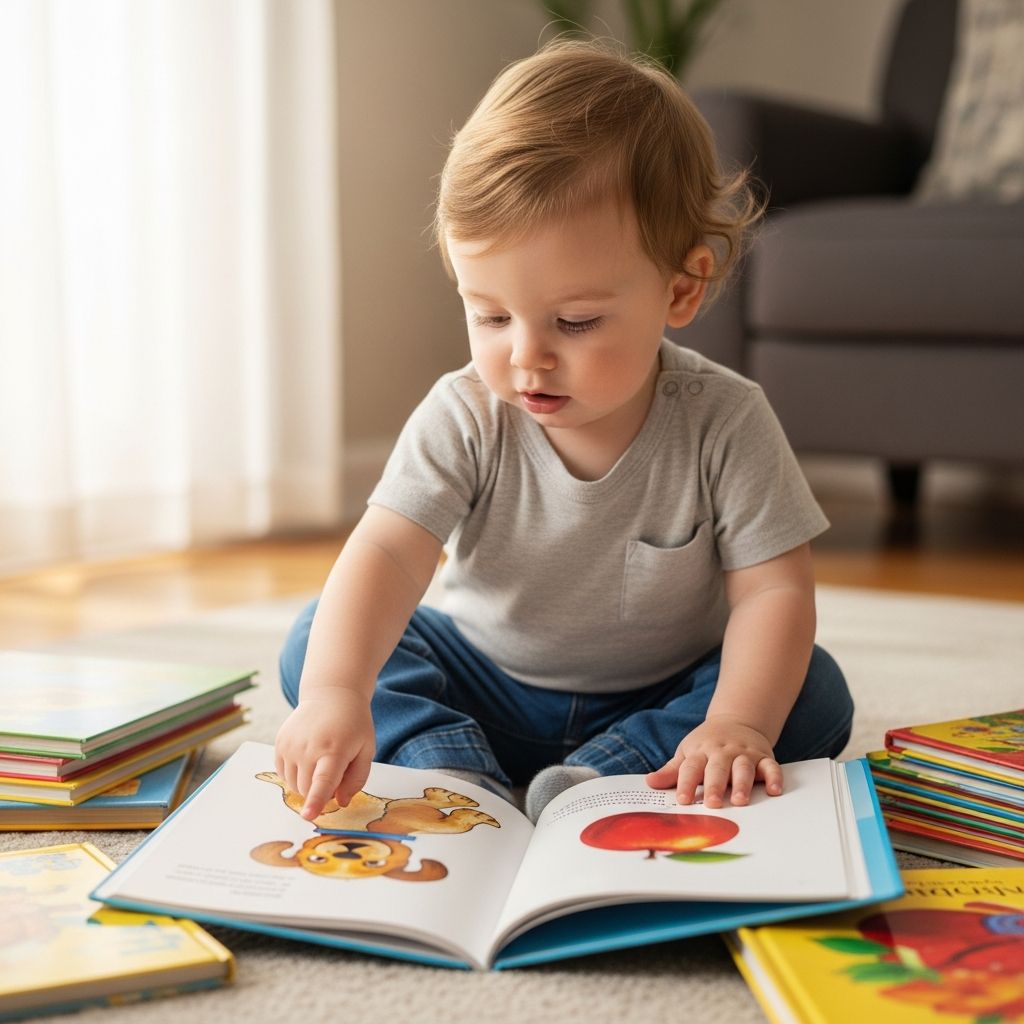
Visual Recognition and Language Learning in Early Toddlerhood
During the period between 14 and 25 months, toddlers undergo remarkable developmental changes in how they process language and connect it to the world around them. One of the most significant cognitive achievements during this phase is the ability to recognize pictures and accurately associate them with their spoken names. This skill represents far more than simple visual recognition—it demonstrates that children are building bridges between sound, meaning, and imagery, laying crucial groundwork for literacy and communication skills that will develop throughout their lives.
The capacity to identify a picture when hearing its corresponding word is a fundamental indicator of
receptive language development
. Unlike expressive language, which involves children producing words themselves, receptive language focuses on what children understand when they hear or see communication from others. During the 14-to-25-month window, receptive language typically progresses ahead of expressive language, meaning toddlers comprehend far more than they can actually say. Understanding this distinction helps parents and caregivers recognize and appreciate the silent learning happening every day in their children’s minds.How Picture Recognition Develops in This Age Range
Around 14 months, toddlers begin demonstrating emerging skills in picture recognition. At this age, when you name a familiar object or picture, your child may look toward it, showing they’ve made a connection between the word they heard and the visual representation. This behavior signals that neural pathways connecting auditory input to visual memory are forming. The child doesn’t yet have the vocabulary to name what they see, but they clearly understand what you’re referring to.
By 15 months, this skill becomes more consistent and reliable. Children at this stage can typically understand approximately 50 words, even if they can only say a fraction of that number. When presented with pictures of common objects—such as a ball, dog, or cup—many toddlers will correctly identify the image you’ve named by looking at it or pointing to it when asked, “Where is the ball?” This represents a major cognitive leap from mere recognition to active comprehension and response.
As toddlers approach 18-20 months, their picture recognition skills continue expanding. The vocabulary they understand grows to include more complex and abstract concepts. By this stage, many children can identify multiple pictures in sequence and respond to slightly more complex requests involving pictures, such as “Show me the picture with the cat” or “Where is the dog?”
Between 22 and 25 months, picture recognition becomes even more sophisticated. Children can now identify pictures in books, magazines, and digital formats with greater accuracy. They may even begin to recognize pictures of less common or abstract items, demonstrating that their mental library of visual-linguistic connections has expanded considerably.
The Connection Between Pictures and Word Understanding
Pictures serve as critical bridges in language development because they provide visual anchors for abstract concepts. When a child hears the word “dog” while simultaneously seeing a picture of a dog, their brain strengthens the association between the sound sequence “d-o-g” and the visual representation of a four-legged animal. This multisensory learning creates stronger neural connections than audio alone could provide.
Research on early childhood language development indicates that children learn words more effectively when multiple sensory modalities are engaged. Combining spoken words with visual images—whether in books, flashcards, or everyday objects—creates more robust learning pathways. This is why pediatricians and speech-language pathologists often recommend interactive reading and picture-based activities for toddlers in this age group.
Picture-based learning also helps children categorize information. When a toddler sees multiple pictures of different dogs—large dogs, small dogs, dogs of various colors—while hearing the word “dog,” they begin understanding that “dog” refers to a category of animals rather than a single specific creature. This categorical thinking is essential for developing more advanced language skills, including the ability to use words flexibly and appropriately in different contexts.
Developmental Progression of Picture Recognition Skills
The journey from first noticing a picture to actively identifying it when named involves several overlapping stages:
- Initial Awareness (14 months): Children notice pictures but show inconsistent responses to spoken labels.
- Emerging Recognition (15-17 months): Children reliably look at or point to named pictures, demonstrating consistent understanding.
- Active Selection (18-20 months): Children can choose the correct picture from multiple options when names are provided.
- Advanced Comprehension (22-25 months): Children identify pictures across different contexts and media, including books and digital devices.
Supporting Picture Recognition at Home
Parents and caregivers can actively support the development of picture recognition skills through intentional, engaging activities. Interactive reading is perhaps the most powerful tool available. When reading board books with simple, colorful pictures, pause regularly to ask questions like “Can you point to the cat?” or “Where is the ball?” This turns passive picture-viewing into active learning that strengthens the neural connections between words and images.
Creating simple flashcard games using household items or magazine pictures can also be effective. You might gather pictures of things your child encounters daily—shoes, cups, food items—and practice naming them together. As children become more skilled, introduce pictures of less familiar objects to expand their vocabulary and recognition abilities.
Labeling pictures in your home environment provides natural, ongoing practice. If your child’s room has a poster with animals, regularly point to different animals and name them: “There’s a cow. There’s a horse. Can you find the pig?” This casual labeling approach integrates picture recognition practice into daily routines rather than creating separate “learning time.”
Digital resources also offer opportunities for picture-based learning. Educational apps designed for toddlers often include picture recognition activities that are engaging and appropriately paced for this age group. However, screen time should be balanced with other activities, and any digital learning should be interactive rather than passive viewing.
Red Flags and When to Seek Professional Guidance
While children develop at different rates, certain patterns may warrant professional evaluation. If a 14-month-old child does not seem to understand simple words or does not look toward objects when they are named, this could indicate a language development concern. By 20 months, children should demonstrate clear picture recognition abilities, following simple directions related to named pictures.
Additional concerns that merit professional attention include:
- Inconsistent response to spoken words or repeated difficulty following simple directions
- Lack of interest in books or pictures
- Avoidance of eye contact when engaging with caregivers
- Limited interest in interactive activities involving pictures and labels
Speech-language pathologists can conduct assessments to determine whether development is progressing typically or whether intervention might be beneficial. Early identification and support of language delays can significantly impact long-term communication outcomes.
The Broader Significance of Picture Recognition
Picture recognition skills during this developmental window do more than support immediate vocabulary growth. These abilities form the foundation for future academic skills, including pre-reading and reading comprehension. Children who develop strong picture recognition abilities and connections between visual and auditory information in toddlerhood tend to transition more smoothly into formal reading instruction later. They’ve already practiced the fundamental skill of connecting symbols—in this case, images—with meanings and sounds.
Furthermore, picture recognition supports social and cognitive development. When toddlers can identify pictures, they can participate more fully in shared activities with caregivers. They can point out things they notice, make choices about what to look at, and engage in increasingly sophisticated back-and-forth interactions that strengthen emotional bonds and provide rich language input.
Individual Variation and Developmental Trajectories
It’s essential to remember that the timelines provided for developmental milestones represent averages and ranges rather than fixed schedules. Some 14-month-olds may already demonstrate sophisticated picture recognition abilities, while others may not display these skills consistently until 18 or 19 months. Both scenarios can be entirely within normal developmental ranges. Factors influencing the timing of picture recognition include exposure to pictures and books, individual temperament, hearing ability, and overall language exposure.
Bilingual and multilingual toddlers may show different patterns of picture recognition as their vocabulary is distributed across multiple languages. A bilingual child might understand 50 words total across two languages rather than 50 words in a single language, which may affect the timing and appearance of picture recognition skills. This is a normal and healthy pattern of development.
Frequently Asked Questions
Q: At what age should my child be able to identify pictures by their spoken names?
A: Children typically begin showing consistent picture recognition around 15 months, though some children demonstrate this skill as early as 14 months. By 18-20 months, most children reliably identify pictures when their names are spoken.
Q: Why can my toddler identify pictures but not say the words?
A: This is completely normal. Receptive language (understanding) develops before expressive language (speaking). Your child may understand 50 words but only say a handful. This is an expected and healthy pattern of development.
Q: What’s the best way to teach picture recognition?
A: Interactive reading with frequent pauses to name and discuss pictures is highly effective. Ask questions like “Where is…?” and let your child point or look. Avoid passive picture-viewing and instead create opportunities for active engagement and response.
Q: Should I be concerned if my 20-month-old doesn’t consistently identify pictures?
A: Occasional inconsistency is normal, but if your child shows very limited picture recognition or consistently fails to respond to simple picture-naming requests, consulting with a speech-language pathologist can provide reassurance or identify any areas where early support might be helpful.
Q: Does picture recognition ability predict future reading success?
A: Picture recognition during toddlerhood provides a foundation for later reading skills by strengthening the neural connections between symbols and meanings. However, many factors influence reading development, and picture recognition at this age is just one piece of a much larger developmental picture.
References
- Language development: Speech milestones for babies — Mayo Clinic. 2024. https://www.mayoclinic.org/healthy-lifestyle/infant-and-toddler-health/in-depth/language-development/art-20045163
- Developmental Milestones for Pre-Toddlers (12–24 Months) — Coral Care. 2025. https://www.joincoralcare.com/developmental-guides/milestones-12-24-months-pre-toddlers
- Speech and Language Development (from 12 to 24 months) — Great Ormond Street Hospital for Children (GOSH). 2024. https://www.gosh.nhs.uk/conditions-and-treatments/procedures-and-treatments/speech-and-language-development-12-24-months/
- 14 Month Old Toddler Milestones – Development, Growth, Speech — Huckleberry Care. 2025. https://huckleberrycare.com/blog/14-month-old-toddler-milestones-development-growth-speech-language-and-more
- Age-Appropriate Speech and Language Milestones — Children’s Hospital of Philadelphia (CHOP). 2024. https://www.chop.edu/health-resources/age-appropriate-speech-and-language-milestones
- Red Flags for Language Development: Birth-36 Months — North Shore Pediatric Therapy. 2025. https://www.nspt4kids.com/parenting/language-development-red-flags-ages-0-36-months
- Toddler language development and what to expect — Lovevery Blog. 2025. https://blog.lovevery.com/child-development/get-ready-for-these-exciting-language-development-milestones/
Similar Articles








Read full bio of medha deb