Mastering Turn-Taking: Games for 2-3 Year Olds
Fun, engaging games to help toddlers aged 24-35 months learn turn-taking, cooperation, and social skills through play.
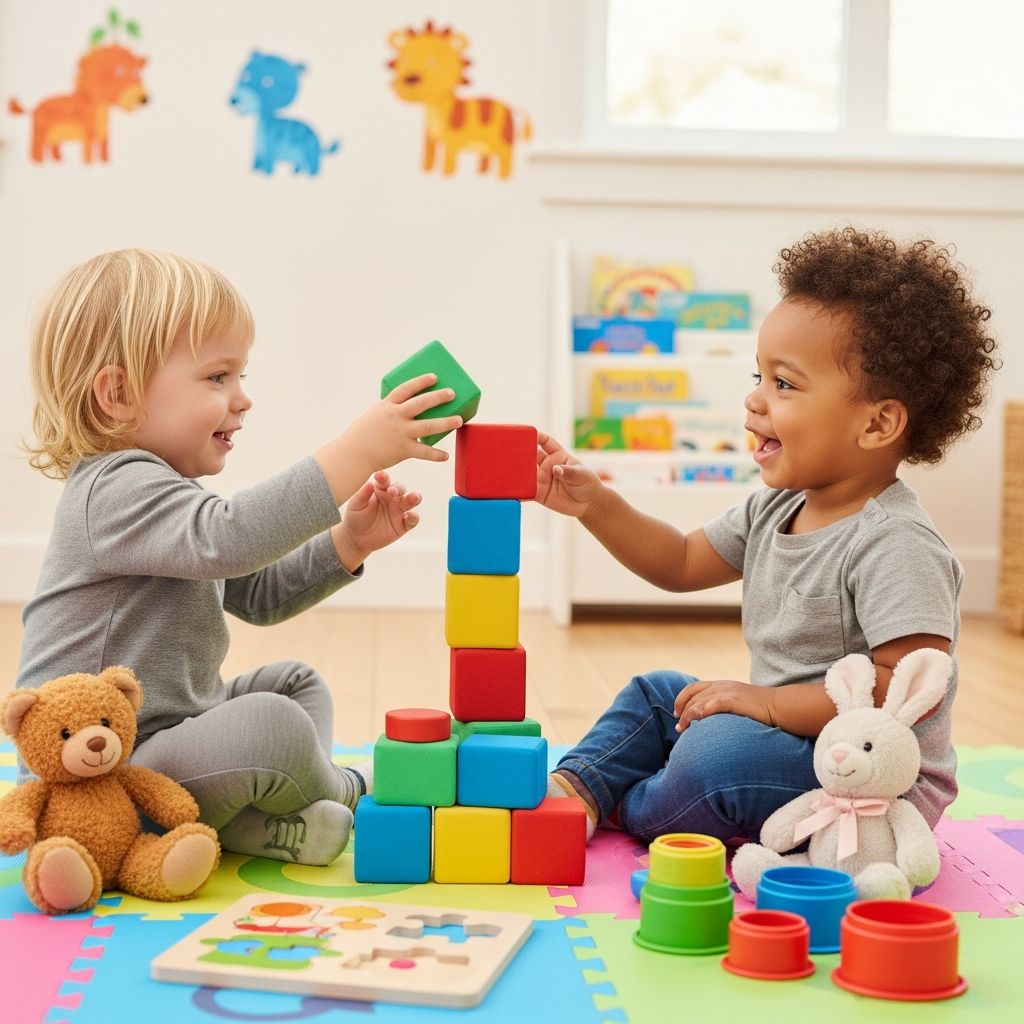
Toddlers between 24 and 35 months are at a pivotal stage where they begin grasping the concept of turn-taking in games, a foundational social skill that supports cooperation, patience, and empathy. This ability emerges as children transition from parallel play to interactive exchanges, laying groundwork for peer relationships and group dynamics.
Why Turn-Taking Matters in Toddler Development
Turn-taking helps toddlers regulate impulses, understand reciprocity, and navigate social cues, reducing frustration during play. Research shows that by age 2-3, children who practice these skills exhibit better emotional control and peer engagement, correlating with long-term prosocial behaviors.
- Builds Patience: Waiting fosters self-regulation, key for school readiness.
- Enhances Communication: Nonverbal signals like eye contact and gestures emerge naturally.
- Promotes Sharing: Reinforces that resources and attention are shared equitably.
- Boosts Confidence: Successful turns encourage initiative and leadership.
Parents and caregivers play a crucial role by modeling turns and providing gentle prompts, turning everyday play into teachable moments.
Indoor Games to Practice Turn-Taking
Indoor activities are ideal for rainy days or small spaces, focusing on simple props to keep engagement high without overwhelming young attention spans.
Roll and Name Ball Game
Children sit in a circle rolling a soft ball while calling out a peer’s name before tossing. This builds name recognition, eye contact, and anticipation of turns. Start with 2-3 kids; extend play by varying rolls (gentle or bounce). Benefits include impulse control as they wait for the ball’s return.
Pretend Play Scenarios
Set up a mini shop or tea party with toys. Kids alternate roles: one as shopkeeper, another as buyer. Use props like play food or coins to mimic real interactions, teaching politeness and negotiation. Rotate roles every 2-3 exchanges to ensure fairness.
Building Tower Challenge
Provide blocks or cups; each child adds one piece per turn to a communal tower. Discuss stability before adding, promoting problem-solving and celebration of group success. If it topples, rebuild together, emphasizing resilience.
| Game | Materials Needed | Skills Targeted | Group Size |
|---|---|---|---|
| Roll and Name Ball | Soft ball | Name recall, waiting | 2-4 |
| Pretend Play | Toys, props | Role-switching, manners | 2-3 |
| Building Tower | Blocks/cups | Cooperation, planning | 2-5 |
Outdoor Adventures for Social Growth
Fresh air amplifies energy for active turn-taking games, combining physical movement with social practice.
Duck Duck Goose Variation
Classic circle game where kids pat heads saying ‘duck’ until ‘goose’ chases the tapper. Emphasizes turn anticipation and gentle tagging for safety. Adapt for 2-year-olds by slowing pace and using names.
Red Light Green Light Relay
One child calls ‘green light’ (go) or ‘red light’ (stop). Others freeze on command. Switch callers frequently to practice leadership. Builds listening and body control.
Bubble Team Chase
Take turns blowing bubbles; others pop or chase collaboratively. Count joint pops to focus on team wins over individual scores. Encourages cheering and shared joy.
Outdoor settings naturally extend playtime, with nature elements like sticks or leaves adding creativity without extra cost.
Crafty Creations for Collaborative Fun
Hands-on crafts teach turn-sharing of materials while sparking creativity. Limit supplies to encourage passing.
- Finger Paint Masterpiece: Large paper, paints on fingers. Each child adds strokes in sequence, mixing colors cooperatively.
- Paper Chain Links: Cut strips; glue one per turn to form chains, then collage. Develops fine motor alongside waiting.
- Collage Sharing: Shared glue sticks and scraps; pass after each addition, discussing choices.
These activities double as art keepsakes, reinforcing pride in group efforts.
Advanced Games for Emerging Leaders
As toddlers near 35 months, introduce structured games with rules to deepen understanding.
Simon Says Commands
Leader gives actions only if prefixed ‘Simon says.’ Promotes listening and inhibition. Rotate leaders to balance power.
Follow the Leader March
One leads movements (hop, clap); others mimic. Builds imitation and transition skills.
Tower of Cups Stack-Off
Alternate stacking cups; defend from gentle ball tosses. Teaches strategy and recovery from ‘failures’.
Tips for Parents: Facilitating Successful Play
Guide without dominating: Use phrases like ‘Your turn next!’ or ‘Great waiting!’. Intervene minimally, praising efforts over outcomes. Pair with children of similar ages for best matches.
- Model enthusiasm: ‘I love my turn—and yours!’
- Keep sessions short: 10-15 minutes max.
- Observe cues: Step in if frustration builds.
- Reflect post-play: ‘You shared so nicely!’
Common Challenges and Solutions
| Challenge | Solution |
|---|---|
| Grabbing toys | Use timer visuals; praise passers. |
| Meltdowns from waiting | Shorten turns; offer comfort breaks. |
| Uneven participation | Assign roles; rotate promptly. |
| Lack of interest | Choose child-led themes. |
Frequently Asked Questions (FAQs)
What age do toddlers typically learn turn-taking?
Around 24-35 months, with practice accelerating mastery. Individual paces vary.
How many kids per game for best results?
2-4 prevents overload; small groups allow full participation.
Can screen time help with turn-taking?
Limited; interactive video playdates teach eye contact but prioritize in-person.
What if my toddler refuses to share?
Persist gently with modeling; consistency builds habit over time.
Are these games suitable for daycare?
Yes, scalable for groups with caregiver oversight.
Long-Term Benefits of Early Turn-Taking
Consistent practice yields preschool readiness: better friendships, conflict resolution, and academic focus. Studies link early social play to reduced behavioral issues later. Integrate daily for holistic growth.
By embedding turn-taking into routines, parents equip toddlers with tools for a connected world, transforming play into profound learning.
References
- 14 Fun Activities for Social Skills Enhancement — Little Playhouse. 2023. https://littleplayhouse.com.my/social-skills-for-toddlers-preschoolers/
- Outdoor Games that Promote Good Social Skill Development — Doodlebugs. 2024. https://www.doodlebugs.com/outdoor-games-that-promote-good-social-skill-development/
- 20 Evidence-Based Social Skills Activities and Games for Kids — Positive Action. 2023. https://www.positiveaction.net/blog/social-skills-activities-and-games-for-kids
- Social Skills Activities for Toddlers — Learning Resources. 2024. https://www.learningresources.com/teacher-resources/toddler-18-mo-3-yr/social-skills
- Social Games for Babies and Toddlers — Teach Me To Talk. 2008-02-23. https://teachmetotalk.com/2008/02/23/social-games-for-babies-toddlers/
Similar Articles







Read full bio of medha deb