Why Kids Act Up at Home: Unmasking Selective Misbehavior
Discover why children reserve their worst behavior for parents and gain proven strategies to foster better home dynamics and emotional growth.
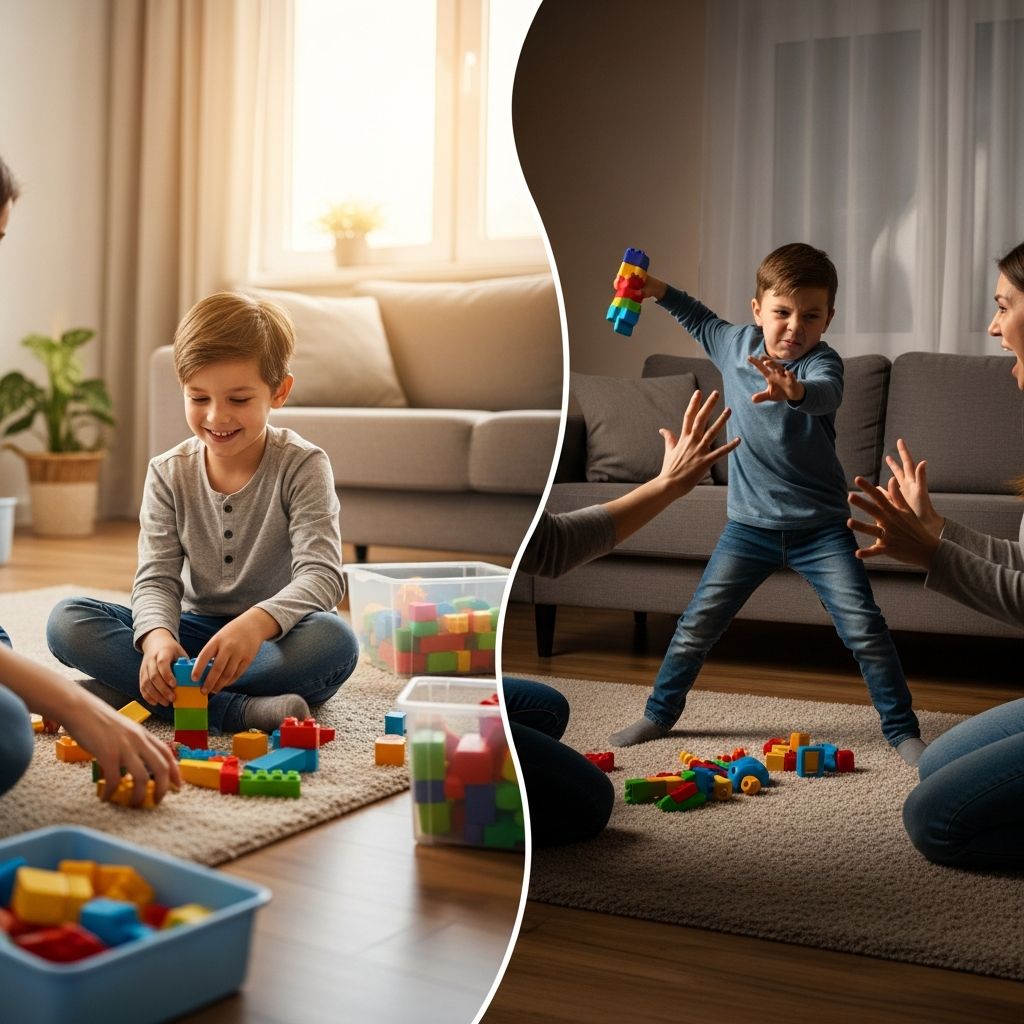
Parents frequently observe their children displaying impeccable manners in public settings like school or social gatherings, only to return home and unleash a torrent of challenging behaviors. This phenomenon, where kids reserve their ‘worst’ side for family, stems from the unique safety net provided by home environments. Children perceive parents as their secure base, allowing them to express unfiltered emotions without fear of rejection. Understanding this dynamic is crucial for fostering healthier interactions.
The Comfort Zone Effect: Home as a Safe Haven for Emotional Release
At home, children feel safest to drop their ‘good child’ facade. In external environments, they exert effort to conform to social norms, suppressing frustrations to gain approval. This emotional labor exhausts them, leading to outbursts once in the familiar sanctuary of home. Research on attachment theory highlights how secure bonds enable children to vent pent-up feelings, viewing parents as resilient figures who won’t abandon them despite tantrums or defiance.
This selective expression serves a developmental purpose. Toddlers test boundaries through tantrums to assert independence, school-age kids push limits to build autonomy, and teens rebel to carve identities. Dismissing these as mere ‘bad behavior’ overlooks their role in emotional growth. Instead, recognizing home as a testing ground empowers parents to guide rather than react punitively.
- Infancy and Attachment: Babies cry freely with caregivers to signal needs, forming bonds through responsive care.
- Toddler Independence: Tantrums peak as children grapple with ‘no’ and self-assertion.
- School Years: Rule-following outside contrasts with home negotiations for control.
- Adolescence: Risk-taking and arguments signal autonomy quests.
These patterns align with developmental stages, where environmental consistency aids navigation.
Parenting Styles: The Hidden Architects of Behavior Patterns
Parenting approaches profoundly shape how children behave at home versus elsewhere. Diana Baumrind’s framework categorizes styles into authoritative, authoritarian, permissive, and uninvolved, each yielding distinct outcomes. Authoritative parenting, blending warmth with firm limits, correlates with optimal child adjustment, including better self-regulation and social skills.
| Parenting Style | Key Traits | Home Behavior Impact | Long-term Effects |
|---|---|---|---|
| Authoritative | Warmth, clear rules, explanations | Balanced expression; kids communicate needs openly | High self-esteem, emotional control, academic success |
| Authoritarian | Strict rules, low warmth, punishment-focused | Suppressed emotions erupt at home; rebellion brews | Aggression, low confidence, poor decision-making |
| Permissive | High warmth, few rules | Impulsivity, demands escalate unchecked | Self-regulation struggles, entitlement |
| Uninvolved | Low warmth and structure | Attention-seeking extremes or withdrawal | Behavioral risks, poor social skills |
Authoritative homes minimize selective misbehavior by modeling emotional regulation. Children learn boundaries are flexible yet firm, reducing the need for dramatic home releases. Conversely, authoritarian rigidity prompts hidden resentments that surface privately, while permissive leniency invites constant testing.
Unpacking Common Behavioral Traps in Family Settings
Beyond styles, ingrained family patterns perpetuate home-specific issues. Parents often unconsciously enable cycles like the ‘rescue reflex,’ where swooping in prevents kids from building resilience, fostering dependence. This mirrors habits where children wait for parental intervention in routine tasks, stunting independence.
Another trap is the ’emotion dismissal pattern,’ with phrases like ‘You’re fine’ invalidating feelings. This teaches suppression, leading to explosive home releases. Comparisons among siblings fuel rivalry, eroding cooperation and amplifying chaos. Blurry boundaries—shifting rules based on parental mood—prompt endless testing, as kids probe for consistency.
Passive-aggressive tendencies emerge from unaddressed frustration, while impulsivity challenges social harmony. Codependency arises when kids prioritize parental pleasure over self-needs. Genetics interplay with environment; familial traits like anxiety heighten risks, but nurturing mitigates them.
Practical Strategies to Shift Home Dynamics Positively
Transforming selective misbehavior requires intentional shifts. Start with self-reflection: Track patterns via journaling incidents, noting triggers, responses, and outcomes. This reveals personal biases, like inconsistent enforcement.
- Set Crystal-Clear Expectations: Define age-appropriate rules collaboratively, explaining rationales to build buy-in.
- Implement Consistent Consequences: Link actions to natural outcomes without anger; e.g., lost screen time for unfinished chores.
- Practice Active Listening: Validate emotions first—’I see you’re frustrated’—before problem-solving.
- Deploy Positive Reinforcement: Praise specific good behaviors lavishly; rewards amplify repetition.
- Model Desired Behaviors: Demonstrate calm regulation; kids mirror parental poise.
For developmental challenges, break habit loops by gradually withdrawing assistance, encouraging self-reliance. Positive reinforcement trumps punishment, as it builds neural pathways for good habits.
Navigating Challenges by Age: Tailored Approaches
Strategies must adapt to stages. For toddlers, redirect tantrums with choices to restore control. School-agers benefit from chore charts tracking progress visually. Teens need autonomy-respecting dialogues, focusing on natural consequences like missed social events from poor choices.
- Toddlers (1-3): Short, firm redirects; ignore minor bids for attention.
- School-Age (4-12): Logical consequences; family meetings for input.
- Teens (13+): Negotiate privileges; emphasize mutual respect.
Consistency across caregivers prevents confusion. If patterns persist intensely, consult professionals to rule out underlying issues like ADHD.
Frequently Asked Questions (FAQs)
Why do kids behave better outside the home?
External settings demand conformity for peer acceptance; home offers safety for authentic emotional expression.
Can genetics cause selective misbehavior?
Yes, traits like impulsivity have genetic roots, but environment shapes expression significantly.
How does authoritative parenting reduce home tantrums?
It provides structure with empathy, teaching self-regulation and reducing bottled-up frustrations.
What if consistency feels impossible?
Start small with one rule; build habits gradually. Parental teams unite on basics.
When to seek professional help for behavior?
If patterns disrupt daily life, school, or relationships persistently.
Building Lasting Family Resilience
Addressing selective misbehavior transforms homes into growth labs. By adopting authoritative principles, breaking negative patterns, and applying targeted strategies, parents cultivate confident, regulated children. Patience yields dividends: fewer outbursts, stronger bonds, thriving independence. Research affirms that responsive, structured environments buffer genetic risks, promoting well-adjusted adults.
Empower your family by viewing behaviors as communications, not attacks. With tools like reinforcement and clear boundaries, redirect energy positively. Over time, the ‘angel outside, devil at home’ divide fades, replaced by consistent character.
References
- Childhood Behavioral Patterns — Kids First Services. 2023. https://www.kidsfirstservices.com/first-insights/childhood-behavioral-patterns
- Types of Parenting Styles and Effects on Children — StatPearls, NCBI. 2023-10-05. https://www.ncbi.nlm.nih.gov/books/NBK568743/
- If your parenting feels chaotic, psychology says these 7 behavior patterns might be running the show — Artful Parent. 2024. https://artfulparent.com/k-t-if-your-parenting-feels-chaotic-psychology-says-these-7-behavior-patterns-might-be-running-the-show/
- How Patterns of Behavior Affect Your Developmentally Challenged Child — NACD. 2023. https://www.nacd.org/how-patterns-of-behavior-affect-your-developmentally-challenged-child/
- Are my child’s behavior patterns from genetics or the environment? — OSU Medicine. 2024. https://osumedicine.com/is-it-nature-or-nurture/
- How to Identify Behavioral Issues in Children: 8 Tips for Parents — FMC Dr. Barnett. 2023. https://www.fmcdrbarnett.com/better-health-blog/how-to-identify-behavioral-issues-in-children-8-tips-for-parents
- Relationship between the Parenting Styles and Behavioral Patterns among Children — GJMPBU. 2023. https://gjmpbu.org/relationship-between-the-parenting-styles-and-behavioral-patterns-among-children/
Similar Articles







Read full bio of medha deb